
Last updated August 25, 2026
Free on-site gate assessment - hinges, posts, and your LiftMaster or Nice gate operator checked before anything is quoted
The assessment is free and the quote is the invoice.
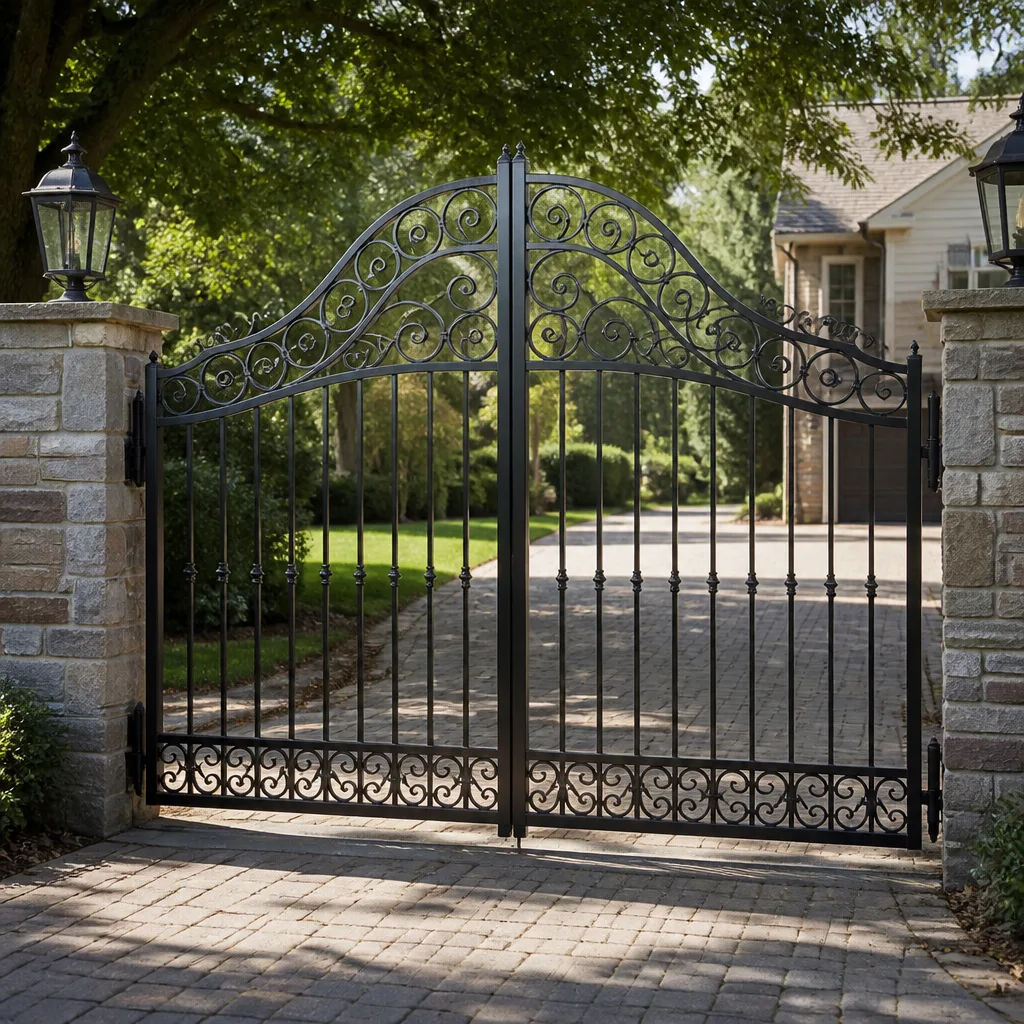
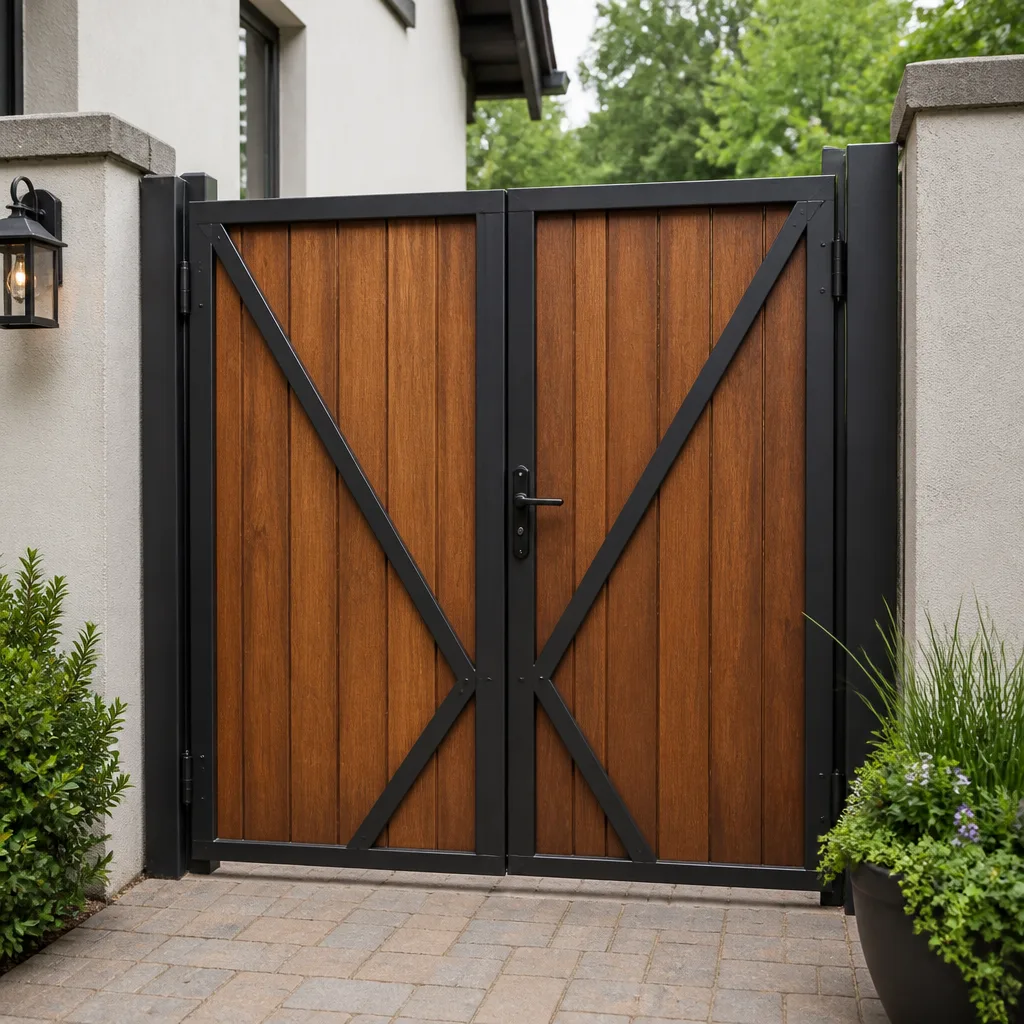
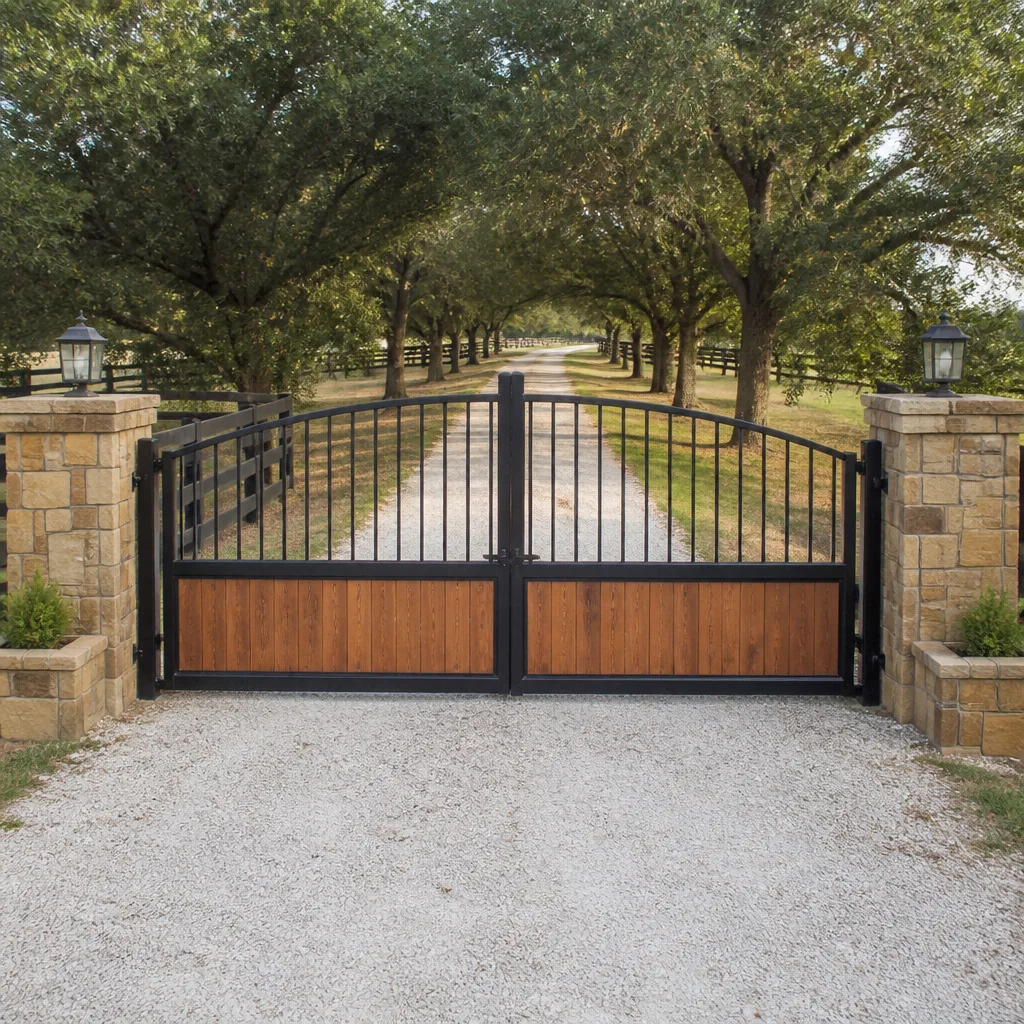
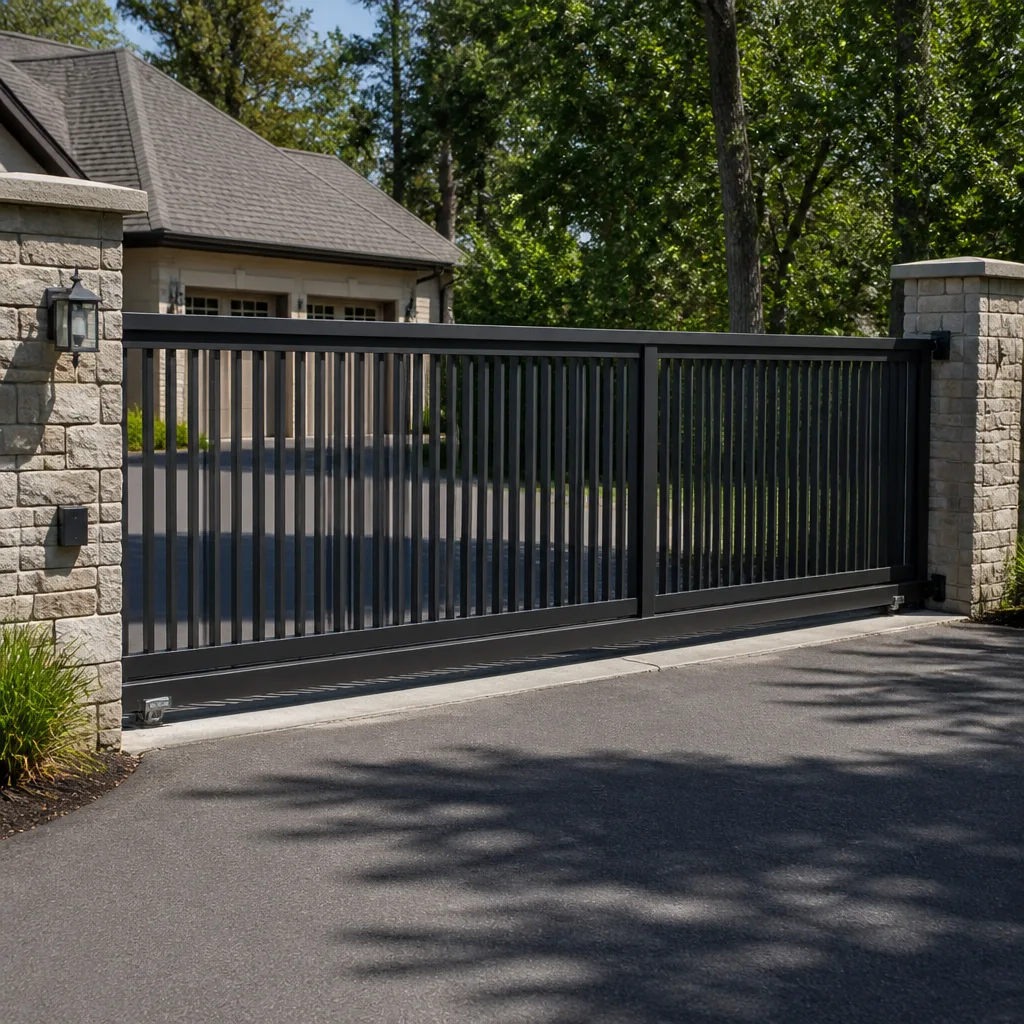
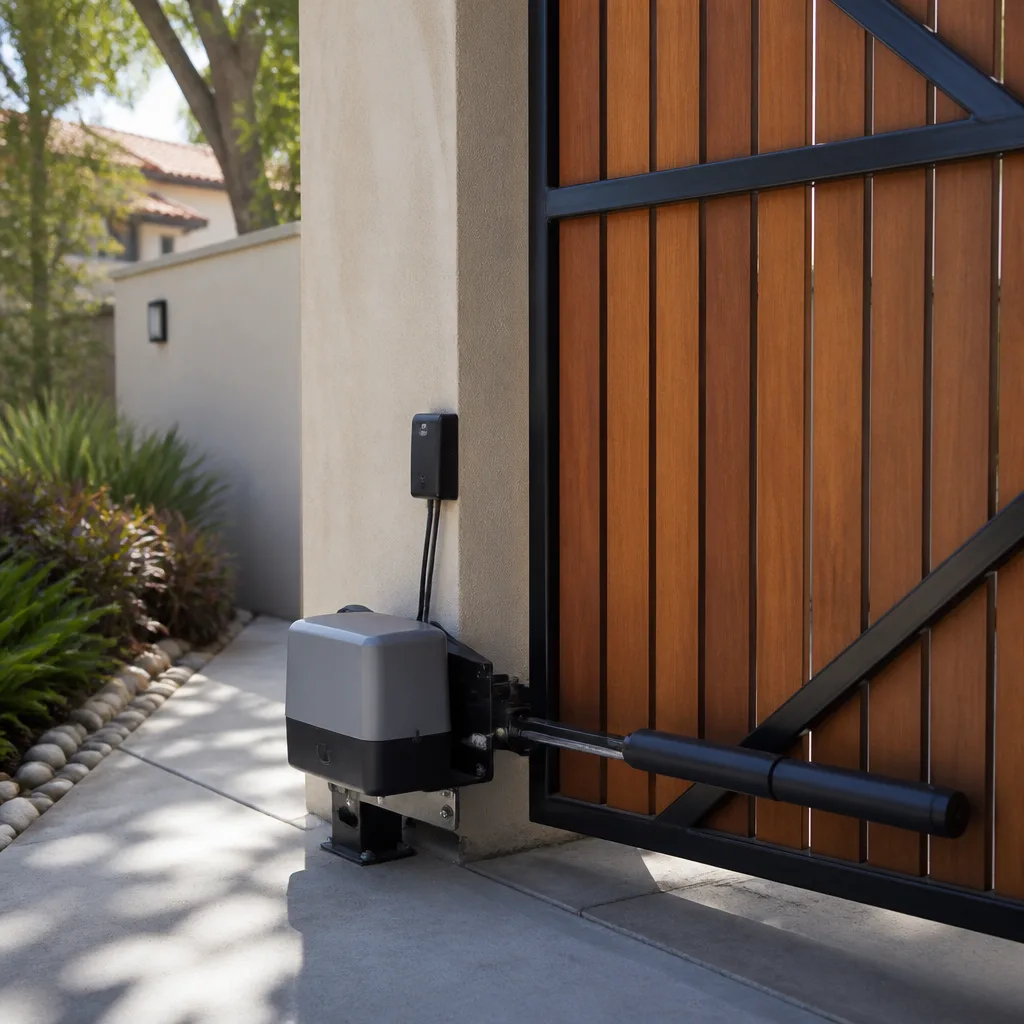
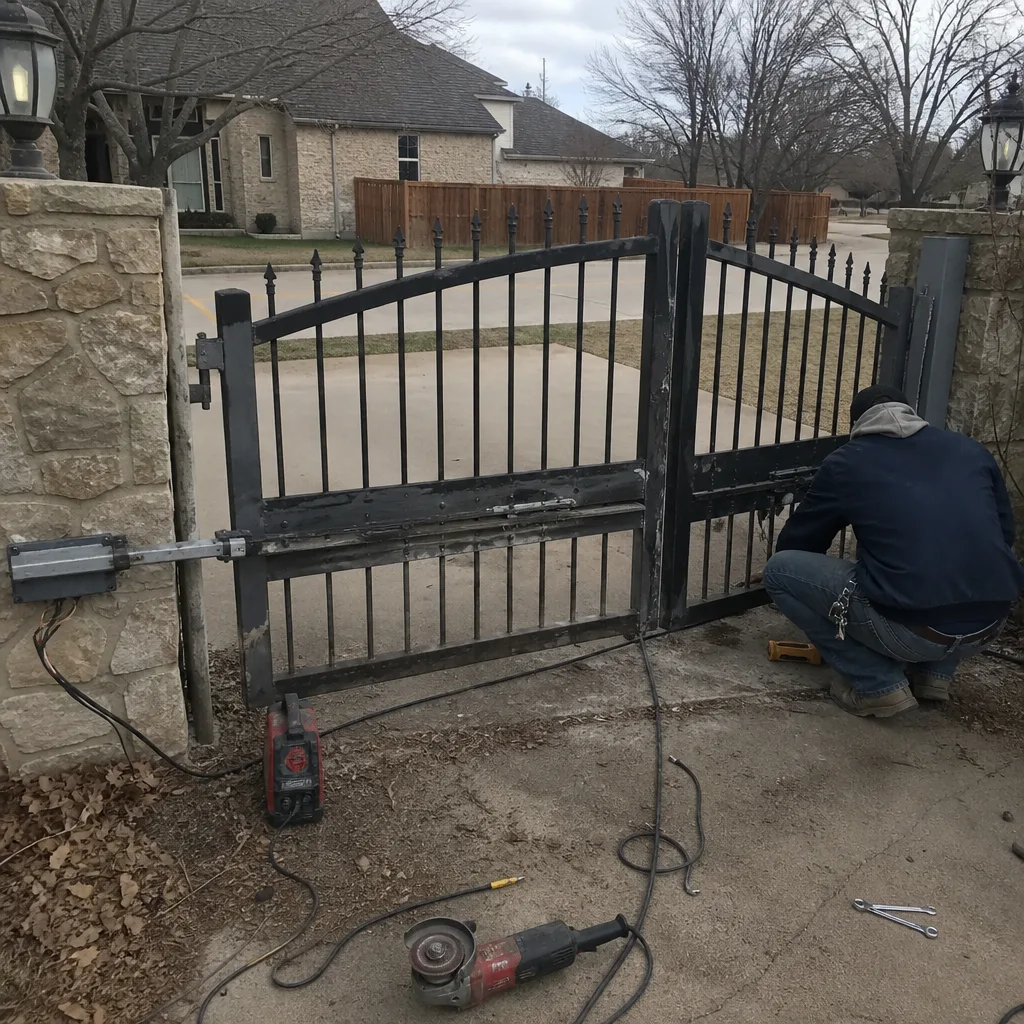 Before
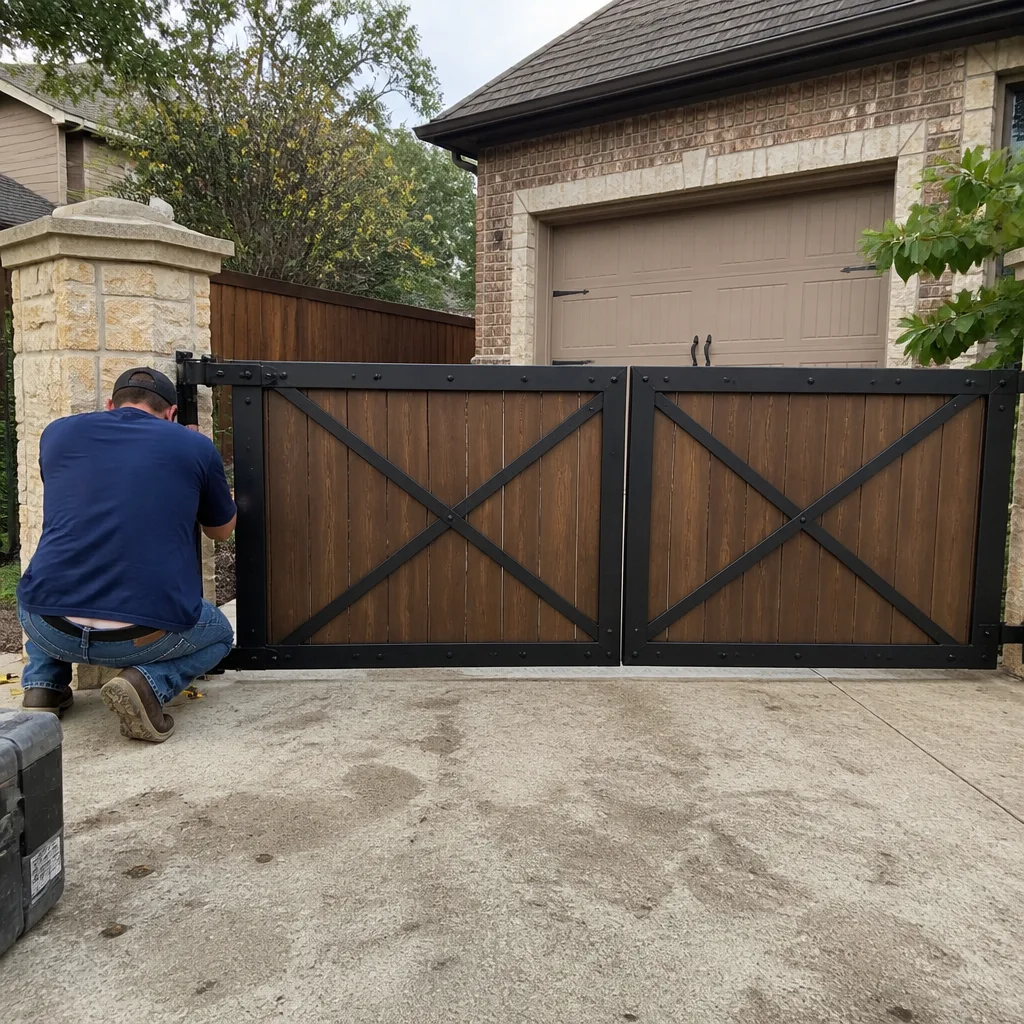 After
After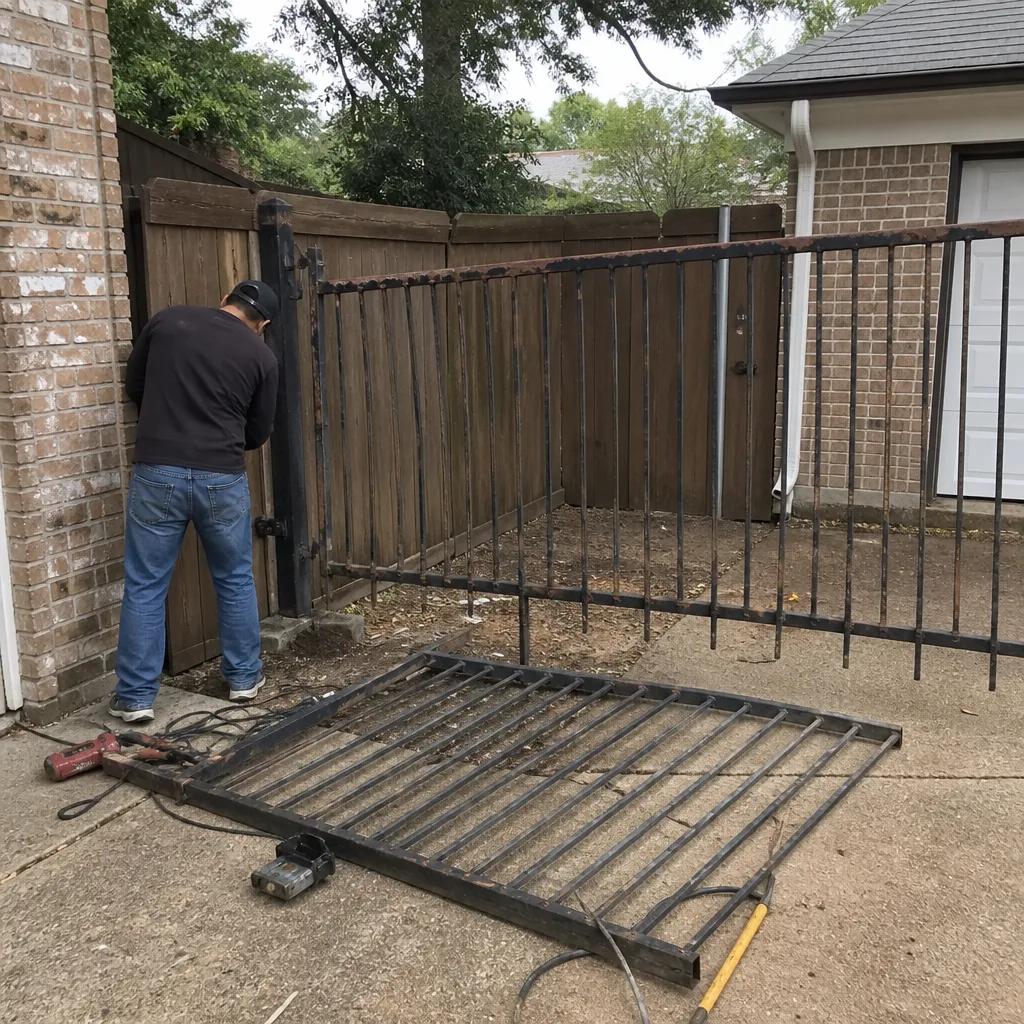 Before
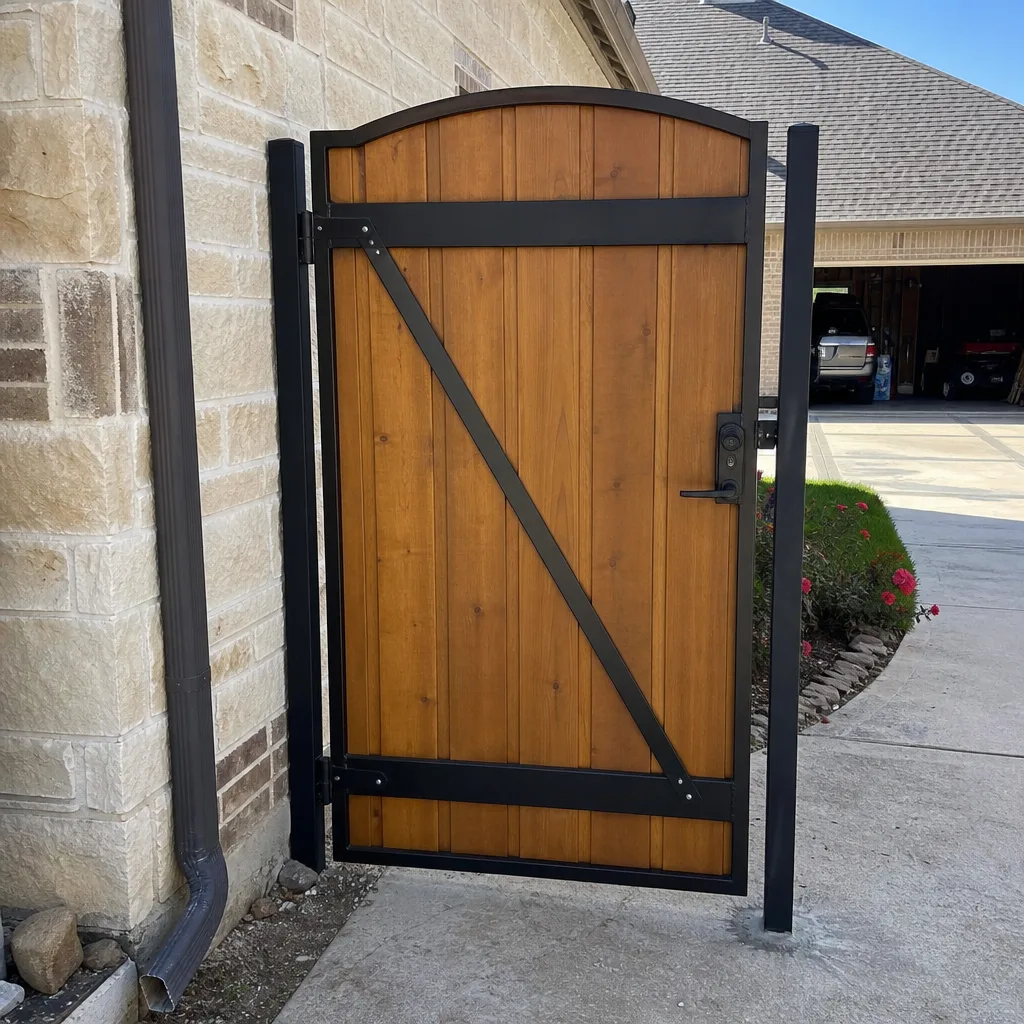 After
After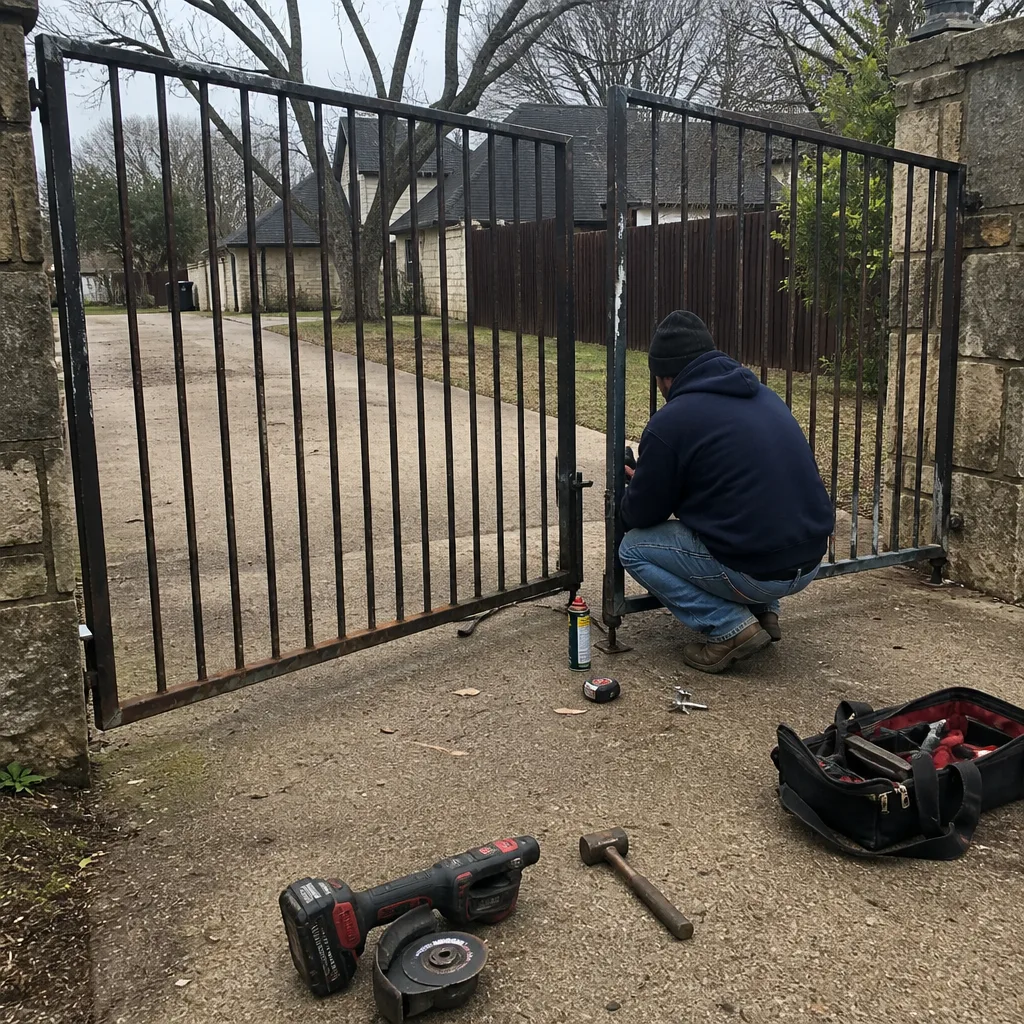 Before
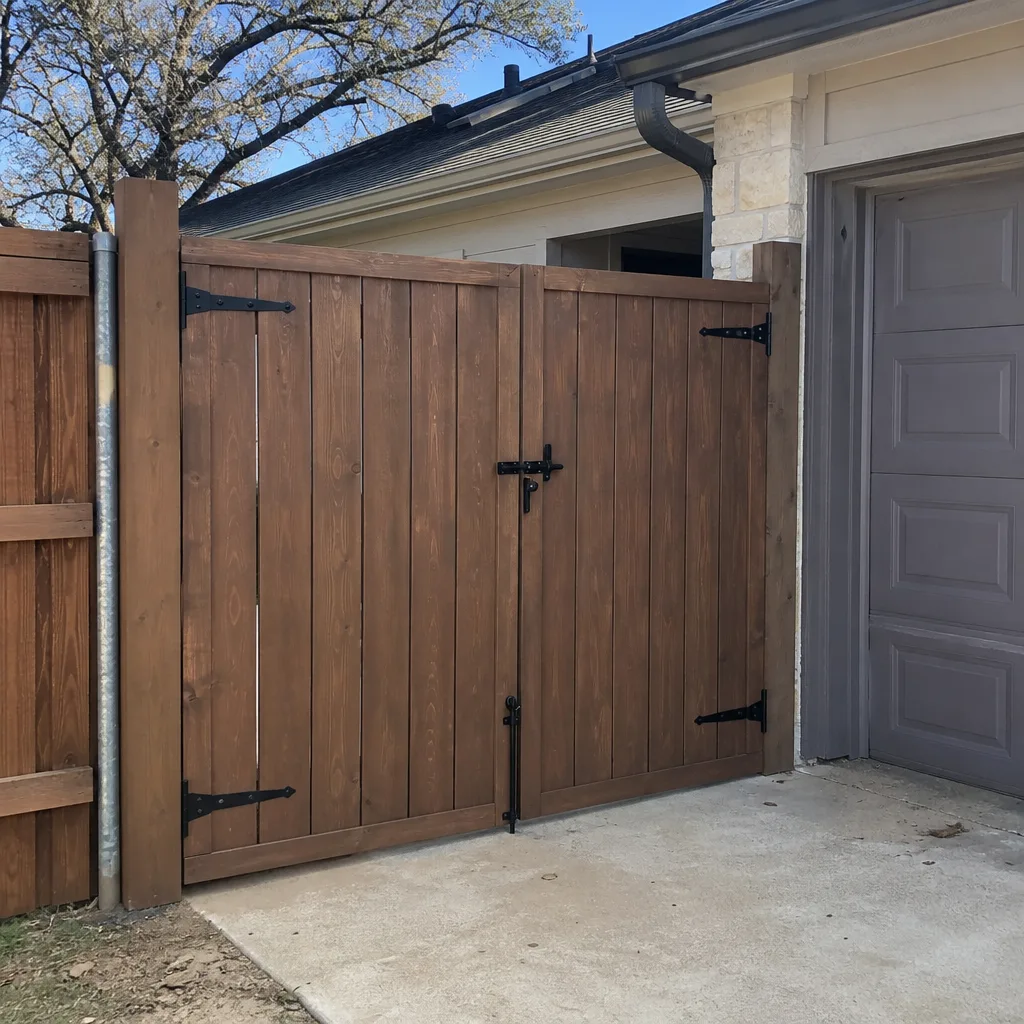 After
AfterThe Complete Guide to Gate Repair in Fort Worth
Most gates in Fort Worth don’t fail because they were built poorly. They fail because they were installed right, worked fine for fifteen years, and then got ignored until a hinge tore loose or a motor burned out trying to drag a sagging leaf across cracked concrete. This guide covers how gates actually fail here, what repairs cost in this market, and how to tell a two-hundred-dollar patch job from a repair that lasts another decade. Whether you own a swing gate in Monticello, a sliding gate off Camp Bowie, or an estate entry in Mira Vista, you’ll know what to ask and what to skip.
Quick Answer
Gate repair in Fort Worth typically runs between $180 and $1,200 depending on whether you’re fixing a hinge, a motor, or a cracked weld. A basic hinge or latch repair is usually under $350, while operator replacement on an automated gate commonly lands between $800 and $2,500 installed. Most single-visit repairs are quoted upfront and completed the same day by a gate specialist, not a general handyman.
Table of Contents
- How Gates Actually Fail in Fort Worth
- What Gate Repair Costs in Fort Worth
- What You Can Check Yourself vs. What Needs a Technician
- Swing Gate Repair: Hinges, Wheels, and Sagging Leaves
- Slide Gate Repair: Tracks, Rollers, and Chain Drives
- Gate Operator and Motor Repair
- When Welding Is the Only Real Fix
- Keypads, Remotes, and Access Control Systems
- Common Mistakes to Avoid
- When to Call a Professional
- Frequently Asked Questions
- The Bottom Line
How Gates Actually Fail in Fort Worth
Fort Worth has a specific combination of problems for gates: heavy clay soil that shifts with rain and drought, summer heat that cooks electronics and dries out grease, and wind that catches a solid gate leaf like a sail. The clay is the one most people don’t see coming. When we get a wet spring followed by a dry August, the ground under your gate posts moves enough to throw a gate out of square. That’s when hinges start to bind, latches stop lining up, and motors begin straining harder than they should.
Here’s the failure pattern we see most often, in order of frequency:
- Hinge wear and post sag. The gate leaf drops a quarter inch, then a half inch. The latch won’t catch. The gate drags at the far end.
- Operator strain from misalignment. The motor keeps working, but it’s pushing against a gate that’s fighting back. Boards burn out or the gear strips.
- Weld fatigue on ornamental iron. Vibration and wind flex the steel at its joints. The weld cracks first, then the picket loosens.
- Electronics failure from heat and ants. North Texas fire ants love control boxes. So does the August heat. Both kill circuit boards.
- Track and roller wear on slide gates. Dust, gravel, and mud grind down rollers. The gate starts to shimmy, then jumps the track.
What matters for a homeowner is that item one is cheap to fix if caught early and expensive if ignored. A hinge that costs $85 to replace becomes an operator that costs $900 because the motor burned out fighting the sag. That’s the whole economics of gate repair: the first domino is always the metal, never the motor.
What Gate Repair Costs in Fort Worth
Fort Worth pricing sits about 10 to 15 percent below Dallas for gate work, mostly because shop overhead is lower on this side of the metroplex. You’ll pay a trip charge of $50 to $90 from most companies, which is typically waived or credited toward the repair if you approve the work. After that, costs break down by job type:
- Hinge replacement (per hinge): $60-$180 depending on size, steel weight, and whether the post also needs shimming
- Latch and lock repair: $75-$220 including parts
- Weld repair (cracked picket or joint): $80-$300 per location, more if the gate has to be un-hung and re-hung
- Track and roller replacement (slide gate): $200-$600 including parts and alignment
- Operator motor replacement (parts and labor): $800-$2,500 depending on brand and gate weight
- Circuit board replacement: $250-$600 for most residential brands
- Full gate reset and tune-up: $89-$250, including lubrication, alignment, and safety sensor checks
Every reputable shop writes the price down before turning a bolt. If a company won’t give you a firm quote before starting, that’s a signal to call someone else. The honest shops in Fort Worth quote the job, get your approval, and the bill matches the quote. No surprises. Never pay a gate repair bill that wasn’t agreed to in advance.
What You Can Check Yourself vs. What Needs a Technician
You can do a ten-minute inspection on your own gate without touching a tool. It won’t fix anything, but it’ll tell you what you’re dealing with and make the phone call a lot more productive. Here’s the safe way to look at your gate:
- Stand back and look at the gap lines. Is the gap even top to bottom along the latch side? If it’s wider at the top than the bottom, the gate is sagging. If the gap is even but the latch still won’t catch, the post itself has moved.
- Open the gate halfway and let go. It should stay put. If it swings open or closed on its own, the hinges or the post are out of plumb. That’s the single biggest tell of a developing problem.
- Listen to the operator. A smooth hum is fine. A grinding, clicking, or laboring sound means the motor is working against a mechanical problem. Don’t run it more than necessary once you hear that.
- Look at the safety sensors. Most automated gates have photo eyes near the base. Make sure they’re pointed at each other and the lenses aren’t caked with dirt or spider webs. About a third of “my gate won’t close” calls in Fort Worth are just dirty sensor lenses.
- Check the rollers and track on a slide gate. Roller wheels should roll, not slide. Flat spots, wobble, or a rough patch on the track means wear that will only get worse.
A note on safety: Do not attempt to adjust, remove, or replace gate operator components, torsion springs, or high-tension cables yourself. Automated gates weigh hundreds of pounds and the moving parts carry enough force to cause serious injury or death if something slips. Hinge bolts under tension will snap without warning. If you find a problem in your inspection, call a trained technician. It’s not worth a crushed hand or worse.
Swing Gate Repair: Hinges, Wheels, and Sagging Leaves
Swing gates are the most common gate type in Fort Worth’s older neighborhoods, and the hinge is where they live or die. A properly hung swing gate transfers its entire weight through the hinges into the post. When the post shifts in our clay soil or the hinge bearings wear out, the gate starts to lean, and everything downstream gets worse.
The classic sagging gate has three repair paths, and which one you need depends on what’s actually wrong:
- Hinge replacement only. The post is still plumb and solid, but the hinge pins or bearings are worn. This is the cheapest fix and often all a five-to-ten-year-old gate needs.
- Post reset. The post has tilted or settled in loose soil. The gate gets un-hung, the post is dug out, re-set in concrete, and the gate is re-hung after the concrete cures. In Fort Worth clay, this is more common than people expect, especially after a rainy spring.
- Weld reinforcement. The gate frame itself is racking because a weld failed and the rectangle is becoming a parallelogram. The fix is re-squaring the frame and welding a cross brace into the corners.
We see a lot of swing gates in Ridglea Hills and Arlington Heights that were hung forty years ago and have been repaired three times because each previous fix only replaced the hinge without correcting the post. The gate still sagged. The new hinge wore out in two years. When you fix a swing gate, the first question is never “which hinge fits.” The first question is “why did the old one fail.” Fix the cause and the hinge lasts another decade.
Slide Gate Repair: Tracks, Rollers, and Chain Drives
Sliding gates are the workhorses of Fort Worth’s newer subdivisions and any driveway with a slope too steep for a swing gate. They’re also the gate type that gets neglected the most, because a slide gate can limp along half-broken for years before it finally refuses to move.
The load path on a slide gate is simple: steel rollers ride a track, a chain or gear rack carries the drive force, and the operator does the pulling. When everything’s aligned, the gate glides with one hand. When it’s not, you get the shimmy, the stutter, and the sound of metal grinding itself thinner every cycle.
The repair priority for a slide gate goes in this order:
- Track condition. A bent, rusted, or misaligned track will destroy new rollers in months. Fix the track first, even if it’s the more expensive line item. New rollers on a bad track is money thrown away.
- Roller replacement. Rollers are wear items. In Fort Worth’s grit and dust, they go three to seven years on a daily-use gate. Replacement costs $200 to $600 for the set, and when they’re replaced the gate should be re-leveled at the same time.
- Chain or rack alignment. A stretched chain skips teeth. A worn rack clunks. Both make the operator sound terrible and eventually strip the drive gear.
- Operator inspection. Only after the mechanical path is smooth should the motor be evaluated. A technician who replaces a slide gate motor without checking the track is doing you a $900 disservice.
In our experience, slide gates on acreage properties outside Loop 820 - think Benbrook, Aledo, and the ranch country west of Fort Worth - see more chain and rack wear than urban gates, simply because the gates are longer, heavier, and often operated multiple times a day for livestock trailers and equipment.
Gate Operator and Motor Repair
The operator is the most misunderstood part of an automated gate, and the most often replaced when it didn’t need to be. A gate motor that “died” usually didn’t. It was killed. By a sagging gate. By a bad capacitor. By ants in the control board. By a lightning strike ten feet from the power run.
Here’s how a competent technician diagnoses an operator failure, in the order a smart tech works through it:
- Power supply check. Is the outlet live? Is the breaker tripped? Is the GFCI on the circuit still set? A surprising number of gate operator calls end with a reset breaker, no parts needed.
- Battery backup check. Many Fort Worth operators have battery backup for power outages. Batteries die after three to five years and take the operator down with them. A $180 battery beats a $1,000 motor.
- Photo eye and safety loop test. If the safety circuit is open, the operator will refuse to close. This is a safety feature, not a malfunction. The fix is cleaning or realigning the sensors, or repairing a cut loop wire in the driveway.
- Capacitor test. Humming without movement is the classic blown capacitor symptom. $30 part, ten-minute fix.
- Board inspection. Ants, moisture, and lightning damage are the big three in Fort Worth. A board with burn marks or ant carcasses tells its own story.
- Motor test, last. Only when everything upstream checks out is the motor itself the problem.
We service nine automation brands, including Ironworks Gate Co. home recommendations on Ghost Controls for residential DIY-upgraded gates, DoorKing for long driveways with loop detectors, Elite for heavy slide gates, and Mighty Mule for light-duty single-swing applications. The brand matters less than the diagnosis. A motor that’s fighting a misaligned gate will fail again whether it’s a $400 Mighty Mule or a $2,400 Elite, and the warranty won’t cover it, because the failure wasn’t the motor’s fault.
When Welding Is the Only Real Fix
Ornamental iron gates in Fort Worth’s historic districts are a point of pride, and a constant maintenance item. These gates are welded steel, usually hung before most of their owners were born, and steel that’s been flexing in wind for thirty years eventually cracks. Not at the bolt, always at the weld.
Here’s the honest truth about weld repairs: a cracked weld can sometimes be welded in place, but the repair will only be as good as the metal around it and the access the welder has. On a gate with multiple cracked joints, or a crack that’s propagated into the surrounding tube, the only real fix is to un-hang the gate, jig it square, grind out the old weld, and re-weld the joint with proper penetration. Half measures leave a fresh crack right next to the old one, and you’ll pay twice.
Repair-first is the right philosophy for most gates, but there’s a threshold where restoration stops making sense:
- The gate frame is rusted through in more than two places
- Three or more pickets have separated from the frame
- The gate has been welded over before and the previous repairs are failing
- The cost of re-welding exceeds half the cost of a new fabricated gate
At that point, a new welded gate built to match the old design is often the smarter money. A good fabrication shop in Fort Worth can match period designs from the 1920s through modern, and a well-built steel gate with proper primer and powder coat will outlast most of the people reading this.
Keypads, Remotes, and Access Control Systems
Access control is where gate repair stops being mechanical and becomes equal parts electrical and behavioral. The hardware is straightforward: a keypad, a receiver, a remote, maybe a loop detector or a phone app. The hard part is diagnosing which component in the chain isn’t doing its job.
When a keypad stops opening the gate, the problem is rarely the keypad. More often it’s:
- The relay output on the control board. The keypad sends its signal, the board receives it, but the relay that actually fires the operator has failed. Replacement board or relay, $150 to $450.
- RF interference. Fort Worth has a growing number of neighborhoods with new LED streetlights, security systems, and municipal radio equipment that can walk on the same frequency as older 433 MHz remotes. A frequency swap to a 318 MHz or rolling-code receiver usually clears it.
- Corroded wiring at the keypad. Outdoor keypads live in the rain and the sun. The contacts inside corrode. A replacement keypad is $120 to $350 installed.
- Dead remote batteries. It happens. Two AA batteries and the problem’s gone. If your remote takes a weird 12V battery, most Fort Worth hardware stores carry them.
For gated communities and estates, we recommend redundancy: a keypad at the driveway, a wired telephone entry system at the main gate, and loop detectors that open the gate from the exit side automatically. No single failure point. And whatever system you have, write down the brand, the model number, and the programming instructions somewhere you can find them. The next technician will thank you, and you’ll save an hour of labor.
Common Mistakes to Avoid
- Greasing a gate that isn’t aligning. Grease is for hinges that are tight but square. If the gate is sagging, grease just makes a messy sagging gate. Fix the alignment first.
- Replacing the operator without checking the gate. This is the most expensive mistake in the business. A new motor on a binding gate fails again, and the warranty won’t cover misuse. Always fix the mechanical path first.
- Welding over rust. A weld over rusty steel holds nothing. The rust has to be ground out to clean metal. A repair that skips this step cracks again within a year.
- Ignoring a jumpy slide gate. That stutter you’ve been noticing for six months is a roller flattening out. Every cycle is grinding metal off the track. By the time it jumps the track entirely, the repair bill has tripled.
- Using a power washer too close to the operator. Fort Worth’s hard water and high pressure push water into seals and control boxes. Hand-wash the operator housing, or don’t wash it at all.
- Skipping the safety sensors. Bypassing or removing photo eyes because they’re “annoying” leaves you liable if someone gets hurt. They’re required by code on automated gates in Fort Worth, and they’re there for a reason.
When to Call a Professional
Call a gate specialist when the gate leans more than half an inch, when the operator makes a sound it didn’t make last month, when the gate has been welded once and cracked again, or when you’ve replaced the remote batteries and the keypad still won’t open anything. These are symptoms of structural or electrical failure that only get more expensive with time. Call the same day the gate starts to misbehave, not the day it stops working. Ironworks Gate Co. offers free estimates in Fort Worth - call (817) 562-7979 and we’ll send a technician who can tell you what’s wrong and what it costs before any work begins.
Frequently Asked Questions
Most gate repairs in Fort Worth run $180 to $1,200, with hinge and latch repairs at the low end and operator replacement at the high end. The price depends on whether the problem is mechanical (hinges, rollers, welds) or electrical (boards, motors, wiring). Get the quote in writing before work starts, and expect a trip charge of $50 to $90 if the repair is declined. Call (817) 562-7979 for a no-obligation estimate on your specific gate.
Yes, and in most cases you should. A sagging gate is usually a hinge replacement, a post reset, or a weld reinforcement, not a whole-gate replacement. Repair costs run $80 to $600 depending on the cause. Replacing the gate without fixing the underlying post movement just means the new gate will sag too.
Most common repairs - hinge replacement, latch repair, sensor realignment, capacitor replacement - are completed in a single visit lasting one to three hours. Post resets take longer because the concrete has to cure before the gate can be re-hung, typically two to three days between un-hanging and re-hanging. Full fabrication work takes one to three weeks depending on the shop’s schedule and the complexity of the gate.
If the gate opens fine but won’t close, the safety sensors are the first thing to check. Dirty or misaligned photo eyes account for about a third of these calls in Fort Worth. If the sensors are clean and aligned, the next checks are the limit switches, the loop detector, and the close-force setting. All are repairable without replacing the operator in most cases.
We cover the entire Fort Worth area, from the near-southside historic districts up through Lake Worth, Saginaw, and the country properties west toward Weatherford. If it’s a driveway gate and it’s in Tarrant County or the bordering counties, we’ll come look at it and give you a written price before any work starts.
A properly repaired gate should last ten or more years before needing the same repair again, assuming the root cause was fixed and not just patched. Hinges installed on a stable post and aligned correctly typically last a decade. Weld repairs done to clean metal with proper penetration outlast the surrounding steel. The shortest lifespan item on any gate is the battery backup, which every three to five years is just part of normal maintenance in Fort Worth’s heat.
The Bottom Line
Gate repair in Fort Worth is a game of dominoes. The first piece to fail is almost always mechanical - a hinge, a roller, a weld, a shifted post - and everything after that, including the motor that gets blamed, is just the result. Catch the mechanical problem early and you’re out a couple hundred dollars. Ignore it and you’re replacing a $1,500 operator that didn’t need to die. Get the gate inspected when it starts acting different, fix the cause, not the symptom, and work with a shop that quotes the price before touching a single bolt. A gate that’s done right, once, keeps working for decades. That’s the whole trick.
Written by Victor Salinas, Owner at Ironworks Gate Co., serving Fort Worth since 2013.