
Last updated August 25, 2026
Free on-site gate assessment - hinges, posts, and your LiftMaster or Nice gate operator checked before anything is quoted
The assessment is free and the quote is the invoice.
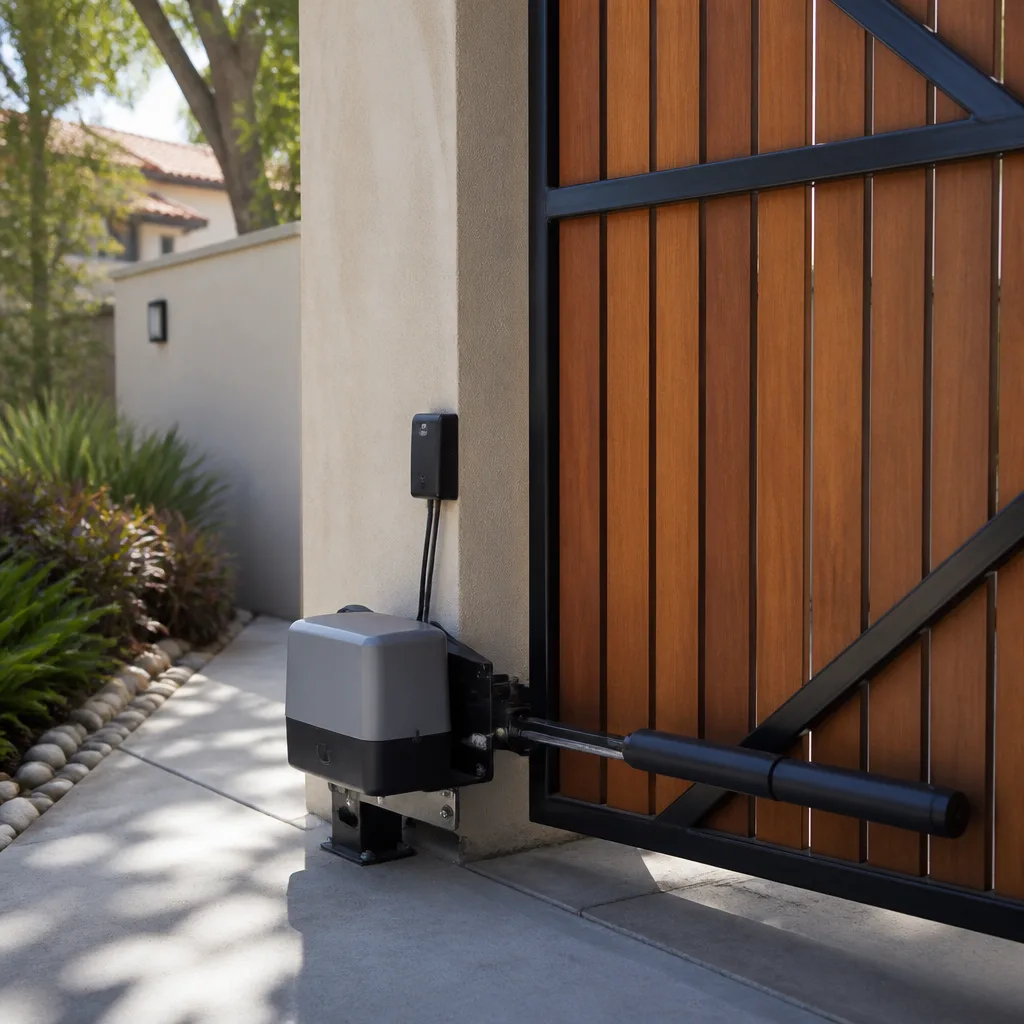
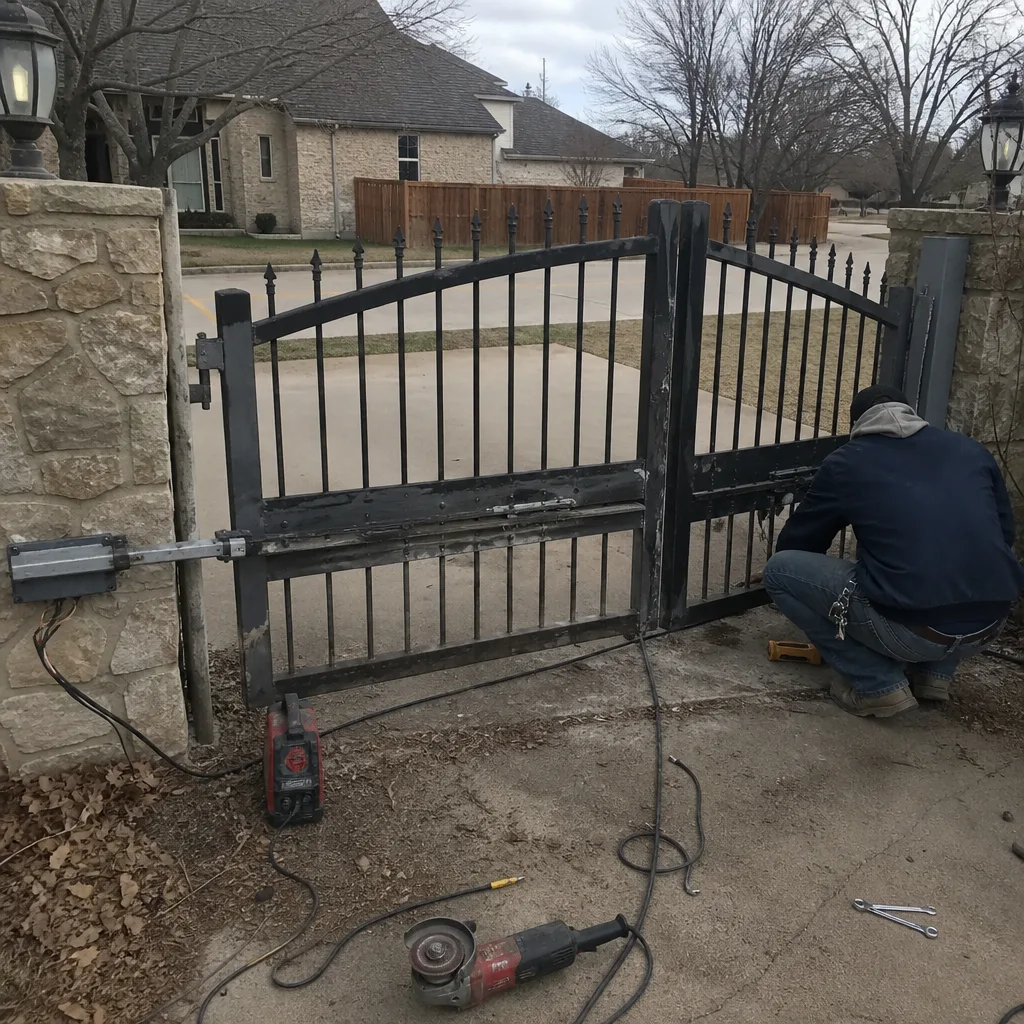 Before
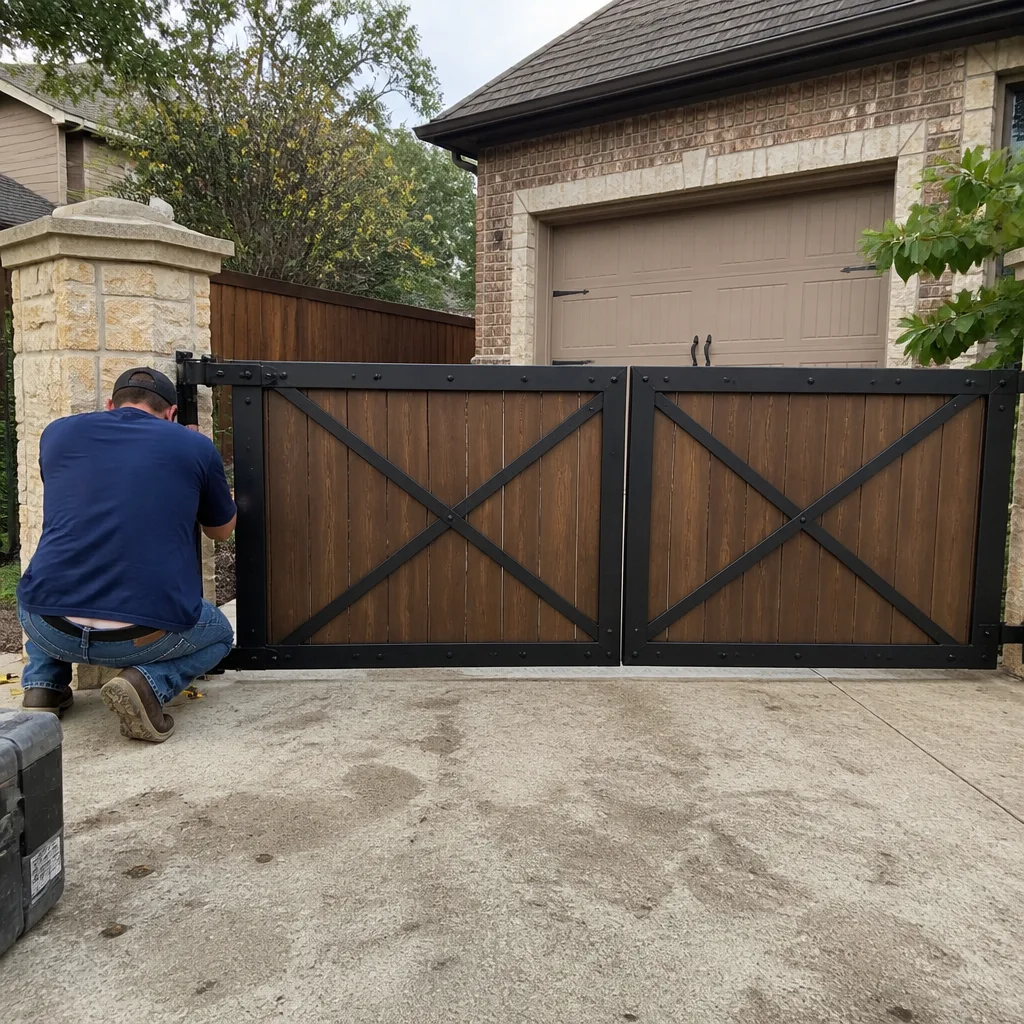 After
After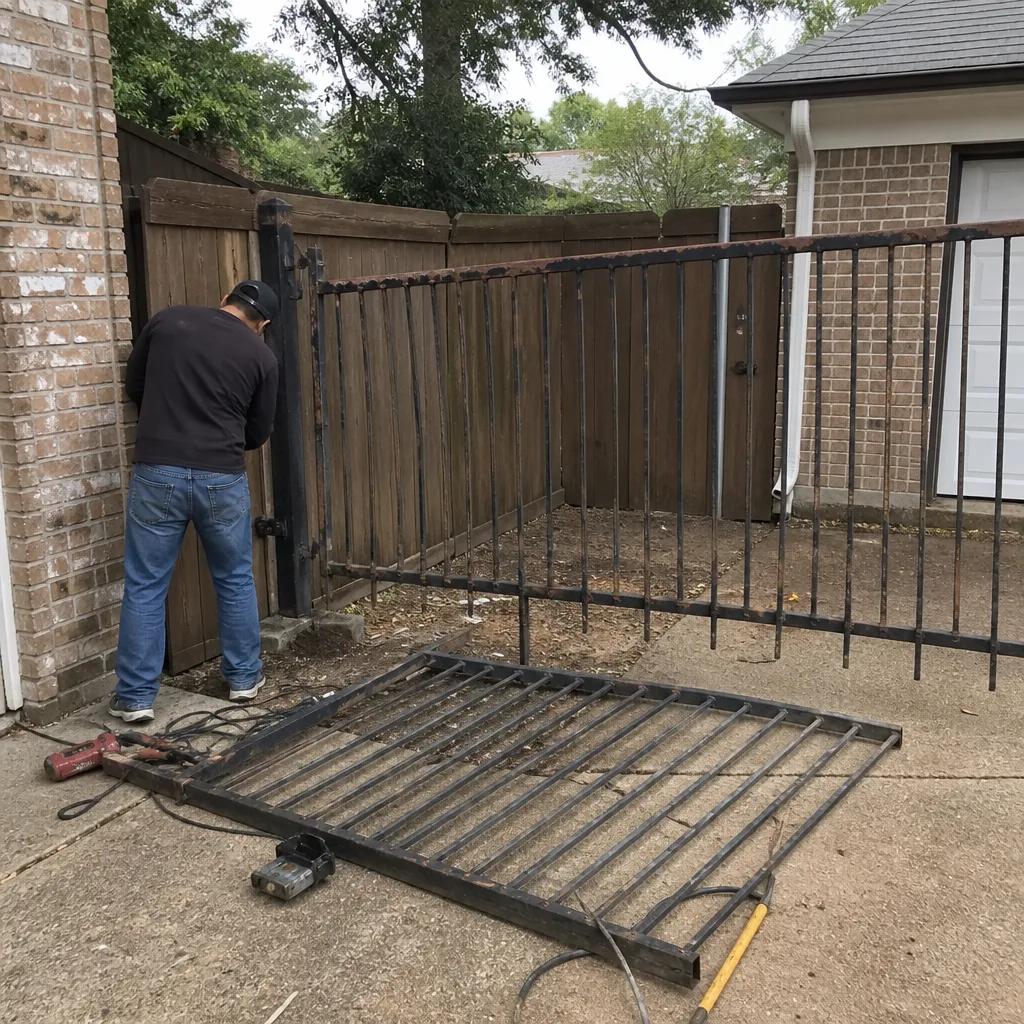 Before
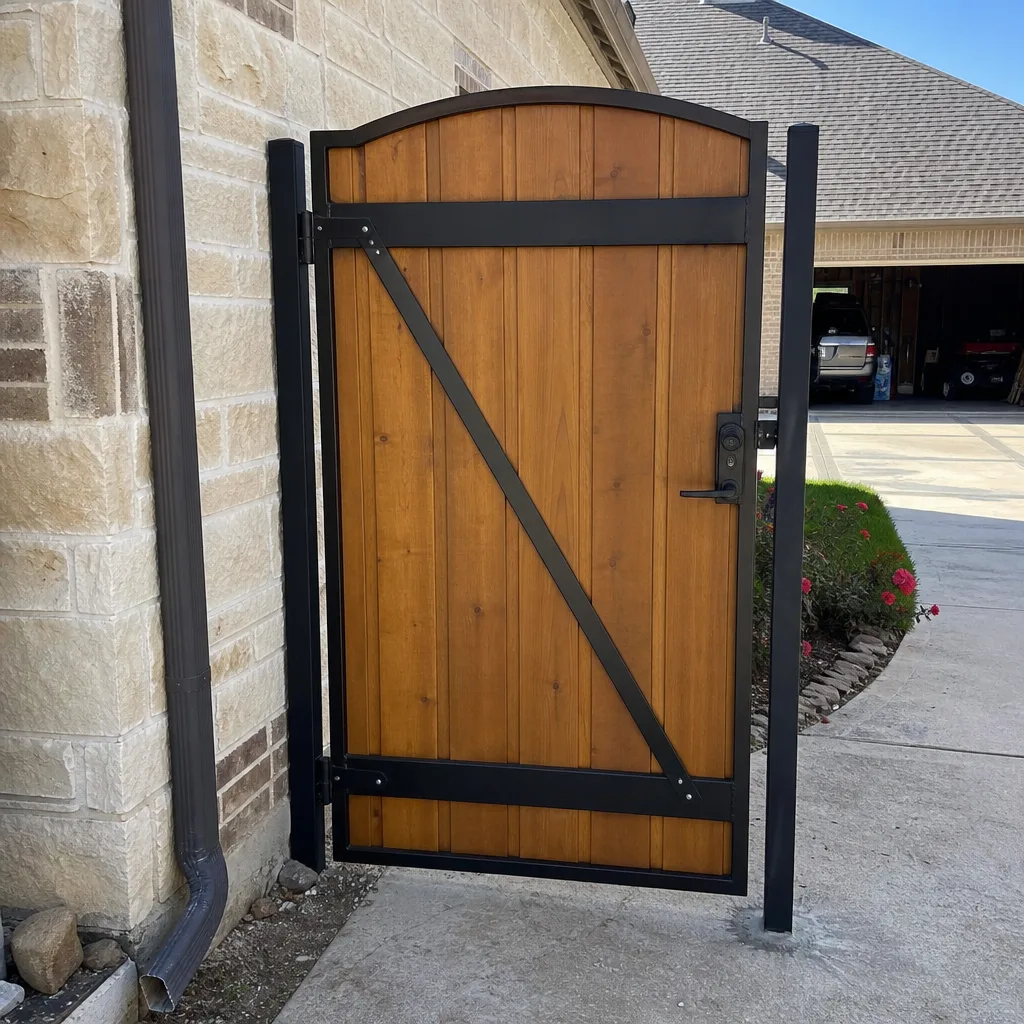 After
After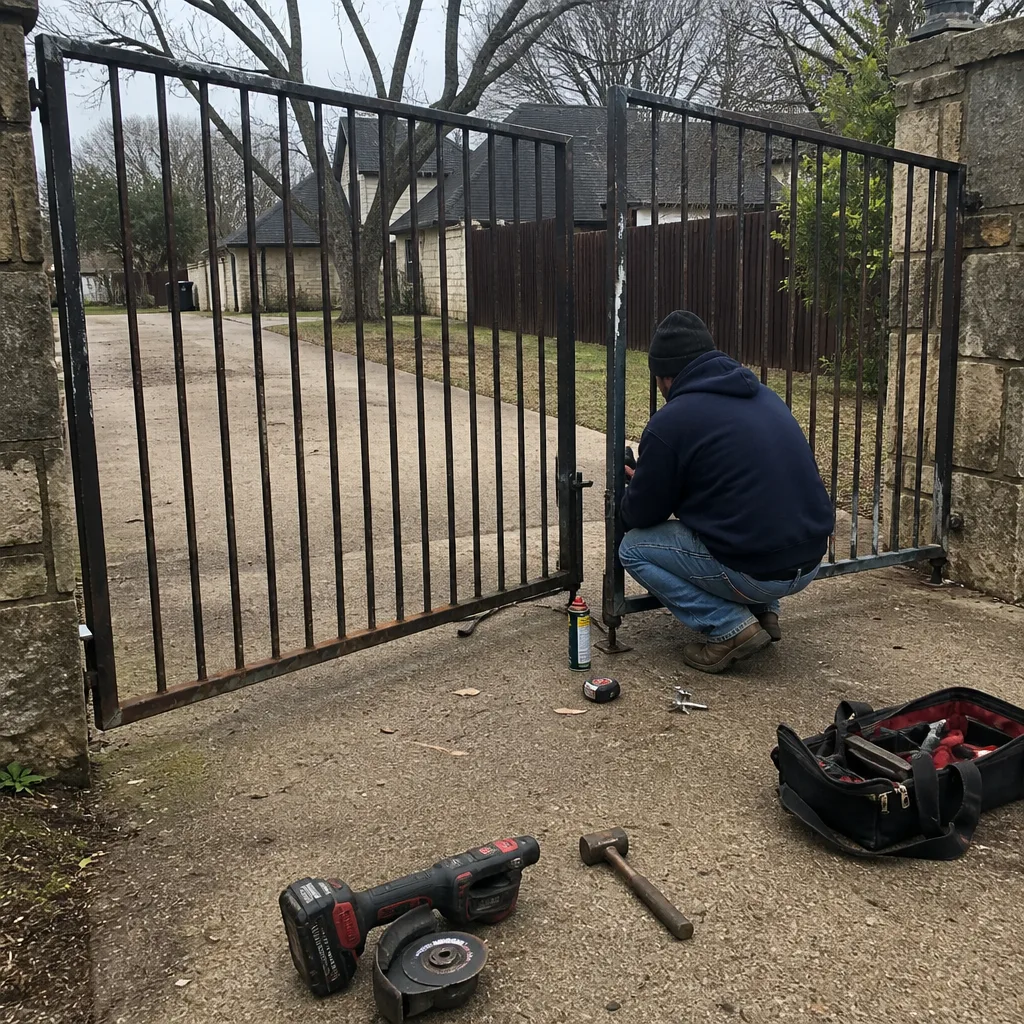 Before
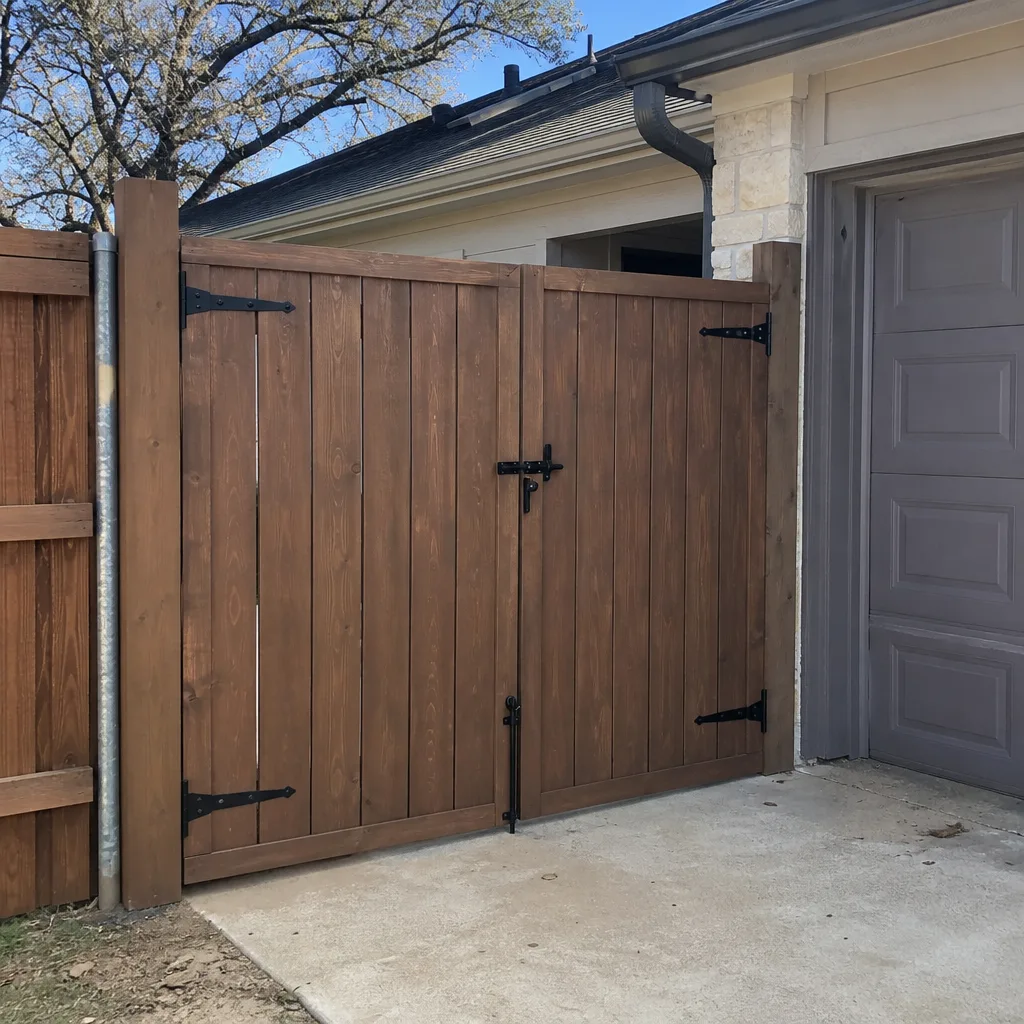 After
AfterGate Repair Permits, Codes & Inspections in TX: What You Need to Know
Most Texas homeowners assume a driveway gate is just a fancy fence panel with a motor bolted on. That assumption costs money. A gate is, in the eyes of every Texas municipality we work in, a piece of automated equipment attached to your property’s access point. It has electrical wiring, moving steel that can weigh over 800 pounds, and safety sensors that have to work every single time. Get the permit wrong and you are not just looking at a fine from the City of Fort Worth. You are looking at a gate that may fail an inspection, void a home insurance claim, or injure someone on your property. This guide lays out, in plain language, what Texas actually requires when you repair, modify, or install a driveway gate.
Quick Answer
In Texas, automatic driveway gates rarely require a state-level permit, but most cities, including Fort Worth, require a local electrical permit when the opener, control board, keypad, or loop detector is installed or significantly modified. Welded gate repairs, hinge replacements, and mechanical fixes typically need no permit at all. The gate itself must meet UL 325 safety standards, and any electrical work must be done to the current National Electrical Code (NEC) as adopted by your city. Inspections are quick, usually a single visit, and cost far less than the liability of skipping them.
Table of Contents
- Do You Need a Permit for Gate Repair in Texas?
- When Permits Are Actually Required
- The UL 325 Safety Standard Explained
- Fort Worth Codes and Local Amendments
- The Inspection Process Step by Step
- HOA Rules and Easement Considerations
- Common Mistakes to Avoid
- When to Call a Professional
- Frequently Asked Questions
Do You Need a Permit for Gate Repair in Texas?
Here is the short answer from 42 years of doing this work in Fort Worth and surrounding North Texas communities: most gate repairs do not require a permit. If the repair is mechanical, meaning it involves the physical gate structure, hinges, wheels, track, chain, or welded frame, no city we serve in the Dallas-Fort Worth metroplex asks you to pull a permit for that work.
What changes the picture is the operator, the electrical side, and anything that involves connecting wire to your home’s power supply. Once a technician touches line voltage, installs a new motor, replaces a control board, adds a keypad, or runs conduit from your house to the gate post, most Texas cities treat that as electrical work. Electrical work requires a permit, and it must be done by a licensed electrician or a licensed gate contractor working under an electrical permit.
The Texas Department of Licensing and Regulation (TDLR) does not issue a specific “gate repair” license at the state level. Gate automation work falls under electrical licensing rules. In Fort Worth, the city issues permits through its Development Services department, and the electrical permit for a typical gate opener installation runs between $50 and $150 depending on the scope. The inspection is usually scheduled within 48 hours of the work being completed.
We have seen homeowners in Arlington, Benbrook, and Keller get caught on this when selling a home. The buyer’s inspector flags an unpermitted gate operator installation, and now the seller is scrambling to pull a permit retroactively, which costs more and takes longer. Do it right the first time. It is cheaper.
If you would rather just know whether your specific repair needs a permit, call us. A live person answers at Ironworks Gate Co. home related to our service area, or you can reach Victor directly. We will tell you what the city actually requires for your exact situation, no obligation.
When Permits Are Actually Required
Permit requirements vary by city, but the pattern across North Texas is consistent. Here is what triggers a permit in most jurisdictions, including Fort Worth, and what does not.
Work that typically requires an electrical permit:
- Installing a new automatic gate opener or motor of any brand, including Ghost Controls, DoorKing, or Elite units
- Replacing an existing operator with a different model that changes the electrical load
- Running new electrical conduit or wire from the house panel to the gate
- Installing a new keypad, card reader, telephone entry system, or loop detector that ties into the gate’s control system
- Adding a battery backup system that connects to the operator’s power supply
- Any repair that involves opening the operator’s electrical enclosure and replacing wiring or the control board
Work that typically requires no permit at all:
- Welding a cracked gate frame or replacing a bent gate rail
- Replacing worn hinges, rollers, or wheels
- Adjusting the gate’s travel limits or closing force
- Replacing a broken chain or belt on a slide gate
- Lubricating and servicing mechanical components
- Repainting or cosmetic repairs
- Replacing sensor eyes or photo cells on an existing system, as long as no new wiring is run
Here is the nuance most homeowners miss: a repair that starts mechanical can become electrical. You call someone to fix a sagging gate. They discover the operator’s control board has a burnt relay because the gate was binding for months. Now they are opening the electrical enclosure and replacing a board. That is electrical work now, and it needs a permit. A diligent contractor will stop and tell you before touching that board. A careless one will just swap it and leave you with an unpermitted electrical modification.
We do not work that way. Every job at Ironworks Gate Co. is quoted with a clear price agreed before any work starts, and if the scope changes because we found something unexpected, we tell you before we turn a single additional bolt. No surprises means no surprises on the permit side either.
The UL 325 Safety Standard Explained
UL 325 is not a Texas law. It is a national safety standard from Underwriters Laboratories that every automatic gate opener sold in the United States must meet. But here is why it matters for Texas homeowners: your city’s code inspection will check for UL 325 compliance, and your insurance company will ask about it if anyone is ever injured by your gate.
UL 325 was created after a series of fatalities involving automatic gates. The standard mandates specific safety features that every gate operator must include. The key requirements are:
- Entrapment protection devices. Every automatic gate must have at least two independent means of protection against trapping a person or pet. This typically means photo eyes (sensors that detect anything in the gate’s path) paired with a reversing mechanism in the motor itself.
- Contact sensors or non-contact sensors. A contact sensor is an edge that physically detects pressure and reverses the gate. A non-contact sensor is the photo eye. Most modern systems use both.
- Audible warning. Operators that are not continuously monitored must sound an alarm before and during gate movement. This is the beeping you hear on commercial gates.
- Manual release mechanism. Every automatic gate must have a way to disconnect the motor and open the gate by hand, typically a keyed release or a simple lever.
- Force limitation. The motor must not exceed a specific closing force, measured in pounds at the leading edge. In our experience servicing nine opener brands including Mighty Mule and Elite, older units often exceed this limit as components wear.
In Fort Worth, when a gate operator is inspected, the inspector will check that photo eyes are mounted correctly, the gate reverses when an obstruction is encountered, and the manual release works. They are not testing to the full UL 325 laboratory standard, but they are confirming the installed equipment carries the UL listing and was installed to the manufacturer’s specifications.
One thing we see regularly in older Fort Worth neighborhoods like Ridglea Hills, Tanglewood, and Monticello: gates installed twenty or thirty years ago with openers that predate current UL 325 requirements. Those operators are grandfathered in most cases, meaning you are not required to upgrade them. But the moment you replace the operator, the new unit must meet current UL 325, and your permit inspection will enforce it.
Fort Worth Codes and Local Amendments
Fort Worth operates under the 2020 National Electrical Code with local amendments, and the city’s Development Services department handles permits for gate automation work. The city is generally practical about residential gates, but there are specific rules you need to know if your gate is in Fort Worth proper.
First, the setbacks. Fort Worth zoning requires that a driveway gate be set back from the property line far enough that a vehicle can fully pull off the street before the gate opens. The standard setback is 20 feet, though corner lots and homes on busier streets may need more. If your gate opens outward toward the street, that is a problem in Fort Worth on most residential lots. Gates must open inward or slide, not swing into a public right-of-way.
Second, the electrical connection. Fort Worth requires that the gate operator be on a dedicated circuit if it is hardwired to the house panel, and that the conduit from the house to the gate be buried at least 18 inches deep if it crosses a landscaped area. If it crosses under a driveway or walkway, it needs to be in rigid metal conduit at a depth of 18 inches or more. This is where we see the most code violations on older Fort Worth properties: shallow-buried Romex that should have been in conduit, spliced connections in underground boxes that fill with water, and operators wired into a garage door outlet they share with a freezer.
Third, Fort Worth requires that any gate positioned to control vehicular access to a property have a clearly visible manual release, and that the opener be listed for outdoor use. Indoor-rated openers, typically cheap units sold online, are not permitted for a Texas driveway gate that sits in full sun and 105-degree heat. We have replaced enough heat-damaged control boards to know exactly why that code exists.
In our experience across Fort Worth service calls, most homes in established neighborhoods like Wedgwood, Arlington Heights, and Berkeley Place were built before automated gates were common. That means the electrical infrastructure for a gate was never installed when the house was built. When we quote a new gate operator installation, the price includes the trenching, conduit, dedicated circuit, and permit because that is what a code-compliant job actually requires. Anyone who quotes you a new operator without mentioning trenching or conduit is not doing the job the city will pass.
The Inspection Process Step by Step
If your gate project requires an electrical permit, here is exactly how the process works in Fort Worth and most surrounding North Texas cities. It is simpler than most homeowners fear.
- Permit application. Your contractor, or you if you are doing the work yourself, files the permit application with the city. In Fort Worth this is done online through the Development Services portal. The application describes the scope: new operator install, operator replacement, control board upgrade, or new access control wiring.
- Permit issuance. For a typical residential gate project, the permit is issued same day or within 24 hours. The fee for a residential electrical permit in Fort Worth typically falls between $50 and $150 depending on the project valuation.
- Work performed. The work is done to code, with the permit on site. The inspector may do a rough-in inspection if new conduit is being buried, which means they inspect the trench and conduit before it is covered.
- Final inspection. Once the work is complete, a city inspector visits the property. The inspection takes 15 to 30 minutes. They check the panel connection, the conduit run, the operator’s UL listing, the photo eyes, the manual release, and the gate’s reversing function.
- Approval. If everything passes, the permit is closed and you have a record that the work was inspected and approved. Keep that record. It matters when you sell the house.
One practical note: in Fort Worth, the final inspection for a gate operator must be scheduled within a certain window after the work is completed. Most contractors handle this, but if you are acting as your own general contractor, you are responsible for scheduling it. Missed inspection deadlines result in permit expiration, which means you pay for a new permit and start the process over.
We handle every permit and inspection for the gate automation work we do in Fort Worth. You do not have to figure out the city portal or take time off work to wait for an inspector. That is part of what you are paying for when you hire a company that has been doing this since 1984.
HOA Rules and Easement Considerations
Before any gate work happens in a Fort Worth neighborhood, check your HOA covenants. This is a step homeowners skip, and it costs them. Texas HOAs have broad authority over exterior modifications, and a driveway gate is absolutely an exterior modification.
Many Fort Worth HOAs, particularly in master-planned communities like those in the Alliance corridor or along the Chisholm Trail Parkway, have architectural control committees that must approve any new gate or gate modification. The HOA may specify gate style, height, material, color, and whether the gate can be automatic at all. Some older HOAs written in the 1980s and 1990s prohibit automatic gates entirely because the rules predate common residential automation.
Here is what we tell every homeowner in Fort Worth before any gate job:
- Pull your HOA’s design guidelines and read the fence and gate section before you sign any contract
- Submit the proper architectural review application with drawings or specifications
- Expect 30 to 60 days for HOA approval, which means planning ahead if you are adding a new gate
- Repairs to an existing gate, especially like-for-like mechanical repairs, usually do not require HOA approval, but adding automation to a previously manual gate often does
- If your HOA denies your gate request, you have appeal rights under Texas Property Code Section 209, but the process is slow and often frustrating
Easements are a separate issue that also catches Fort Worth homeowners off guard. Many properties have utility easements along the driveway or near the street. You cannot build a permanent gate structure on top of a utility easement without utility company approval, and some utilities will not grant it. If the gate is in an easement and a utility needs to access lines, they can legally remove your gate and are not required to restore it. Check your survey before you set gate posts.
In our experience, the homeowners who have the smoothest gate projects in Fort Worth are the ones who resolve HOA and easement questions before the first post hole is dug. The ones who skip this step are the ones calling us six months later to move a gate that never should have been there.
Common Mistakes to Avoid
- Skipping the permit on an operator replacement. You think it is a like-for-like swap, but the inspector who finds it later will not see it that way. In Fort Worth, unpermitted electrical work discovered during a home sale can delay closing by weeks. The permit costs less than a dinner out.
- Buying an indoor-rated opener online and installing it outside. Texas sun and heat destroy these units in a season or two. The Fort Worth inspectors we work with will fail an outdoor gate with an indoor-rated opener, and they should. Outdoor-rated units from brands like DoorKing and Ghost Controls are built for exactly this environment.
- Burying the electrical supply too shallow. Eighteen inches of cover is the code requirement for conduit under landscaped areas in Fort Worth, and 18 inches under hardscape. Shallow-buried wire gets cut by landscape tools, chewed by rodents, and fails after heavy rain. We see this constantly.
- Ignoring the reversing mechanism. A gate that does not reverse when it hits resistance is dangerous. UL 325 requires it. Your inspector will test it. If it fails, the gate fails inspection, and rightfully so. This is a child-safety issue, not a technicality.
- Not checking the HOA before starting work. Installing a gate your HOA forbids means removing it at your expense, and Texas courts have consistently sided with HOAs in these disputes. The HOA rules in Fort Worth neighborhoods are enforceable contract provisions.
- Setting the gate too close to the street. Fort Worth’s setback requirements exist so a car waiting for the gate to open is not blocking the road. A gate too close to the street is a code violation and a traffic hazard, especially on busier Fort Worth streets.
- Hiring a contractor who does not pull permits as standard practice. If a gate contractor tells you a permit is “not needed” for new automation, they are either wrong or they do not want the inspection because they know their work will not pass. Either way, walk away. We have been fixing those jobs for over four decades.
When to Call a Professional
Some gate work is genuinely DIY-accessible: tightening a hinge, painting a rust spot, clearing debris from a slide track. But the moment the work touches electricity, automation, or a gate that weighs more than a few hundred pounds, a professional is not a luxury. It is a safety decision.
Call a professional if your gate opener is making a grinding noise, if the gate reverses for no reason, if the photo eyes are misaligned and you cannot get them working, if the keypad is dead, or if the gate has come off its track with the motor still trying to run. These are not repair scenarios. These are injury scenarios waiting to happen. A cast-iron gate weighing 600 pounds moving under motor power can crush a person. We do not say this to scare you. We say it because 42 years in this trade teaches you what force does to flesh and bone.
Call a professional if you are installing new automation, running new wire, or replacing an operator. The permit, the inspection, the UL 325 compliance, the correct brand-specific programming on Ghost Controls, DoorKing, or Elite units. This is not a weekend project. Ironworks Gate Co. offers free estimates in Fort Worth. Call (817) 562-7979 and we will walk your property, tell you exactly what the job requires, and put the price in writing before any work starts. Done right, and backed in writing.
Frequently Asked Questions
Mechanical repairs like hinge replacement, welding, or track adjustment require no permit in Fort Worth. Work involving the operator, control board, keypad, or electrical wiring requires an electrical permit from the City of Fort Worth. The permit typically costs between $50 and $150, and we handle the entire permit and inspection process for every automation job we do. Call (817) 562-7979 and we will tell you whether your specific repair needs one.
Residential electrical permits for gate automation in Fort Worth and surrounding cities typically run between $50 and $150, depending on project scope and city fee schedules. The permit is a small line item compared to the cost of an unpermitted installation fixing later, which can run into the thousands when you factor in retroactive permit fees, reinspection, and rework. Estimates from us include the permit cost, quoted before any work begins.
UL 325 is the national safety standard for automatic gate operators, requiring entrapment protection, force limits, manual release, and other safeguards. Your Fort Worth gate inspection verifies that your installed operator carries the UL listing and was installed to the manufacturer’s specifications. Older operators in neighborhoods like Wedgwood and Ridglea Hills are grandfathered, but any replacement unit must meet current UL 325.
It depends entirely on your HOA’s covenants and architectural guidelines. Some Fort Worth HOAs permit automatic gates with design approval. Others, particularly older communities, restrict or prohibit them. Check your HOA documents before any work begins. We are happy to help you understand what your HOA rules mean for your gate project when we quote the job.
If a gate fails inspection, the inspector leaves a correction list and you schedule a reinspection after the issues are fixed. Common failure reasons in Fort Worth include missing or misaligned photo eyes, a non-functioning reversing mechanism, shallow-buried conduit, or an indoor-rated opener on an outdoor gate. A professional gate contractor fixes these issues quickly. We stand behind every job we do with a written 90-Day Done Right Promise, so if something is not right, we come back and make it right.
Texas law permits a homeowner to act as their own contractor and pull an electrical permit on their own home, including for gate automation. But here is the reality we see in Fort Worth: most homeowner-installed operators fail inspection the first time, and some fail because the owner bought an opener not listed for outdoor use or wired it against code. If you want to do it yourself, understand that the city will hold your work to the same standard as a licensed contractor. If you want it done right and inspected once, call (817) 562-7979 for a free estimate.
The Bottom Line
A gate repair in Texas is usually permit-free if it stays mechanical, but the moment automation, wiring, or a control board is involved, Fort Worth and most North Texas cities want an electrical permit and a passing inspection. The rules exist for safety: UL 325 entrapment protection, proper conduit depth, outdoor-rated operators, correct setbacks, and a functional reversing mechanism. HOAs add another layer most homeowners do not anticipate until it is too late. Do the paperwork right, hire a contractor who handles permits as standard practice, and your gate will serve you for decades without costing you a delayed closing or a voided insurance claim. That is the square deal: upfront price, no surprises on the bill, and a gate that closes like the day it was hung.
If you have a gate question in Fort Worth, call (817) 562-7979. A live person answers, 24 hours a day, 7 days a week. We will be there when we say.
Written by Victor Salinas, Owner at Ironworks Gate Co., serving Fort Worth since 2013.