
Last updated August 25, 2026
Free on-site gate assessment - hinges, posts, and your LiftMaster or Nice gate operator checked before anything is quoted
The assessment is free and the quote is the invoice.
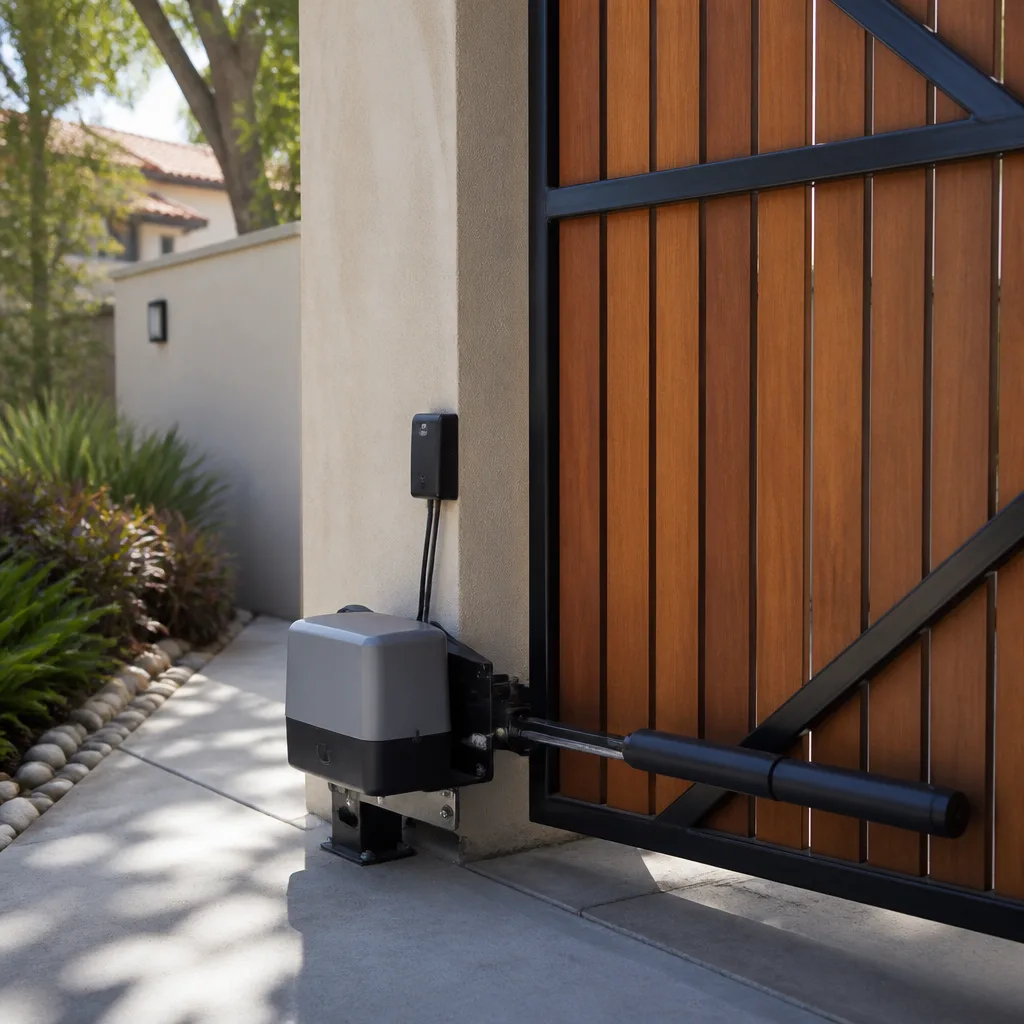
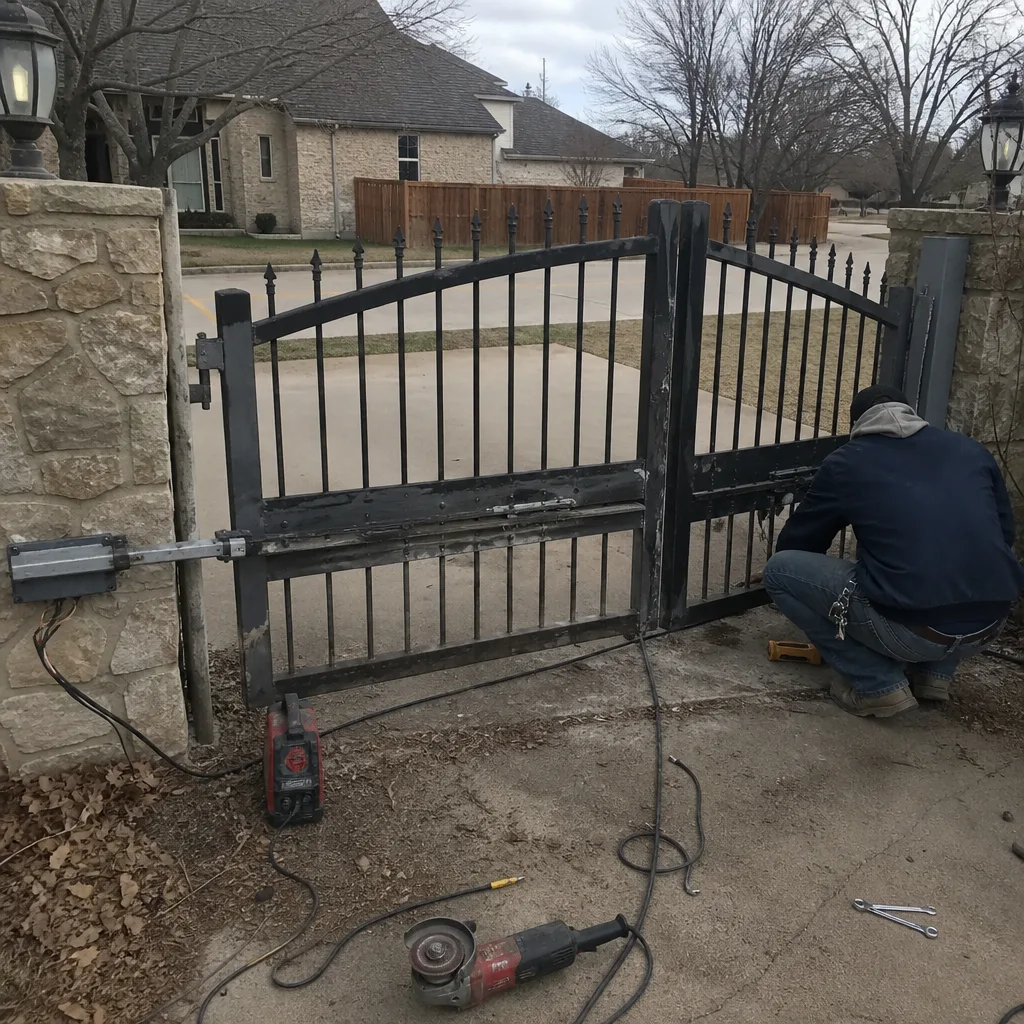 Before
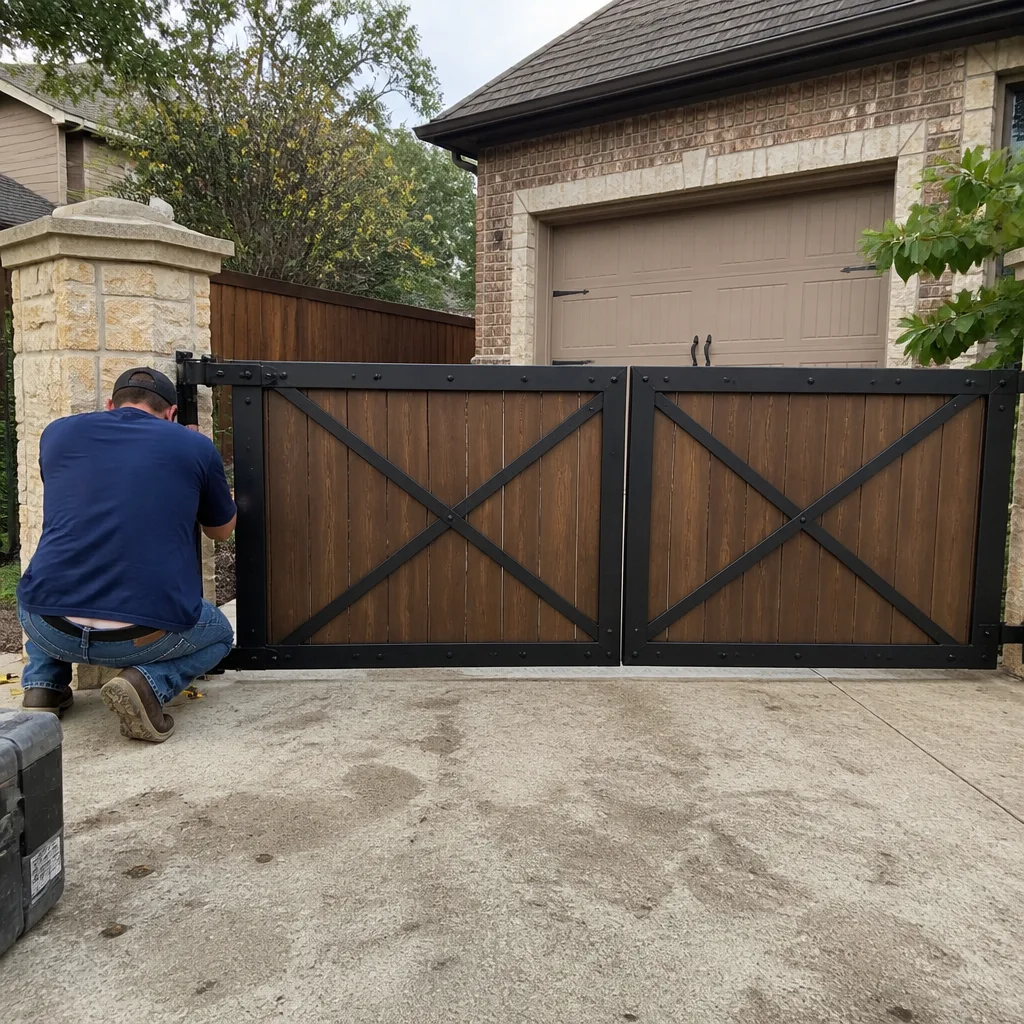 After
After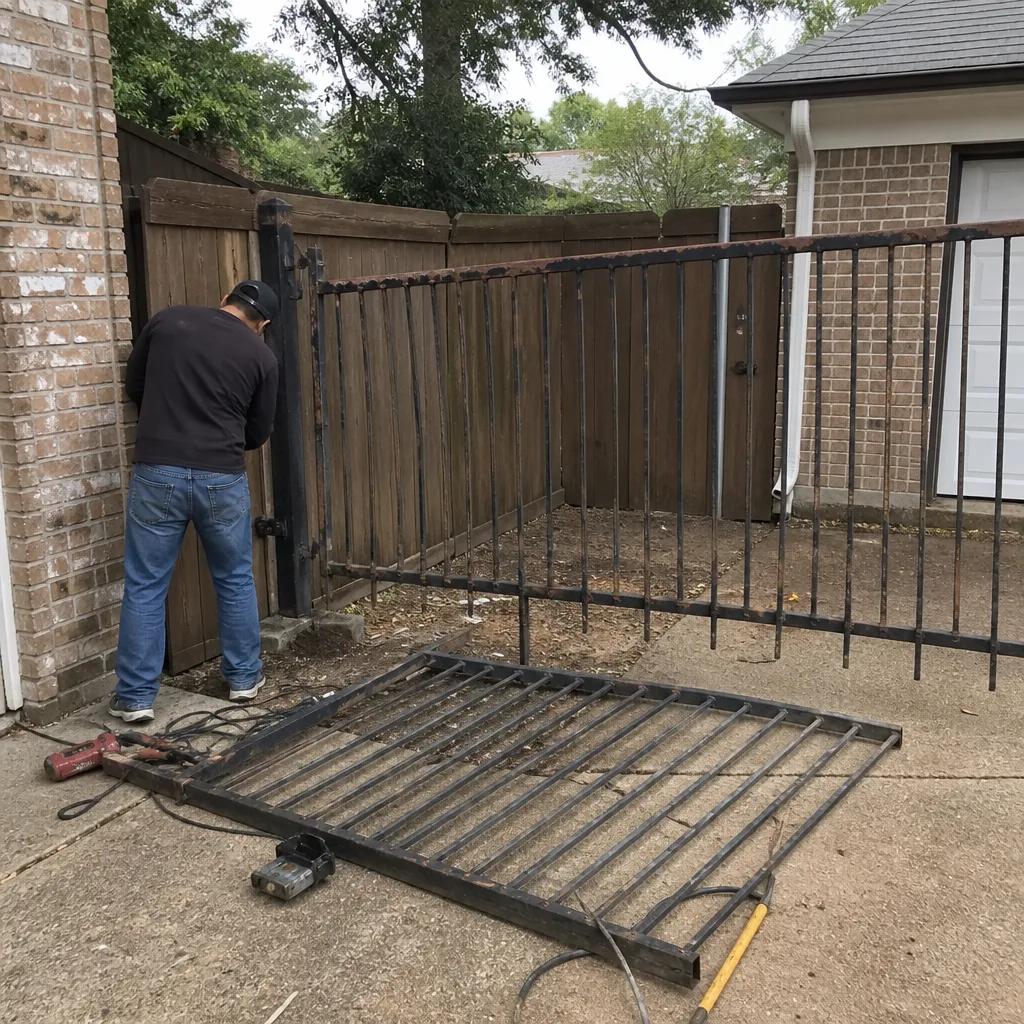 Before
 After
After Before
 After
AfterSeasonal Gate Repair Care for Fort Worth: Year-Round Homeowner’s Guide
Most gate failures in Fort Worth don’t happen in February. They begin in October, bake silently through July, and announce themselves the first time you need the gate to close against a north wind and it won’t. In our 42 years working on driveway and estate gates across this city, we’ve learned that the difference between a gate that lasts fifteen years and one that needs a new motor every three comes down to the twelve months between repairs, not the repairs themselves. This guide walks you through what Fort Worth’s climate actually does to your gate, season by season, and what you can do about it. You don’t need to be mechanically inclined. You need to know what to watch for and when to call someone who is.
Quick Answer
Seasonal gate care in Fort Worth means preparing for two punishing stretches: the July-August heat that degrades motors, capacitors, and plastic gears, and the February-April storm season that fills tracks with silt, waterlogs electronics, and exposes weakened hinges and welds. A homeowner can handle monthly visual checks and light lubrication, but spring tension adjustment, motor diagnostics, and any repair involving high-tension components should go to a licensed professional. Budget for one professional tune-up per year, ideally in April or October.
Table of Contents
- What Fort Worth’s Climate Actually Does to Your Gate
- Spring: Storm Season Preparation (March-May)
- Summer: Heat Protection for Motors and Electronics (June-September)
- Fall: Structural Inspection and Lubrication (October-November)
- Winter: Cold Snaps, Wind, and Battery Health (December-February)
- The 10-Minute Monthly Gate Check
- Repair or Replace: How to Decide
- What a Professional Seasonal Tune-Up Should Include
What Fort Worth’s Climate Actually Does to Your Gate
Fort Worth sits in a climate that punishes gates in specific, predictable ways. We see it every week in neighborhoods from Ridglea to Wedgwood, from Ryan Place to Heritage. The city averages 230-plus sunny days a year, and while that’s pleasant for people, direct sun on a steel gate panel can push surface temperatures past 150°F in July. Behind that panel sits your gate motor, and inside that motor are capacitors, circuit boards, and plastic drive gears. Heat is the number one killer of gate automation in Tarrant County, and it works slowly. A motor that runs hot one summer may not fail until the next, but the damage is cumulative.
The second force is wind. Fort Worth is not called Cowtown by accident, and the open terrain around Eagle Mountain Lake, Benbrook, and Saginaw means sustained winds that push against a closed gate leaf hour after hour. Every wind gust applies load to the hinges, the gate posts, and the motor’s internal gearing. Over years, this load elongates hinge pin holes, cracks welds at stress points, and causes the motor to work harder than it was designed to. We regularly see gates in the Como neighborhood and along the Trinity Trails corridor where wind exposure has created racking, a condition where the gate leaf sags slightly out of square and the latch no longer lines up with the receiver.
The third factor is soil. Much of Fort Worth sits on expansive clay soil, the kind that swells after spring rains and contracts during summer drought. Gate posts set in concrete can heave or settle, throwing the entire gate out of alignment by a quarter inch or more. In neighborhoods like Fairmount and Mistletoe Heights, where homes and gates are often 70 to 90 years old, this soil movement is a constant background issue that shortens the life of hinges and motors alike. A gate that was perfectly level in March may be visibly strained by August.
None of this is cause for alarm. It is cause for a routine. A gate is a machine, and machines in harsh climates either get maintained or get replaced. The sections below give you a season-by-season routine that fits the way Fort Worth weather actually behaves.
Spring: Storm Season Preparation (March-May)
Spring in Fort Worth is when your gate earns its keep. March through May brings the city’s most volatile weather: heavy thunderstorms, hail, high winds, and the occasional tornado warning. A gate that fails during a storm becomes more than an inconvenience. It becomes an open breach in your perimeter at the exact moment you want it closed. Spring preparation is about water management, wind resistance, and making sure the gate is anchored to the ground the way it should be.
Spring Maintenance Steps
- Clear the track and the gate path. Winter debris, leaves, and silt from February rains accumulate in slide-gate tracks. Use a leaf blower or stiff brush to clear the entire length of the track. Check for pebbles that can jam the rollers. On swing gates, cut back any ground cover or low branches that have grown into the gate’s arc. Fort Worth red-tip photinia and wax myrtle grow fast in April; they are among the most common obstructions we see.
- Inspect the posts for movement. Grasp the gate post and rock it firmly. You’re looking for any give at the base. After a wet winter on clay soil, posts can loosen. A post that moves more than a quarter inch needs professional attention before it becomes a full rebuild.
- Check drain holes and weep holes. Gate motors and control boxes often have small drain holes at the bottom of their enclosures. If these clog with dirt or insect nests, water from a spring downpour can pool inside and short out the board. Clear them with a small screwdriver or a pipe cleaner.
- Test the safety edges and photo eyes. Every automated gate should have safety entrapment protection. Run the gate and put your hand in front of the photo eye. The gate should stop and reverse. Do the same with the safety edge if your gate has one. This is not just a maintenance item; it’s a safety requirement.
- Lubricate hinge pins and rollers. Use a dry silicone spray or white lithium grease on hinge pins, roller bearings, and the gate latch. Avoid heavy grease, which collects Tarrant County dust and turns into grinding paste. Two or three sprays per pivot point is enough.
If the gate struggles to open after a heavy rain, you likely have water intrusion in the motor or a failing capacitor. That’s the time to call before the problem spreads. Ironworks Gate Co. offers a $89 Seasonal Tune-Up that covers this entire spring checklist, plus a load test on the motor. A live person answers the phone 24 hours a day at (817) 562-7979, so you don’t have to wait until Monday if a Saturday storm leaves your gate half-open.
Summer: Heat Protection for Motors and Electronics (June-September)
Fort Worth summers are brutal on gate automation. When the air temperature climbs past 100°F, the operating temperature inside a gate motor enclosure can exceed 140°F, and that’s on a day with no direct sun. In direct sun, 160°F is not unusual. At those temperatures, three things happen: capacitors begin to degrade, plastic gears soften under load, and circuit-board solder joints expand and crack. Most of the motor failures we replace in August and September started as heat damage accumulated over two or three summers. The motor doesn’t fail on the hottest day. It fails a few weeks later, when the damage has had time to complete its work.
Heat-Proofing Steps for Summer
- Check ventilation. If your gate motor is housed in a metal enclosure, make sure the enclosure’s vents are clear and unobstructed. In newer installations, motors are sometimes tucked into tight corners or behind landscaping that blocks airflow. Trim anything that blocks the enclosure’s breathing. On older installs where the motor is mounted directly to a sun-facing steel panel, consider having a shade shield installed.
- Test the motor’s thermal cutout. On a hot afternoon, run your gate through two or three full cycles in a row. If it stops mid-cycle and refuses to respond for five or ten minutes, the thermal overload protection is tripping. That tells you the motor is running hotter than it should. It’s a warning sign, not a failure. Ignore it and the next failure will be permanent.
- Watch for slow operation. Heat increases electrical resistance in wiring and reduces motor output. If your gate moves 20% slower in late July than it did in April, the heat is taking a toll. Slow operation is a diagnostic signal, and it’s a good reason to call for a professional load test before the heat finishes the job.
- Check the battery backup. Many opener models, including units from Ghost Controls and DoorKing, offer battery backup for power outages. Fort Worth summer thunderstorms cause frequent brief outages, and a dead backup battery means your gate won’t move when the power drops. Heat shortens battery life. Test the backup by unplugging the opener and running the gate on battery power. If it won’t run a full cycle, the battery is due for replacement before storm season peaks.
One Fort Worth-specific note: if your gate faces west, it absorbs the harshest afternoon sun in the city. Homes in the Ridglea Hills and Arlington Heights neighborhoods especially see elevated motor failure rates on west-facing gates. A simple louvered vent at the top of the motor enclosure or a shade panel between the gate and the motor can add years to the motor’s life. In our experience, a $150 shade fix in June prevents a $900 motor replacement in September. That’s the math of summer gate care in Fort Worth.
Fall: Structural Inspection and Lubrication (October-November)
Fall is the single most important season for gate maintenance in Fort Worth. The weather is mild, the ground is dry, and any problem found in October can be fixed before winter arrives. It’s also the time when a year’s worth of accumulated wear becomes visible if you know what to look for. This is the season where we recommend every homeowner schedule a professional structural inspection, whether or not the gate is showing symptoms.
Fall Inspection Checklist
- Weld integrity. Walk around every joint and weld on the gate frame with a flashlight. Look for hairline cracks, rust weep lines, or flaking paint at stress points: the bottom hinge, the latch side, and anywhere a decorative element meets the frame. A crack in October is a $200 weld repair. The same crack after a February ice storm is a broken gate leaf and a much larger bill.
- Hinge wear. Open the gate halfway and lift the free end. More than a quarter inch of vertical play means the hinge bushings are worn. Worn bushings transfer uneven load to the motor and accelerate gear wear. In our service area, hinge bushing replacement is one of the most common repairs we perform in October and November.
- Latch and receiver alignment. A gate that needs a shove to latch has likely sagged over the summer. The sag may be from soil movement, hinge wear, or structural fatigue. Catching it now means a simple adjustment. Waiting until the gate won’t close at all means a rebuild.
- Full lubrication pass. Fall is the time for a thorough lubrication of all moving parts: hinge pins, roller bearings, latch internals, and the drive screw if your gate uses a screw-driven linear actuator. Use a dry lubricant on anything exposed to dust. This one step does more to extend gate life than anything else a homeowner can do.
- Electronics inspection. Open the control box and look for signs of moisture, insect activity, or rodent nesting. Fort Worth’s fall weather drives field mice looking for warm spaces, and a control box is an inviting winter home. Look for chewed wires, droppings, or nesting material. A $40 rodent guard installed in November prevents a $400 board replacement in February.
Autumn is also the right time to replace your keypad or intercom system if it’s been fading, and to review your access-control setup before holiday visitors arrive. This is not the season to defer anything you find. The window of good working weather in Fort Worth closes fast, and a problem that’s merely annoying in October is genuinely dangerous in December when it’s dark, cold, and raining.
Winter: Cold Snaps, Wind, and Battery Health (December-February)
Fort Worth winters don’t bring the sustained ice of Minnesota, but they bring something subtler: freeze-thaw cycles that work on concrete and metal with surprising force. A winter day in Fort Worth can swing from 28°F at dawn to 70°F by mid-afternoon. Every cycle of freezing and thawing causes materials to expand and contract at different rates, and over repeated winters this movement loosens bolts, opens cracks in caulk and gaskets, and stresses the connections between gate posts and their concrete footings. Winter gate care is less about active maintenance and more about vigilance and emergency readiness.
Winter Preparation Steps
- Seal the electronics. Before the first hard freeze, open the control box and inspect the gasket around the lid. A dried-out gasket lets moisture in when a cold snap is followed by a warm rain, and condensation forms inside the enclosure. Replace gaskets that are cracked or compressed. Apply a thin bead of exterior silicone caulk where conduit enters the box.
- Test the battery backup (again). Cold weather reduces battery capacity, and winter storms are the most likely time to lose power. A battery that tested fine in September may be marginal in January. Run a full cycle on battery power after the first freeze. If the gate runs slowly or stops partway, the battery should be replaced.
- Watch the track for ice and debris. On mornings after a freeze, check the slide-gate track before you operate the gate. Ice in the track can cause the rollers to bind. Broken tree branches after winter windstorms are another common obstruction. Clearing the track before operating the gate takes thirty seconds and prevents a jammed roller or a burned motor.
- Check wind load on swing gates. Fort Worth’s strongest sustained winds arrive between December and March, and they hit swing gates at the worst possible angle. A swing gate caught by a 40 mph wind gust experiences load far beyond its design spec. Long-term wind exposure is the leading cause of hinge-post failure in older gates. If your gate has any noticeable play at the hinges, winter is the wrong time to ignore it. The load on a loose hinge increases geometrically as the wind rises.
- Keep the gate in service. Gates that sit idle all winter are more likely to seize than gates used daily. Run your gate through a full cycle every day or two, even if you don’t need to. Regular operation keeps grease distributed and keeps contacts clean. It also tells you the gate is working before you actually need it.
One caution directly from our service files: do not try to force a gate open when it is frozen or binding. The motor will draw maximum current, and that is how motors burn out and circuit boards fail. If the gate won’t move, call a professional. We have answered emergency calls in every Fort Worth neighborhood from Ryan Place to North Richland Hills on frozen January mornings, and the fix is always cheaper when the owner hasn’t already forced the gate and caused secondary damage. A live person answers the phone 24 hours a day at (817) 562-7979, and on storm days that matters more than any written guarantee ever will.
The 10-Minute Monthly Gate Check
The seasonal routines above matter, but the monthly check is what keeps small problems small. Every 30 days, regardless of season, walk out to your gate with these five checks. The whole routine takes ten minutes and requires no tools beyond your eyes and ears.
- Listen to the gate run. Run the gate through a full open and close cycle and listen. A healthy gate makes a steady, even sound. Grinding, clicking, or a change in pitch from last month is an early warning. This is how you catch a failing bearing before it takes the motor with it.
- Watch the gate move. Is the gate moving at its normal speed? Does it hesitate, jerk, or slow down at any point in the cycle? Speed changes are one of the clearest indicators of developing problems in the motor or the mechanical linkage.
- Test the safety functions. Put your hand in front of the photo eye and confirm the gate stops. Test the keypad and any intercom. Confirm the manual release function works. These are safety features, and they need to work every month, not just once a year.
- Scan the gate’s structure. Look at the hinges, the welds, the posts, and the ground around the gate. New cracks, new rust, new leaning, or new gaps around the post base are all signs to investigate. Walk both sides of the gate. Most structural failures are visible for months before they become critical.
- Clear the gate’s path. Remove sticks, rocks, leaves, toys, and anything else that has found its way into the gate track or the swing arc. The most common cause of gate damage we see in Fort Worth is something simple and preventable: a toy left in the track, a branch dropped by a storm, a rock kicked up by a lawn mower.
If every monthly check comes back clean, your seasonal maintenance will be straightforward. If any check reveals something off, note it and address it. The goal is never to be surprised by a gate that won’t open. A gate is a predictable machine. It tells you when it’s sick. The monthly check is how you listen.
Repair or Replace: How to Decide
Fort Worth homeowners frequently ask us the same question: is it worth fixing this gate, or should I just replace it? The honest answer is that most gates should be repaired, not replaced. A well-built steel gate has a service life of 30 to 50 years, and if the frame, hinges, and posts are sound, everything else can be replaced economically: motors, control boards, keypads, wheels, safety sensors. Replacement becomes the right call when one of three conditions applies.
First, when the gate frame itself is rusting through. Surface rust is treatable. Deep pitting, holes, or structural rust that has weakened the frame tubing means the gate has reached the end of its structural life. No repair will restore strength that has already been lost. Second, when repair costs approach 60-70% of full replacement cost and the gate is more than 25 years old. At that point, you’re putting a new drivetrain on an old frame, and the economics stop making sense. Third, when the gate’s function has changed. If your driveway now sees heavier traffic than it did twenty years ago, or if you’re adding a keypad, intercom, or smartphone access, a new installation built for those systems may be the smoother path. Ironworks Gate Co. has installed Ironworks Gate Co. home gates across Fort Worth for over four decades, and we’ll give you a straight answer on repair versus replacement. No pressure either way.
For most homeowners, the better annual investment is a professional tune-up. At $89 for a seasonal tune-up, you’re getting an inspection, lubrication, adjustment, and a written report on the gate’s condition, which gives you a documented service history for resale and insurance purposes. A gate that sees an annual tune-up typically outlives an untuned gate by a decade. That’s the real math.
What a Professional Seasonal Tune-Up Should Include
A tune-up is not just a lubrication visit. A proper seasonal tune-up on a Fort Worth gate should be systematic and thorough, and you should get a written report when it’s done. Here’s what an honest tune-up covers, and what to look for when you’re comparing service providers in Tarrant County.
- Full mechanical inspection. Hinges, rollers, brackets, welds, posts, latch, and track are examined for wear, looseness, and cracks. This is the core of the service.
- Load and cycle testing. The motor is run through multiple complete cycles while its current draw is measured. High current draw under normal load is the earliest reliable indicator of motor wear. This test catches motors before they fail.
- Safety system verification. Photo eyes, safety edges, auto-reverse, and any entrapment sensors are tested and adjusted. This is not optional. Gate safety is a legal and insurance issue, not a preference.
- Electrical connection inspection. Every terminal, wire nut, and splice in the control box gets checked for heat damage, corrosion, and loose connections. A loose connection is a fire risk and a common cause of intermittent failure.
- Full lubrication service. Every pivot point gets the appropriate lubricant, not just whatever spray can happens to be on the truck.
- Written condition report. You should receive a dated summary of what was checked, what was found, and what may need attention in the next 12 to 24 months. This record is valuable for warranty claims, home sales, and your own planning.
At Ironworks Gate Co., the $89 Seasonal Tune-Up includes all of the above, performed by a background-checked, uniformed technician who works on nine major gate-automation brands, including LiftMaster, Elite, BFT, and more. We service the brands found in most Fort Worth driveways, which means the first visit is usually the last visit. And every tune-up and repair we perform falls under the 90-Day Done Right Promise. If it’s not right, we come back and make it right. That promise is written, and it applies to every job. This is what we mean when we say we stand behind it.
Common Mistakes to Avoid
- Using the wrong lubricant. WD-40 is a penetrant, not a lubricant, and it will wash out the grease in your hinge pins and leave them drier than before. Fort Worth dust plus WD-40 creates a grinding paste that accelerates wear. Use dry silicone or white lithium grease instead.
- Ignoring a slow gate. A gate that moves slower than it used to is asking for help. In our experience, half of all motor replacements in Fort Worth could have been avoided if the homeowner had called when the gate first slowed down, rather than waiting until it stopped altogether.
- Forcing a stuck gate. When a gate won’t move, the motor should not be asked to push harder. Forcing a binding gate overloads the motor and control board, turning a simple track-clearing job into a $700 electronics repair. Disconnect the opener and call a professional.
- Painting over gate hardware. A fresh coat of paint on the hinges and latch looks good for a season and then causes problems. Paint clogs hinge pins, prevents lubrication from reaching bearing surfaces, and peels into the track. Mask off hardware before painting.
- Skipping the yearly tune-up. The most common mistake, and the most expensive. A gate that appears fine is still wearing, and the wear is cumulative. The $89 annual tune-up is the cheapest insurance you can buy on a machine that costs thousands to replace.
- Letting landscaping grow into the gate path. Fort Worth’s growing season is long, and by late summer, hedges and vines have often crept into the gate’s operating zone. Vegetation catches on the gate, adds resistance to the motor, and damages paint. Trim the gate’s arc every month during the growing season.
- Deferring safety system repairs. A gate with a faulty photo eye or safety edge is a hazard, not just an inconvenience. Anyone using the gate is at risk of entrapment. Safety repairs are not optional, and they’re not the place to save money.
When to Call a Professional
Some gate work is simple enough for a careful homeowner. Monthly visual checks, track clearing, and light lubrication fall into that category. Other work should never be attempted without training and proper equipment. Call a professional when your gate exhibits any of the following: a motor that runs but won’t move the gate, visible damage to hinges, wheels, or posts, a gate that has come off its track or shifted in its frame, electrical problems including tripped breakers or burned smells at the control box, high-tension springs or cables that are visibly loose or broken, or any safety system failure. These problems involve forces, weights, and voltages that can cause serious injury if handled incorrectly. In Fort Worth, spring and winter weather push gates toward failure, and a trained eye catches trouble while it’s still small. Ironworks Gate Co. offers free estimates throughout Fort Worth. Call (817) 562-7979 and a live person will answer, any hour, any day.
Frequently Asked Questions
A gate in Fort Worth should receive a professional tune-up once a year, ideally in the fall before winter winds and freeze-thaw cycles start working on the structure, or in the spring after storm season has passed. Our $89 Seasonal Tune-Up covers inspection, lubrication, adjustment, safety testing, and motor load testing, and it’s the most cost-effective way to extend gate life. Call (817) 562-7979 to schedule a tune-up at your convenience.
Gate repair in Fort Worth typically ranges from $150 for a hinge bushing or minor adjustment to $900 or more for a motor replacement, with most repairs landing between $250 and $450. Every job at Ironworks Gate Co. is quoted and agreed upon before any work starts, so the price on the invoice is the price you approved. We also offer $50 Off Any Repair Over $250 for our Fort Worth customers.
Yes. A live person answers our phone 24 hours a day, 7 days a week, and we respond to stuck-open and stuck-closed gates as emergency calls across Fort Worth. A gate that won’t close is a security and safety issue, especially in neighborhoods with alley access and detached garages. Call (817) 562-7979 and describe what’s happening. We’ll get someone to you.
A full gate installation includes the gate leaf and frame, posts set in concrete, hinges, latch, an operator matched to the gate’s weight and duty cycle, safety entrapment protection (photo eyes or safety edges), and the electrical connection. We install and service nine opener brands, including DoorKing, Elite, and Mighty Mule, and every installation carries the written 90-Day Done Right Promise. Estimates are free, and the price is set before work begins.
Heat increases electrical resistance in the motor windings and wiring, which reduces the motor’s available output, so a gate that runs normally in April can be noticeably slower in August. If the slowdown is minor and consistent, it’s likely normal heat effect. If the gate slows significantly or stops mid-cycle, the motor or a capacitor is failing from accumulated heat damage. A load test tells us which. Call (817) 562-7979 for a diagnosis.
Yes. We handle the complete installation, including the electrical power run from your panel to the gate location, the conduit and wiring, the safety edges or photo eyes, and any keypad, intercom, or access-control integration. One team handles the welding, the electrical, and the automation, so there’s no finger-pointing between trades. This is the advantage of a gate specialist over a handyman or a general contractor.
The Bottom Line
A gate in Fort Worth is a machine living in a hostile environment: summer heat that cooks electronics, spring storms that soak them, clay soil that shifts them, and winter winds that test every hinge and weld. The difference between a gate that lasts fifteen years and one that lasts fifty is the routine: a ten-minute monthly check, a seasonal tune-up once a year, and respect for the machine’s limits. Most gates should be repaired, not replaced, when the right person looks at them early enough. Ironworks Gate Co. has kept Fort Worth’s gates working for over four decades with a straightforward standard: the job done right, the price set upfront, and the work backed in writing. If your gate needs attention, you know where we are.
Written by Victor Salinas, Owner at Ironworks Gate Co., serving Fort Worth since 2013.