
Last updated August 25, 2026
Free on-site gate assessment - hinges, posts, and your LiftMaster or Nice gate operator checked before anything is quoted
The assessment is free and the quote is the invoice.
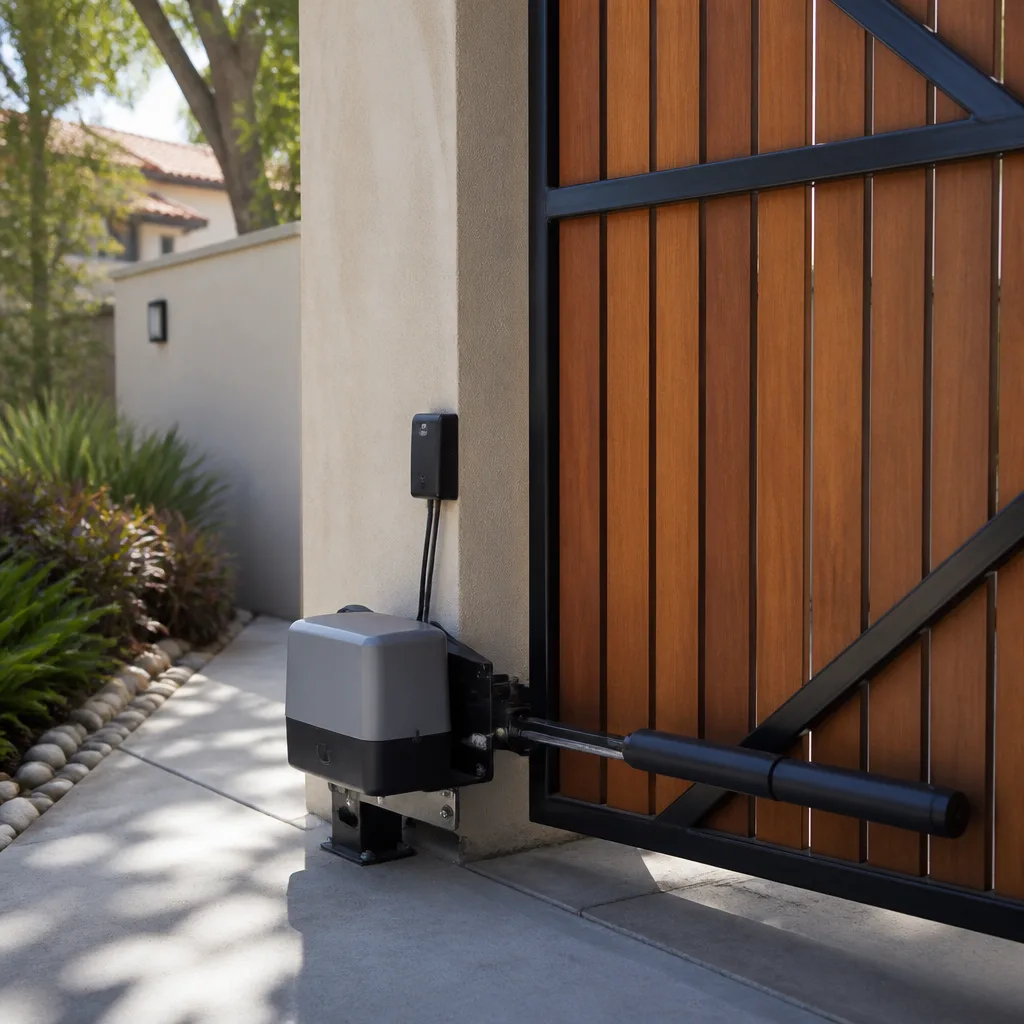
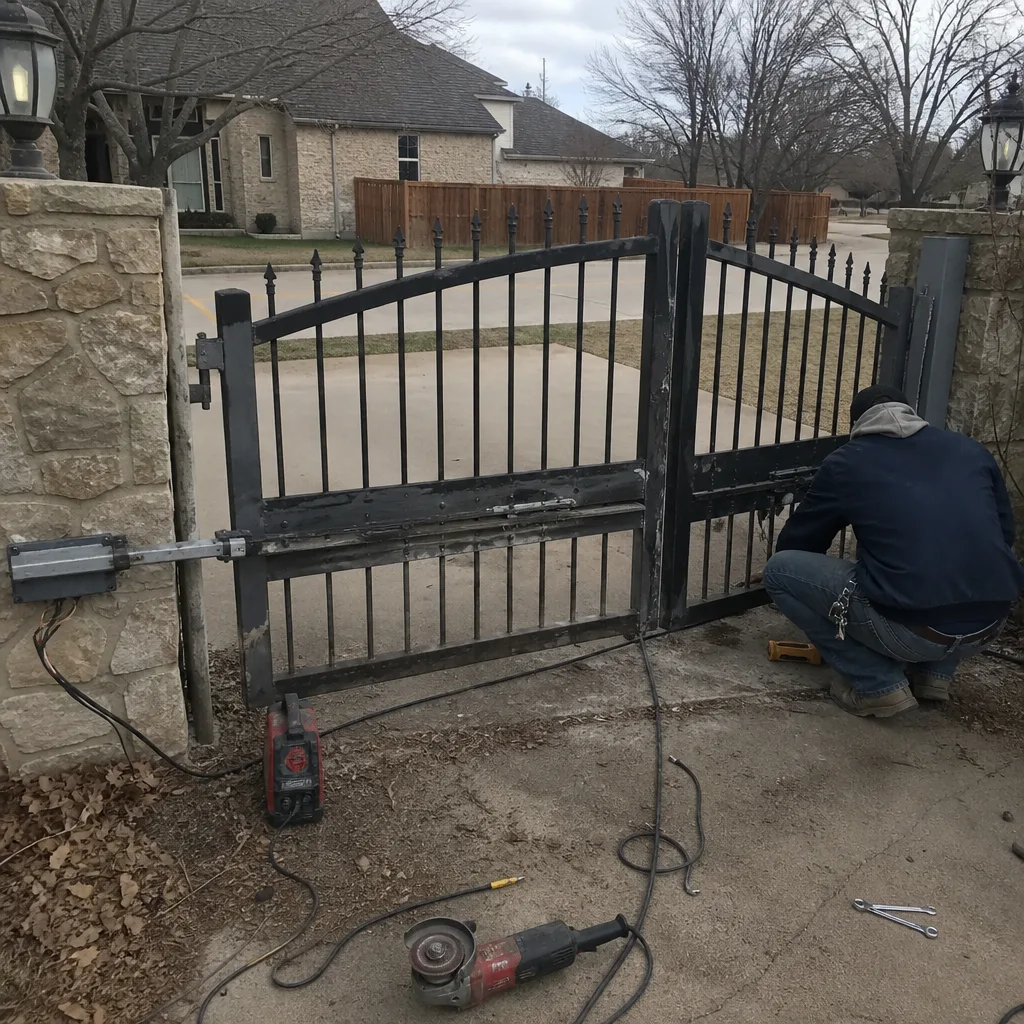 Before
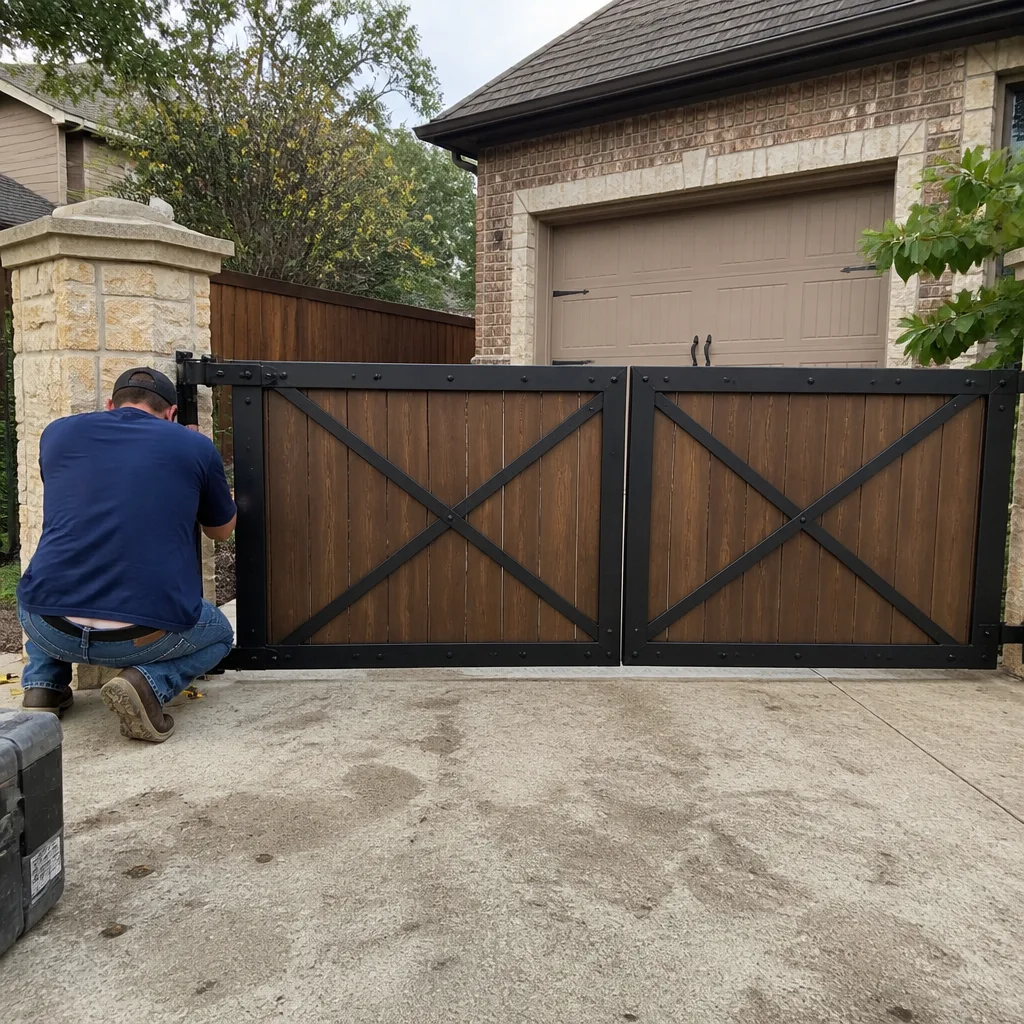 After
After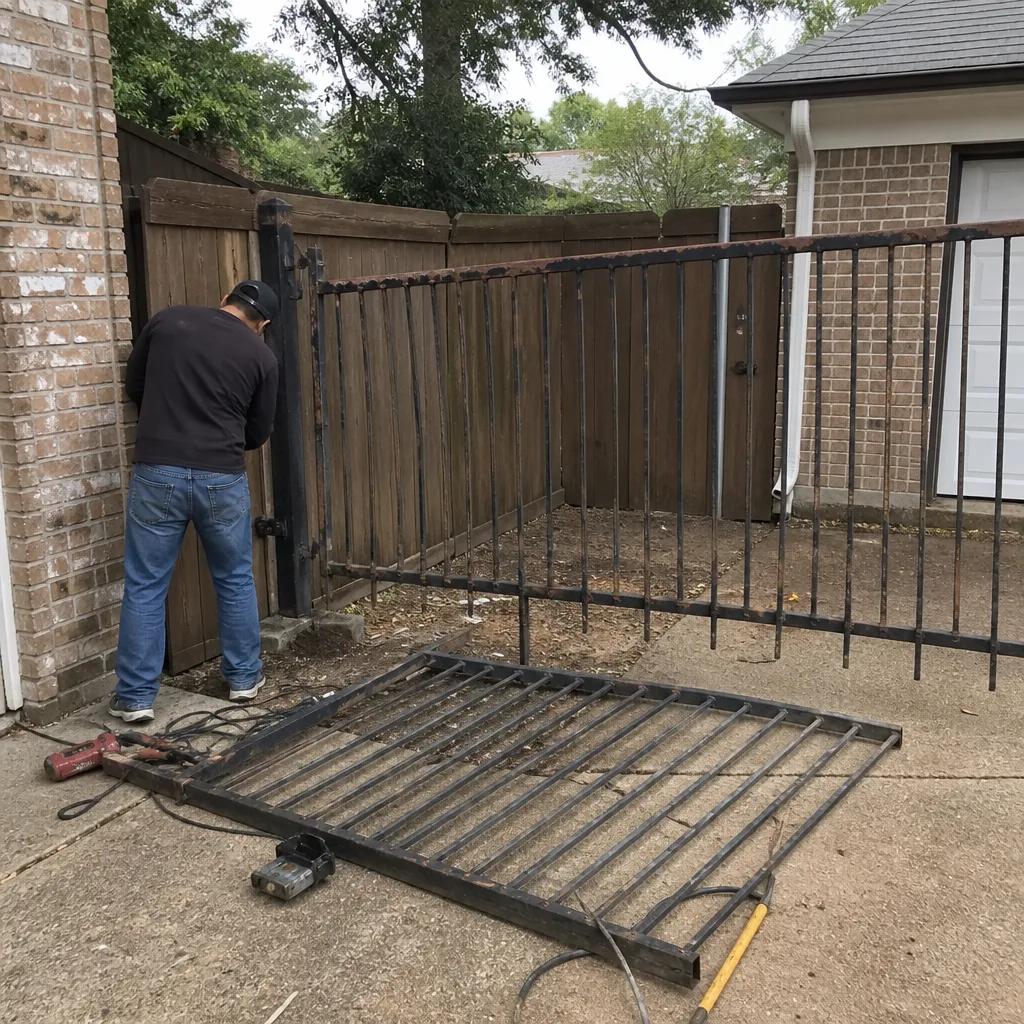 Before
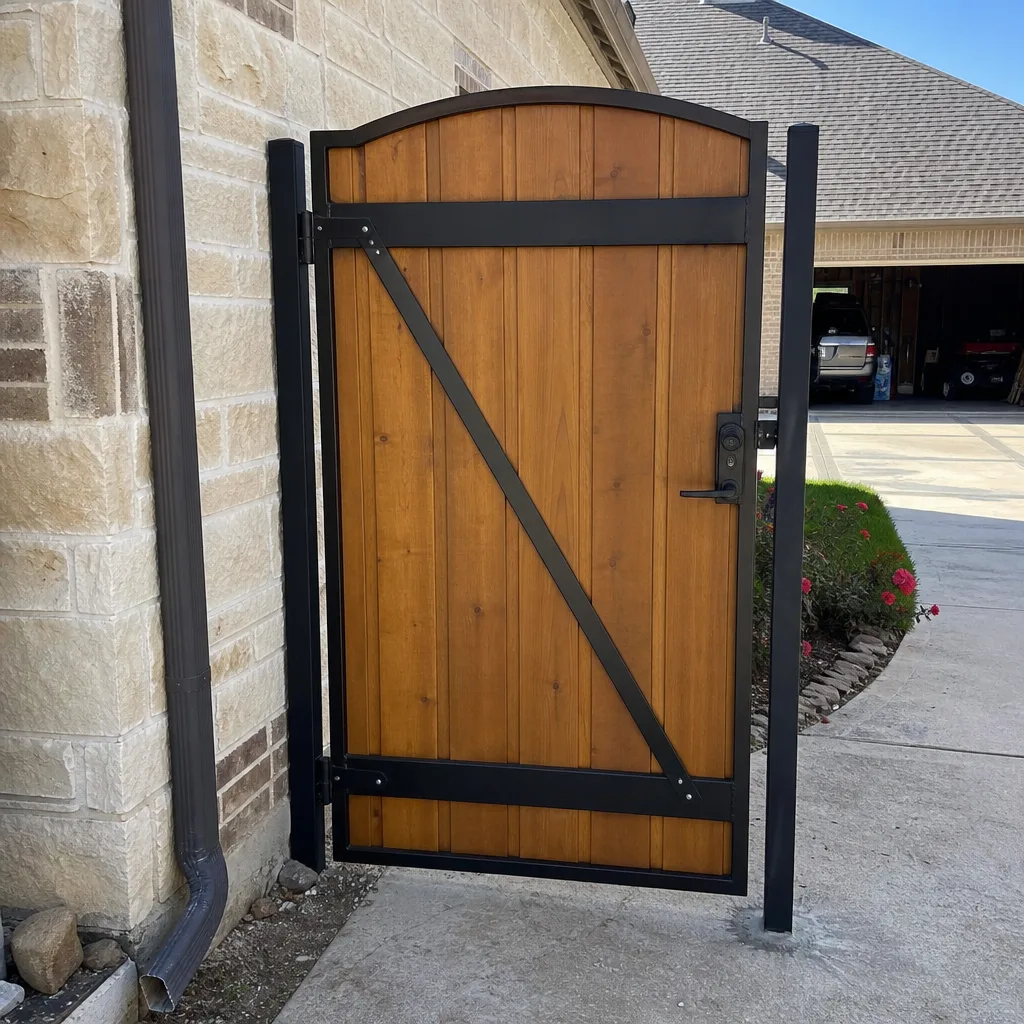 After
After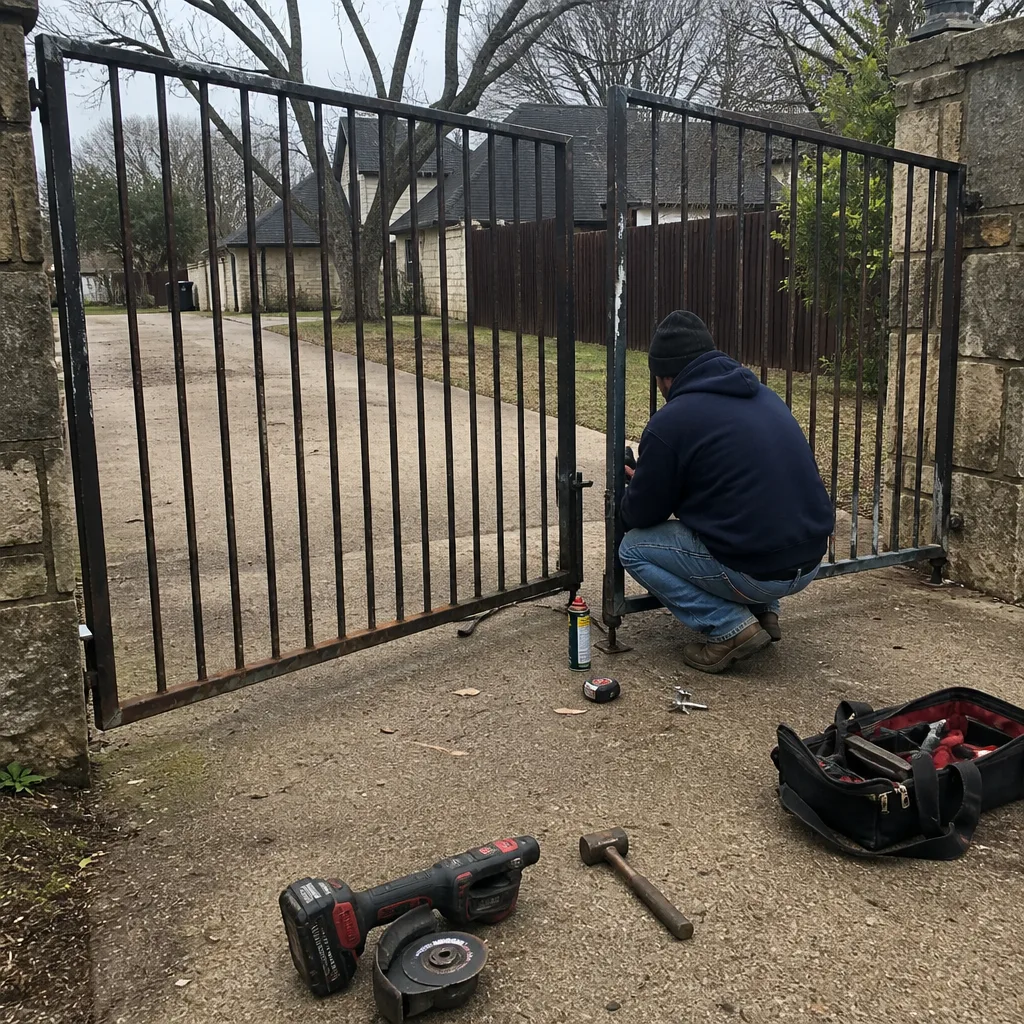 Before
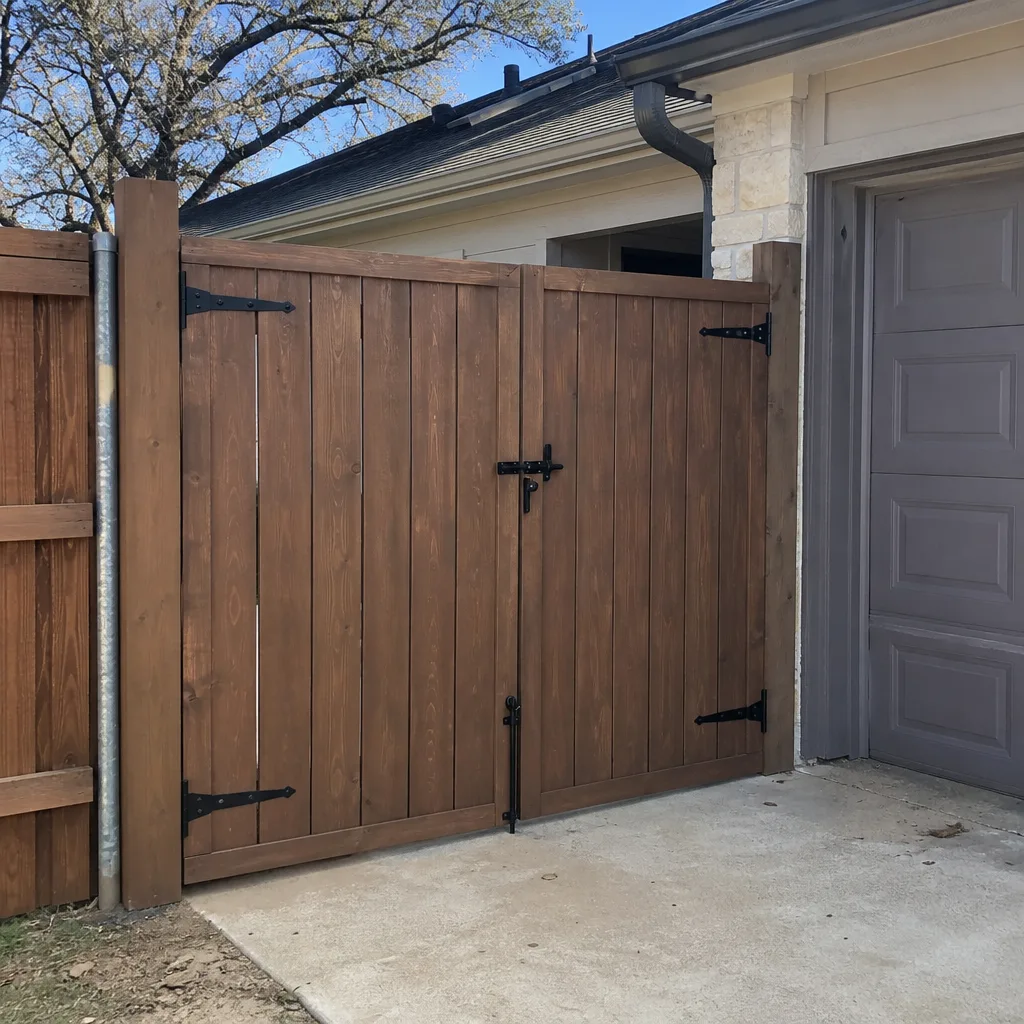 After
AfterGate Repair Maintenance Checklist for Fort Worth Homeowners
Most gate failures in Fort Worth do not begin with a broken motor or a snapped weld. They begin with neglect that costs a few minutes to prevent. A hinge that was never greased in 2016 seizes in 2026. A track that collected Tarrant County clay for three years finally binds the rollers. We have pulled dead leaves, mud dauber nests, and fire ant mounds out of operator boxes all over this city. This guide lays out the exact maintenance routine we follow on our own service calls. You will learn what to check monthly, what Fort Worth’s weather does to gates, and which jobs are safe for a homeowner versus which ones need a trained hand.
Quick Answer
Most Fort Worth gates need a 15-minute monthly inspection covering hinges, rollers, track, and operator function, plus a deeper seasonal service in spring and fall that addresses battery health, limit settings, and safety edges. Homeowners can handle cleaning, lubrication, and visual checks. Motor diagnostics, electrical work, and any repair involving tension springs or high-tension cables should go to a professional.
Table of Contents
- The Monthly Inspection: What to Check in 15 Minutes
- How Fort Worth Weather Attacks Your Gate
- Lubrication: Where to Grease and What to Skip
- Motor and Operator Maintenance for Homeowners
- Safety Edges, Photo Eyes, and Auto-Reverse: Testing Them Properly
- The Spring and Fall Seasonal Service Routine
- Caring for Welded Steel and Wrought-Iron Gates
- Wood Gate Considerations for Fort Worth’s Climate
- Common Mistakes to Avoid
- When to Call a Professional
- Frequently Asked Questions
- The Bottom Line
The Monthly Inspection: What to Check in 15 Minutes
A gate is a moving piece of machinery bolted to your property line. It weighs 300 to 1,200 pounds, and it opens and closes thousands of times a year. No machine that works that hard lasts without someone looking at it. The monthly inspection below takes about 15 minutes and catches most problems while they are still cheap to fix. We recommend doing it on the first Saturday of every month so it becomes a habit.
Steps for a Basic Monthly Inspection
- Open and close the gate manually three full cycles. Pull the release handle on the operator first so you are moving the gate by hand, not fighting the motor. Listen for grinding, squeaking, or a rough spot in the travel. A rough spot today is a failed roller in six months.
- Watch the gate as it moves. Stand at the hinge end and sight down the top rail. A gate that sags even half an inch is telling you something: worn hinge, shifted post, or a weld that is starting to let go.
- Inspect every hinge with a flashlight. Look for orange rust dust weeping out of the hinge pin. That dust is metal grinding itself away. Grease it now, replace it later if it has play.
- Check the track and rollers. Clean out gravel, leaves, and dirt. Fort Worth properties with caliche driveways track a fine white grit into the track that acts like sandpaper on rollers.
- Test the auto-reverse. Put a closed cardboard box or a 2×4 in the gate’s path and close the gate on it. The gate should reverse before it crushes the box flat. If it does not, the safety system has failed and you have a genuine hazard on your hands.
- Check the operator box for residents. Open the cover and look for wasp nests, mud dauber tubes, roach carcasses, or chewed wires. In Fort Worth, fire ants love the warmth of a motor box. A $12 can of contact cleaner keeps them from shorting a board.
- Make a note. Write down anything that changed since last month. A noise that gets louder, a gate that is slower, a remote that only works from 30 feet instead of 60. Trends tell you more than any single symptom.
Fifteen minutes, once a month. That routine catches most gate repairs before they become gate replacements. We have seen gates in Arlington Heights that ran 25 years because the homeowner did this, and gates in Saginaw that died at 8 because nobody ever opened the operator box.
How Fort Worth Weather Attacks Your Gate
Every climate has a signature way of breaking outdoor machinery. On the Gulf Coast it is salt. In Minnesota it is freeze-thaw. In Fort Worth, it is a combination of three things: punishing summer heat, sudden heavy rain, and the expansive clay soil that shifts every foundation in Tarrant County. Your gate sits at the intersection of all three.
The heat is the one that surprises people. A black iron gate on a 102-degree August afternoon can reach 150 degrees on the surface. That heat does two things. It bakes the grease out of hinges and turns it into a hard varnish. And it stresses the motor, which is working against a gate that has expanded ever so slightly in the sun. Operators that run fine at 10 in the morning overheat at 4 in the afternoon. If your gate only acts up on the hottest days, that is a motor telling you it is near its duty cycle limit.
The clay soil matters more than most homeowners realize. Fort Worth sits on the Eagle Ford Shale formation, and the soil expands and contracts dramatically with moisture. Gate posts set in concrete can heave or lean as the ground moves underneath them. A post that was plumb in 2015 may be a quarter-inch out by 2025. That quarter inch translates to a gate that scrapes the latch post, a gap at the bottom that changes with the seasons, and a motor that works harder than it should.
The rain pattern does not help. Fort Worth gets most of its annual rainfall in spring and fall, often in short violent bursts. A driveway gate near a low spot can see water running through the track area during a storm. That water carries silt and gravel into the operator track and leaves it there when the water recedes. Then the next dry spell bakes it in place. Cleaning the track after every heavy rain is not fussy. It is prevention.
Our advice to Fort Worth homeowners is simple: pay extra attention in May and October. Those are the months when the weather swings hardest and the gates show the most movement.
Lubrication: Where to Grease and What to Skip
Lubrication is the single most misunderstood part of gate maintenance. We meet homeowners who grease everything that moves, and homeowners who have never greased anything. Both make mistakes that shorten the life of the gate.
The rule is direct: grease the hinge pins and the roller bearings. Do not grease the track. Never grease the chain on a chain-drive operator if your gate has one. The chain is shipped with its own coating and adding oil to it just collects Fort Worth dust into grinding paste.
What We Use and Why
- Hinge pins: A lithium-based grease or a dry graphite spray. Apply twice a year, or monthly on cattle-gap driveway gates that take dust from pasture roads. One or two pumps per pin. Wipe off the excess.
- Roller bearings: A light machine oil like 3-in-1. Rollers spin thousands of times per opening and the oil film is all that stands between metal and metal. Once a month in dry season, every other month the rest of the year.
- Track: Clean it. A dry brush, then a wipe with a rag. Some installers recommend a silicone spray on the track surface. We do not. It attracts dust that becomes sludge in the summer heat.
- Operator chain (if applicable): Wipe with a dry cloth. If the chain is visibly dry and the manufacturer’s manual specifically calls for a dry film lubricant, follow the manufacturer. Most modern operators are belt or screw drive and need nothing.
One warning that applies citywide: do not use WD-40 as a hinge lubricant. It is a water displacer and a solvent, not a lasting grease. It will quiet a squeak for two weeks, then the squeak comes back worse because the WD-40 washed out whatever grease was left. In Fort Worth’s dry heat, that squeak becomes a scored hinge pin by August.
Motor and Operator Maintenance for Homeowners
The operator is the most expensive single component on most automated gates, and it is also the one homeowners ignore the longest. A good opener can last 10 to 15 years in Fort Worth conditions. A neglected one often dies at 6 or 7. The maintenance tasks below are all homeowner-safe and take less than half an hour for the season.
Homeowner-Safe Operator Maintenance
- Open the cover and clean the box. Unplug the unit first. Use a dry brush and a vacuum with a crevice tool to remove dirt, dead insects, and spider webs. Do not use a leaf blower; it shoves debris deeper into the electronics.
- Inspect the wiring. Look for cracked insulation, corrosion at the terminals, or chew marks from mice. Fort Worth is home to a healthy roof rat population, and a warm motor housing is a favorite winter nest. If you see bare copper, turn the breaker off and call a professional.
- Check the battery (if equipped). Most backup batteries last 2 to 4 years. If your gate has a battery backup and it is swollen, leaking, or more than 4 years old, plan to replace it before a storm season, not after one leaves your gate stuck open or closed.
- Test the remote range. Stand 40 feet from the operator in your car and cycle the gate. If it only works at 15 feet, the receiver board or the remote battery is fading. Replace the remote battery first; it costs four dollars and fixes half of all intermittent remote problems.
- Listen to the motor. A healthy operator makes a steady hum or a steady whir. A groaning motor on start-up, a chattering motor, or a motor that runs for two seconds and stops is sending a signal that a professional should hear.
We are trained and equipped to service nine gate-automation brands, including LiftMaster, FAAC, BFT, Linear, Viking, Ghost Controls, DoorKing, Elite, and Mighty Mule. That breadth matters because the correct diagnosis varies by brand and by model generation. A Ghost Controls residential opener fails differently from a DoorKing commercial duty cycle. The fix for one is not the fix for the other, and the wrong guess is the difference between a one-visit repair and three callbacks.
Safety Edges, Photo Eyes, and Auto-Reverse: Testing Them Properly
A powered gate without a working safety system is a machine that can crush a child, a pet, or an adult. This is not an exaggeration. Gate entrapment injuries are real, and the safety devices on your gate exist because of them. Testing these devices takes five minutes a month and is the most important maintenance you will ever do on a gate.
How to Test Each Safety Device
- Auto-reverse on contact: Close the gate on a 2×4 stood vertically, or on a sturdy cardboard box. The gate should hit the obstacle and immediately reverse direction. It should not push the obstacle, pause for two seconds, then reverse. Immediate reversal is the standard.
- Photo eye: With the gate open, break the beam with your hand or a broom handle and press the close button or use the remote. The gate should not move at all, or if already closing, should stop and reverse before touching what broke the beam. If your photo eyes are dirty, wipe the lenses with a dry cloth. Overgrown shrubs in Fort Worth yards regularly block photo eyes in spring growth season.
- Safety edge (if your gate has one): This is a pressure-sensitive strip along the leading edge of the gate. Press firmly along its entire length at several points. Each press should trigger an immediate reversal. A safety edge that is cracked, dry-rotted, or hard to the touch needs replacement; it is a consumable part in Texas sun.
- Manual release: Pull the release handle and confirm you can move the gate by hand. This is the emergency exit for a power failure, and you want to know it works before you need it. Re-engage the operator afterward and confirm the gate locks back into the drive.
If any of these tests fail, the gate is unsafe until repaired. Bypassing a failed safety device to keep the gate operational is how serious entrapment accidents happen. The math is not complicated: a gate motor that can move 800 pounds of steel will not notice an obstacle in its path. Only the safety systems stop it. Testing them monthly is not optional.
The Spring and Fall Seasonal Service Routine
Twice a year, in March and October, the monthly checklist deserves a deeper companion. We call this the seasonal service routine. It takes about two hours and it aligns with the two times of year when Fort Worth weather changes most sharply. Do it before the April storms and before the first freeze.
Spring Seasonal Service (March-April)
- Full track and roller cleaning. Remove every bit of winter grit and spring pollen. Pollen in North Texas is heavy in April, and it combines with light rain to make a yellow paste that cakes roller axles.
- Hinge inspection for play. Grab the gate at the latch end and lift. Any movement at the hinges means a worn bushing or pin. Replace before the summer heat bakes the grease out and accelerates the wear.
- Photo eye alignment check. Spring growth pushes shrubs into the beam path, and post shifting from spring rains knocks beams out of alignment. Realign and tighten the mounting brackets.
- Operator force setting check. A gate that struggles against resistance is an operator that is drawing high current. High current is heat. Heat kills motors. Let a professional confirm the force settings are appropriate.
- Terminal tightening. With the power off, tighten every wire connection in the operator box. Thermal cycling through the winter loosens screw terminals. A loose connection arcs, and an arc is a burnt board.
Fall Seasonal Service (October-November)
- Battery test and load test. If you have a backup battery, this is the time to confirm it still holds a charge under load. Eight hours is a minimum. A battery that tests fine at rest and collapses under load is a false friend.
- Weatherstripping and seals. Check the operator box gasket, the conduit entry seals, and any junction boxes. Winter rains in Fort Worth find any gap. A dry operator is a reliable operator.
- Limit adjustment check. Cold weather changes motor current draw and can affect limit repeatability. Confirm the gate fully closes against the latch post and fully opens without straining against the open stop.
- Weld inspection. Wrought iron gates in Fort Worth live outdoors year-round. Surface rust at a weld joint is normal; deep flaking rust at a stress point is not. Wire brush and touch up with a rust-inhibitive paint before winter moisture does its work.
- Remote battery replacement. Do every remote and keypad in October. One dollar per battery, once a year, prevents the 11 PM discovery that the gate will not open.
Ironworks Gate Co. offers an $89 Seasonal Tune-Up that covers this full checklist. Many of our Fort Worth customers schedule it every spring and fall and have not had a true gate emergency in over a decade. The routine works because it is consistent.
Caring for Welded Steel and Wrought-Iron Gates
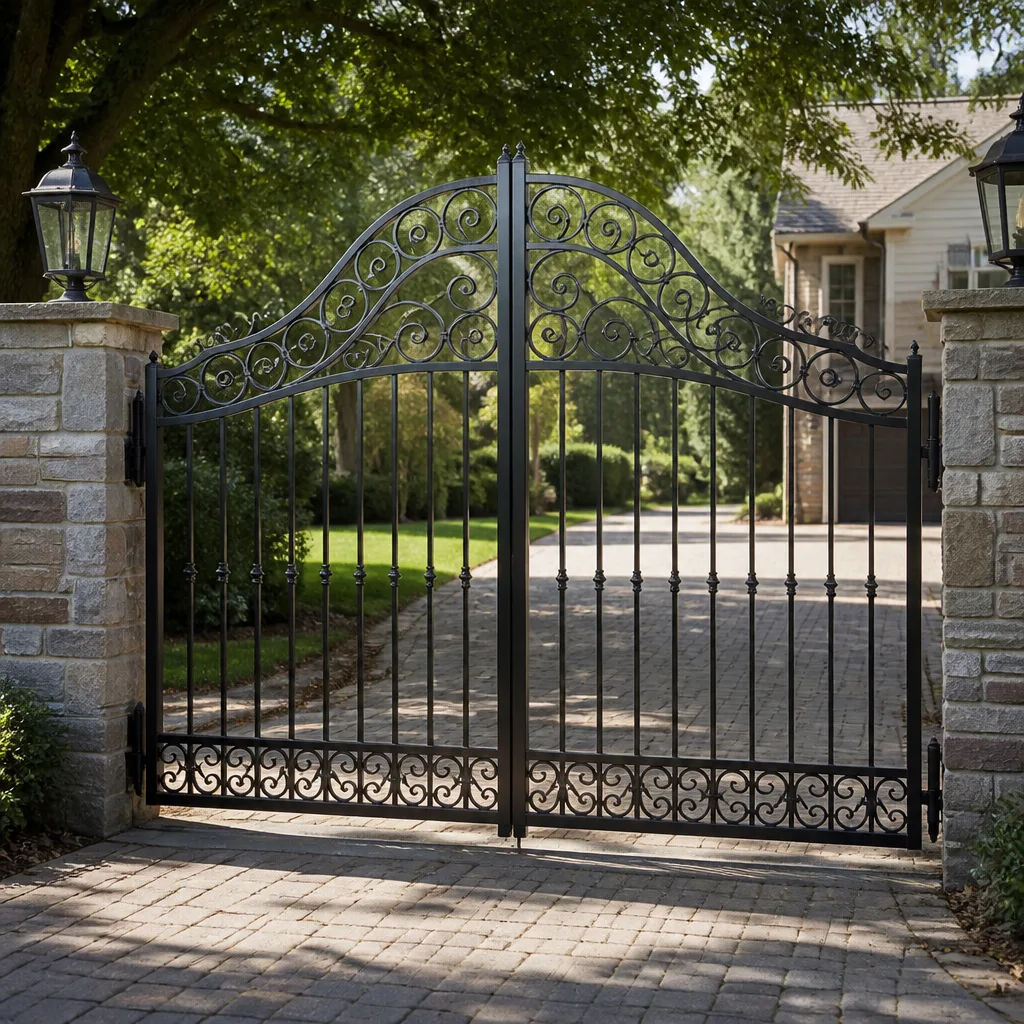
Fort Worth has no shortage of handsome wrought-iron gates. They front the brick homes in Tanglewood, the ranches in Aledo, and the estates along the Trinity River. Iron is strong, but it rusts. The question is not whether a welded steel gate will rust; it is how quickly you catch it.
Steel rusts fastest at the welds. The heat of welding changes the metal’s surface chemistry and burns off the protective mill scale. Paint adheres differently there. Moisture collects in the micro-cracks of the weld bead. So when you inspect an iron gate, the welds are the first place to look, every time.
Rust Treatment That Actually Works in Fort Worth
- Wire brush the affected area until you reach bright metal. A cordless drill with a cup brush does this in minutes.
- Apply a rust converter to any remaining brown oxide. The converter chemically turns rust into an inert black surface that paint can grip.
- Prime with a zinc-rich primer. Zinc sacrifices itself to protect the steel. This is the difference between a touch-up that lasts two years and one that lasts ten.
- Topcoat with a direct-to-metal enamel. Apply in temperatures between 50 and 90 degrees with low humidity. A Fort Worth October afternoon is about perfect.
Do not paint over loose rust. Paint traps the rust and the moisture, and the gate continues to corrode invisibly under a smooth layer of paint. By the time the paint blisters two years later, the steel underneath has lost significant thickness.
When the corrosion is at a hinge point or a structural joint, or when the gate sags because a weld has failed, that is not a paint job. That is a repair job. We weld on-site and we have been doing it long enough to match the work to the original iron so the fix does not announce itself.
Wood Gate Considerations for Fort Worth’s Climate
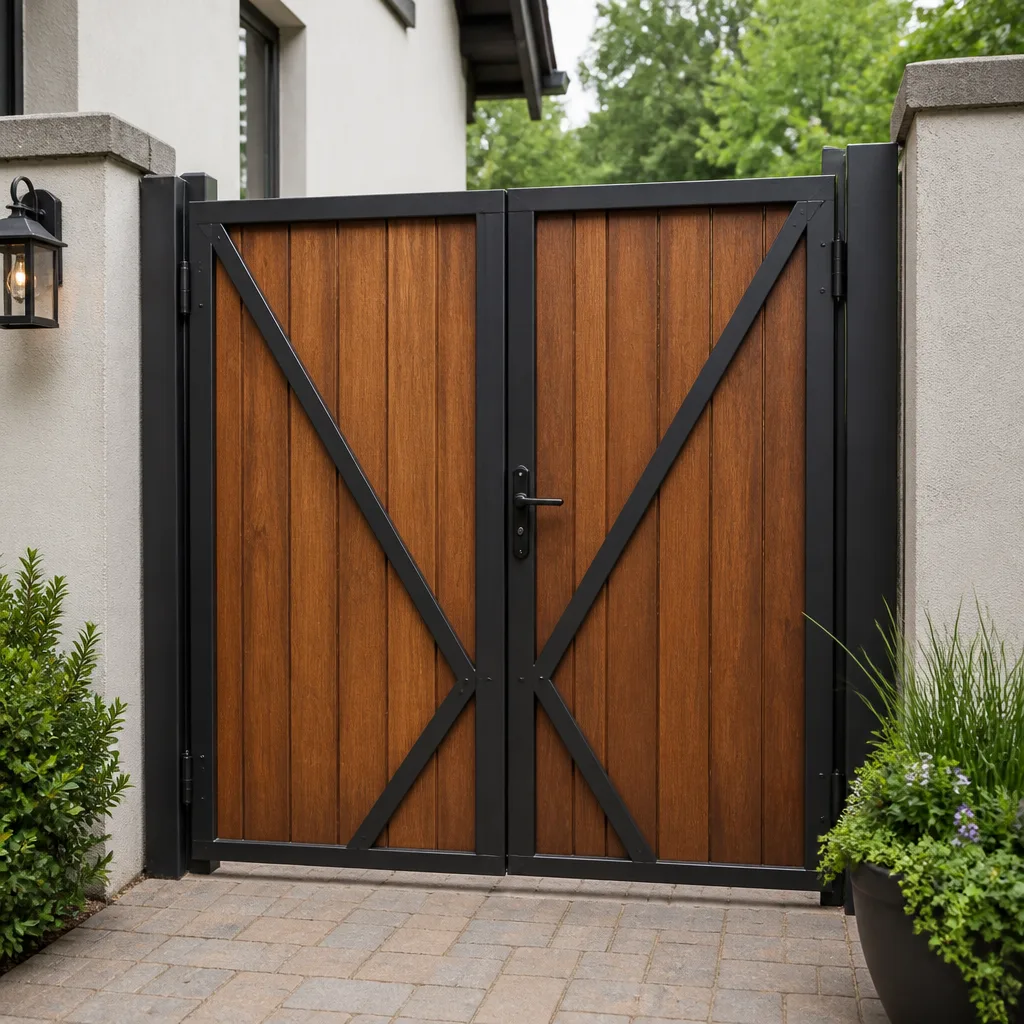
Wood gates have their own personality in this city. Cedar and redwood gates survive the heat better than pine. Pressure-treated pine gates warp in Fort Worth. The summer sun dries them unevenly, the spring rains swell them unevenly, and the result is a gate that no longer fits its frame by year five.
The critical part of a wood gate in this climate is the lumber joined to the hardware. Screws pull out of soft wood. Hinges tear loose from the stile. If you are going to maintain a wood gate, maintain the connection points, not just the surface finish.
- Seal or stain every 2 to 3 years. Use an oil-based product with UV inhibitors. The Fort Worth sun will check and crack bare wood within two summers.
- Check the H-brace or Z-brace. This is the diagonal bracing that keeps a wood gate square. If the brace is loose at the bottom corner, the gate will sag and drag on the latch side. Tighten or replace the brace hardware before it splits the surrounding wood.
- Check the bottom rail clearance. A wood gate that sits directly on the ground wicks moisture every time it rains. Three to four inches of clearance is the standard; if erosion has reduced that, regrade the low spot.
- Inspect for insect activity. Termites are a fact of life in Fort Worth, and a wood gate is an all-you-can-eat buffet attached to your house. Look for mud tubes along the lower rails and for wood that sounds hollow when tapped.
- Greasing the track. It feels like the helpful thing to do. It is not. Greased tracks collect dust and grit and turn it into an abrasive slurry that grinds rollers flat. Clean the track, lubricate the bearings.
- Using WD-40 on hinges. It quiets the squeak, then washes out the remaining grease and accelerates the wear. Use lithium grease or graphite.
- Ignoring a slow gate. A gate that takes ten seconds to open instead of six is not cute; it is a motor working against increasing resistance. Every extra second of travel time is additional heat in the motor windings.
- Waiting to fix a sagging gate. The sag itself is not the only problem. A sagging gate puts lateral load on the operator arm and the hinge posts. If the post starts leaning, the repair cost triples.
- Painting over rust without prep. Paint over rust is a cosmetic fix that hides the problem and makes it worse. The rust continues working under the paint film.
- Bypassing a safety device. Jumping out a photo eye or clamping a safety edge down is how people get hurt. It is also a code violation. A gate that is only safe with the safeties disabled is an unsafe gate.
- Skipping the manual release test. The moment you need the manual release is the moment the power is out and you are standing outside the gate in the rain. Test it monthly so you know it works.
A well-built and consistently maintained wood gate will outlast a neglected iron one. The essential difference is diligence. Wood gates demand a schedule. Iron gates forgive a missed season. Know which one you own.
Common Mistakes to Avoid
When to Call a Professional
Some maintenance tasks are squarely in the homeowner lane. Others are not. Any repair involving high-tension springs, high-tension cables, or the gate operator’s capacitor is a professional job, full stop. A spring under tension stores enough energy to break a hand or a face if it lets go. The capacitor in an operator holds a charge even after the unit is unplugged. Both are hazards that no YouTube video compensates for.
Also call a professional when the gate sags visibly, when a hinge weld cracks, when the motor makes a sound it did not make last month, or when any safety test fails. These are not maintenance situations. They are repair situations, and the longer they wait, the larger they grow.
Ironworks Gate Co. offers free estimates in Fort Worth. Call (817) 562-7979 and a live person answers, any hour, seven days a week. We will send a background-checked, uniformed technician to look at the gate, quote the work before any bolt is turned, and stand behind the repair with our 90-Day Done Right Promise. No voicemail trees, no callback queues, no surprises on the bill.
Frequently Asked Questions
Most gate repairs in Fort Worth run between $150 and $600 depending on the part and the labor involved. A hinge replacement on a residential driveway gate typically falls at the lower end of that range, while a full operator replacement on a large estate gate lands higher. Ironworks Gate Co. quotes the price before any work begins and the quote is the price. Call (817) 562-7979 for an exact figure on your gate.
We recommend a professional tune-up twice a year, once in March and once in October. The spring service catches winter damage and prepares the gate for summer heat. The fall service confirms battery health and limit settings before cold weather. Our $89 Seasonal Tune-Up is the same routine we perform on our own service commitments.
In our experience, the most common complaint is a gate that has slowed down over time. The cause is usually a combination of worn rollers, a dry hinge, and an operator that has slowly lost limit accuracy. All three are repairable. All three are also preventable with the monthly and seasonal routines in this guide.
You can, but the safer course is to let a trained professional handle the electrical connection and the safety system calibration. The operator draws line voltage, the capacitor holds a charge, and the force settings have to be dialed to the gate’s exact weight and travel. A mis-set force limit turns a safe gate into an entrapment hazard. Ironworks Gate Co. is trained and equipped on nine automation brands, including Ghost Controls, DoorKing, Elite, and Mighty Mule, and we complete most opener replacements in a single visit. Call for a free estimate.
Typically yes, when the damage is caused by a covered event like a windstorm, a vehicle collision, or a fallen tree. Damage from deferred maintenance, rust, or normal wear and tear is not covered. The maintenance schedule in this guide is the best insurance you have against the second category.
First, pull the manual release and confirm the gate can be moved by hand so you are not trapped. Then call (817) 562-7979. A live person at Ironworks Gate Co. answers 24 hours a day, 7 days a week, including during Tarrant County storm events. We prioritize safety calls and give you a straight answer on arrival time.
The Bottom Line
A Fort Worth gate will last decades if you do four things consistently. Inspect it monthly for fifteen minutes. Lubricate the right parts and not the wrong ones. Test the safety systems every month and service the operator every spring and fall. Treat rust and weld issues while they are small and call a professional the moment anything is beyond your skill or your comfort. That is the whole system. It works because it is boring and it is consistent. And when the time comes for a repair you do not want to tackle yourself, Ironworks Gate Co. home has been serving Fort Worth gates for over 42 years. Call (817) 562-7979 for a free estimate and a square deal.
Written by Victor Salinas, Owner at Ironworks Gate Co., serving Fort Worth since 2013.