
Last updated August 25, 2026
Free on-site gate assessment - hinges, posts, and your LiftMaster or Nice gate operator checked before anything is quoted
The assessment is free and the quote is the invoice.
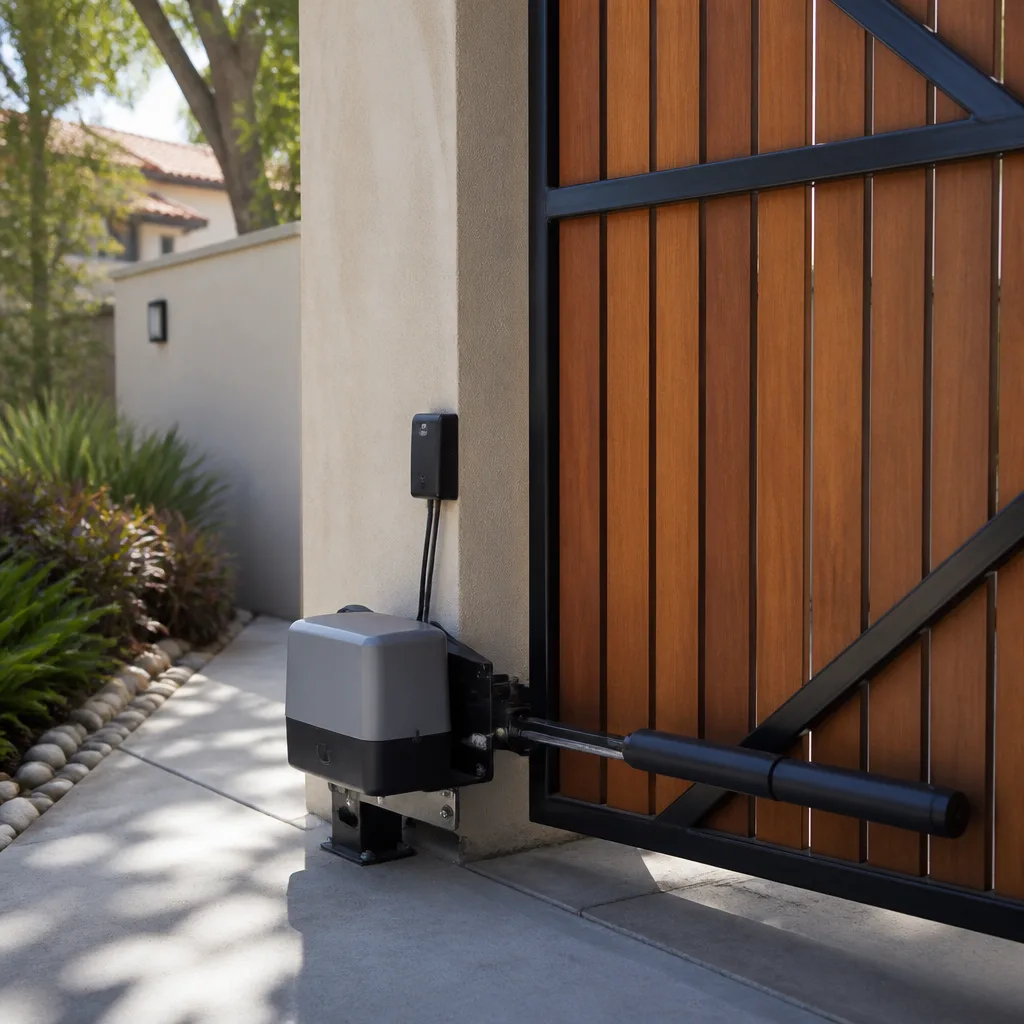
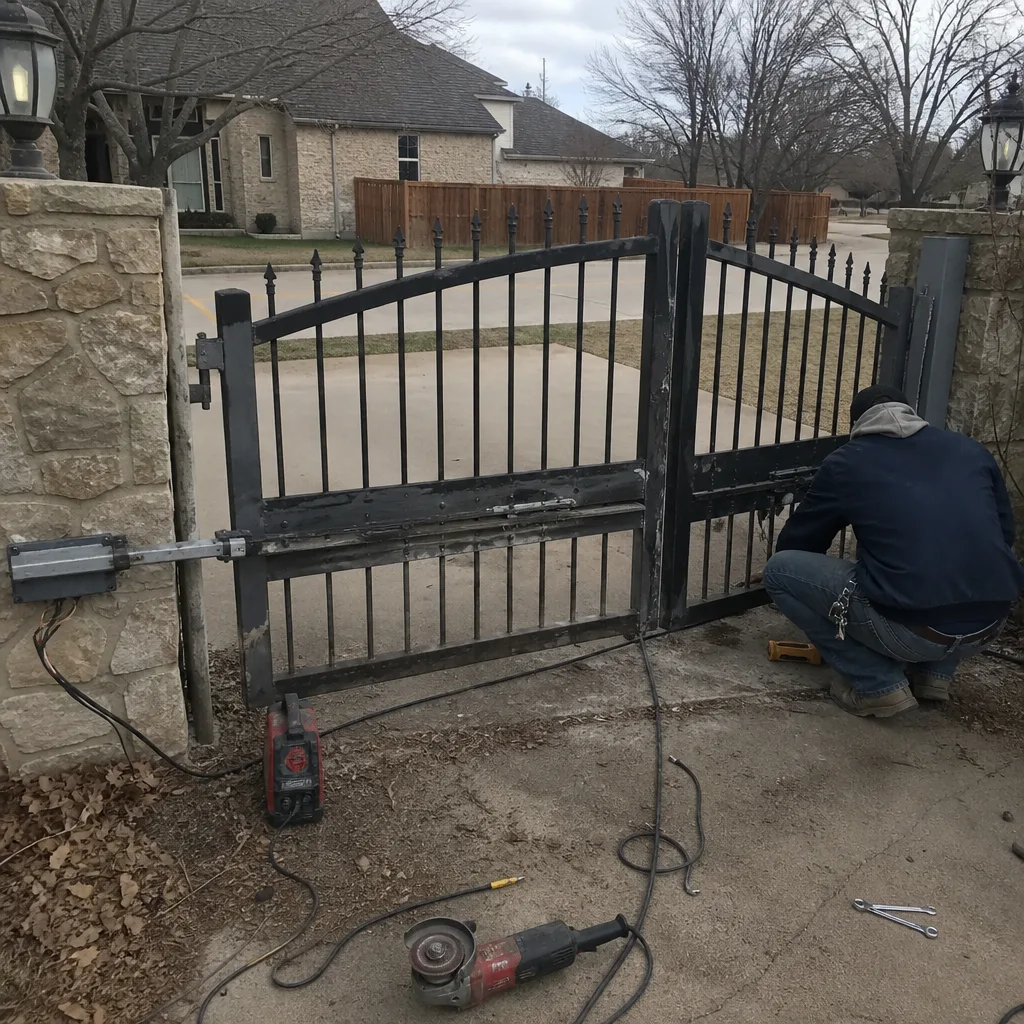 Before
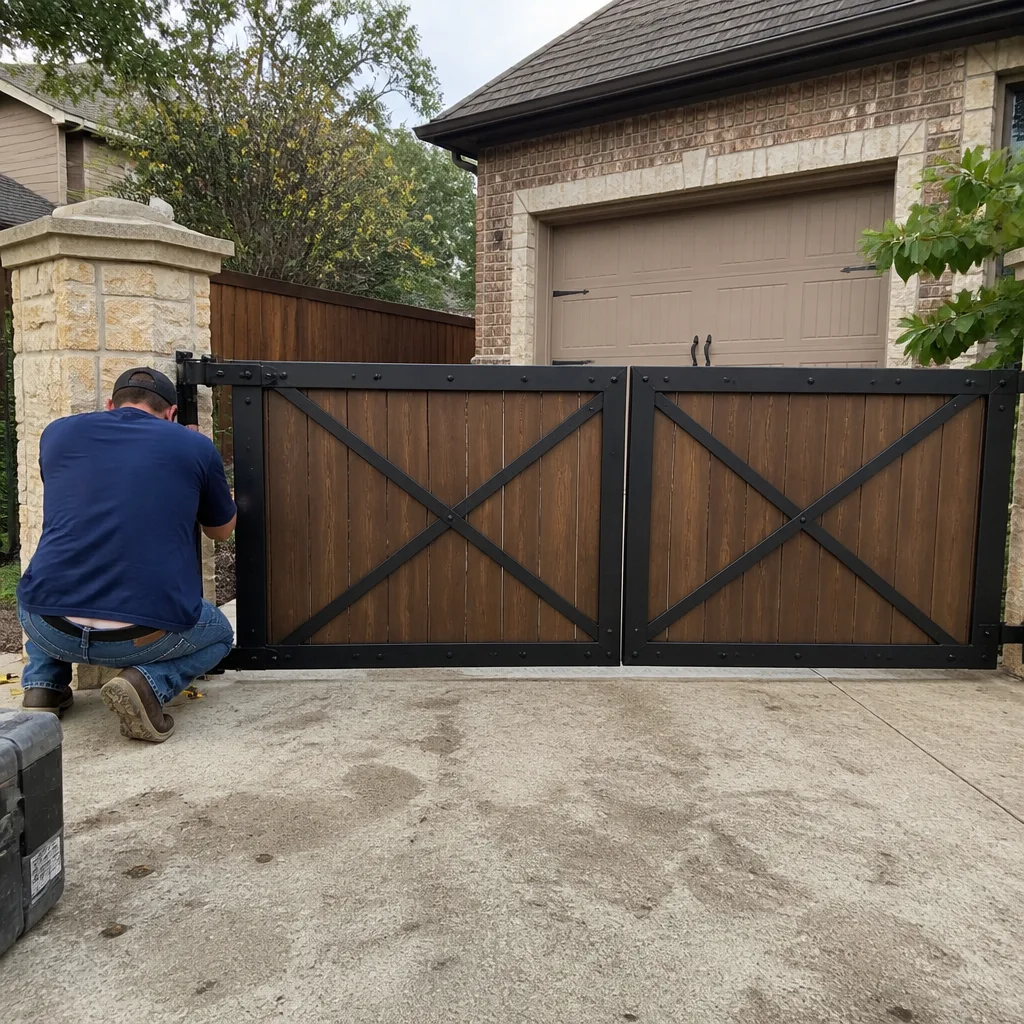 After
After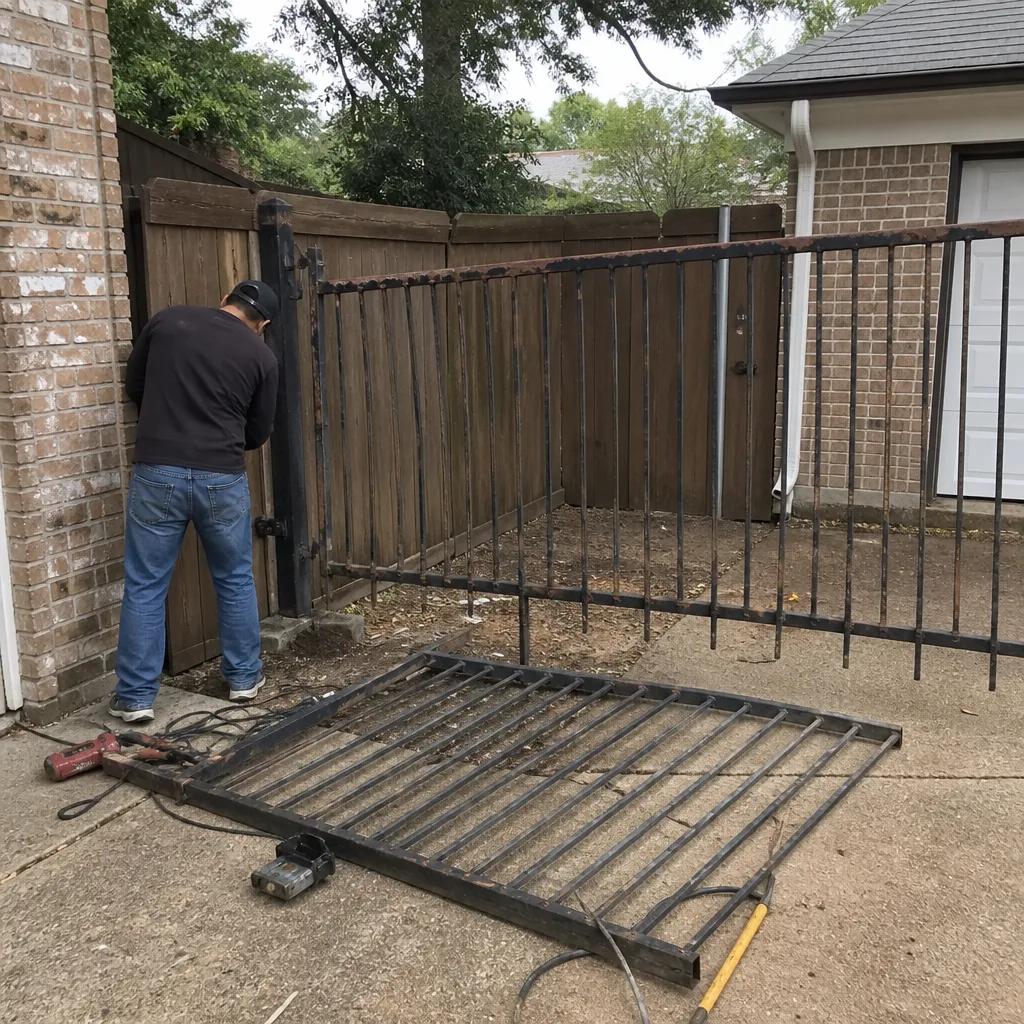 Before
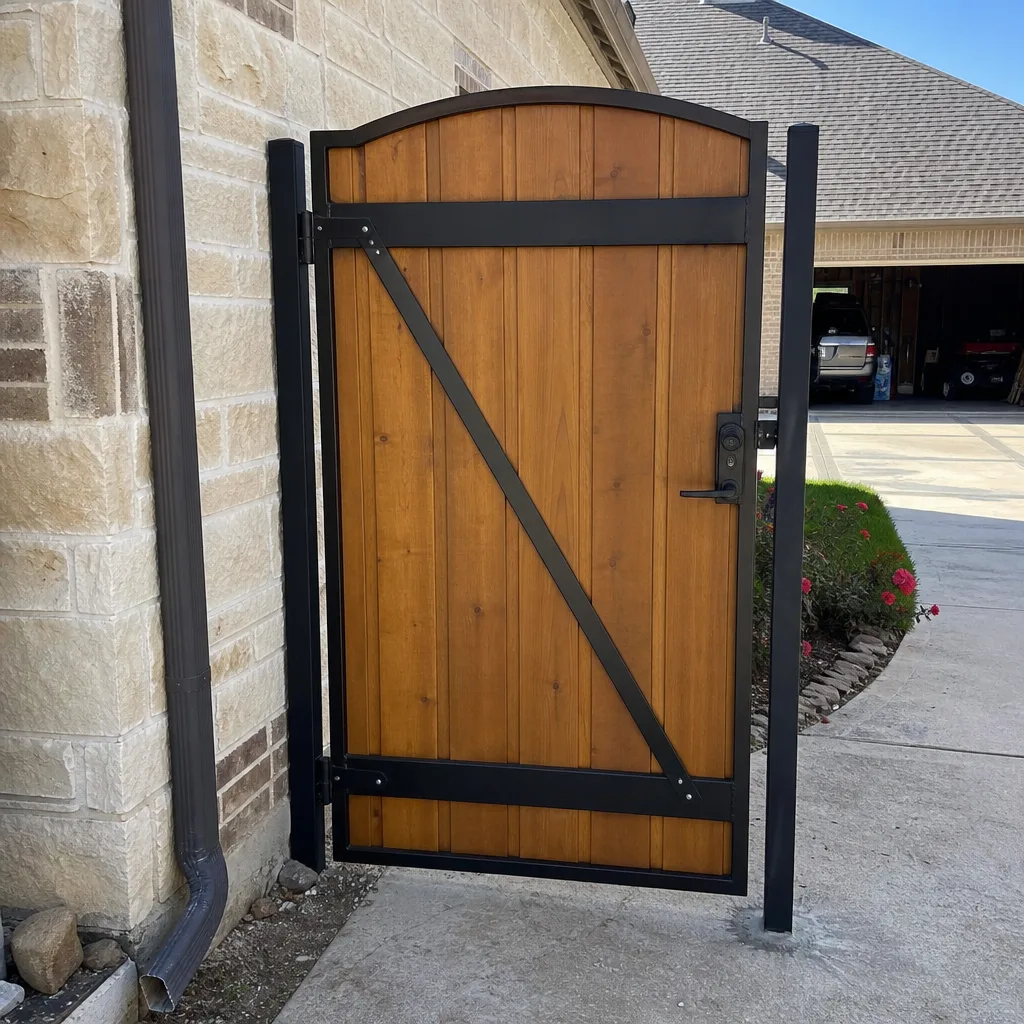 After
After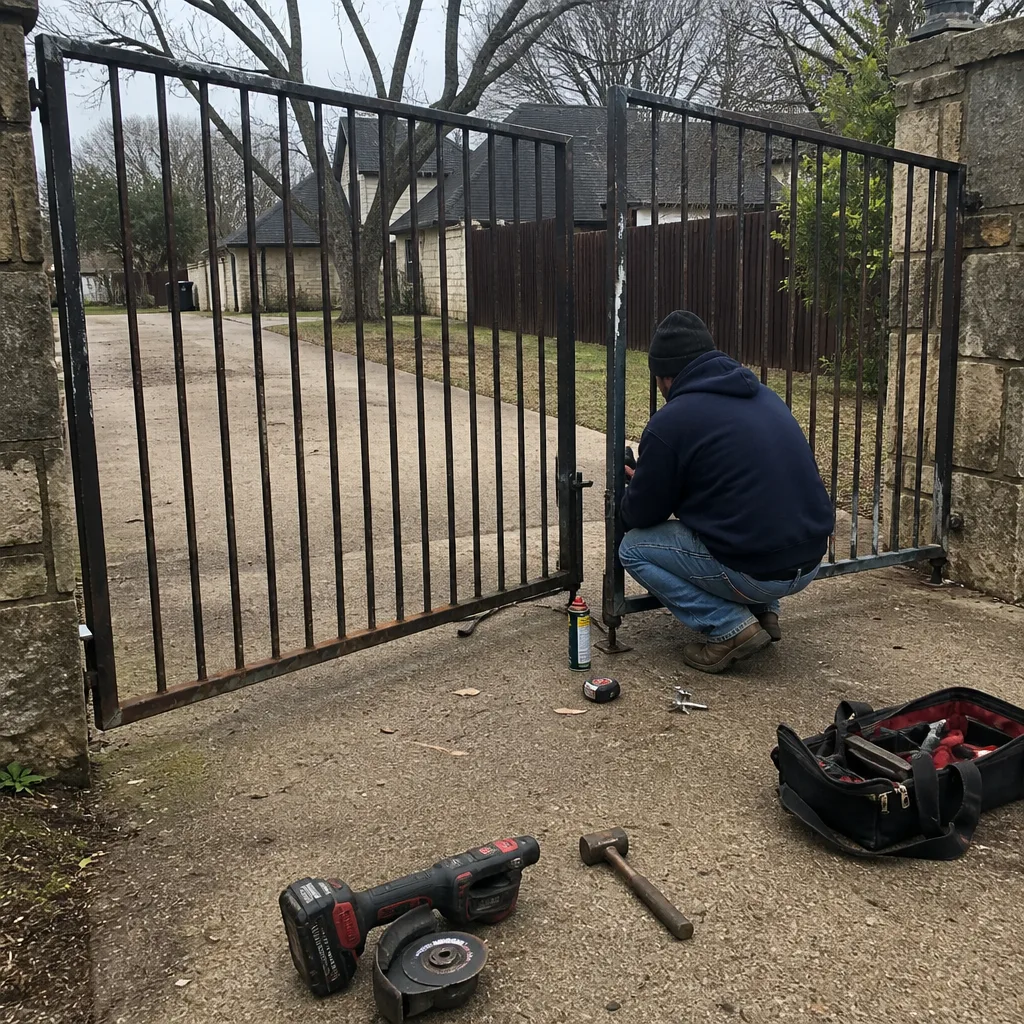 Before
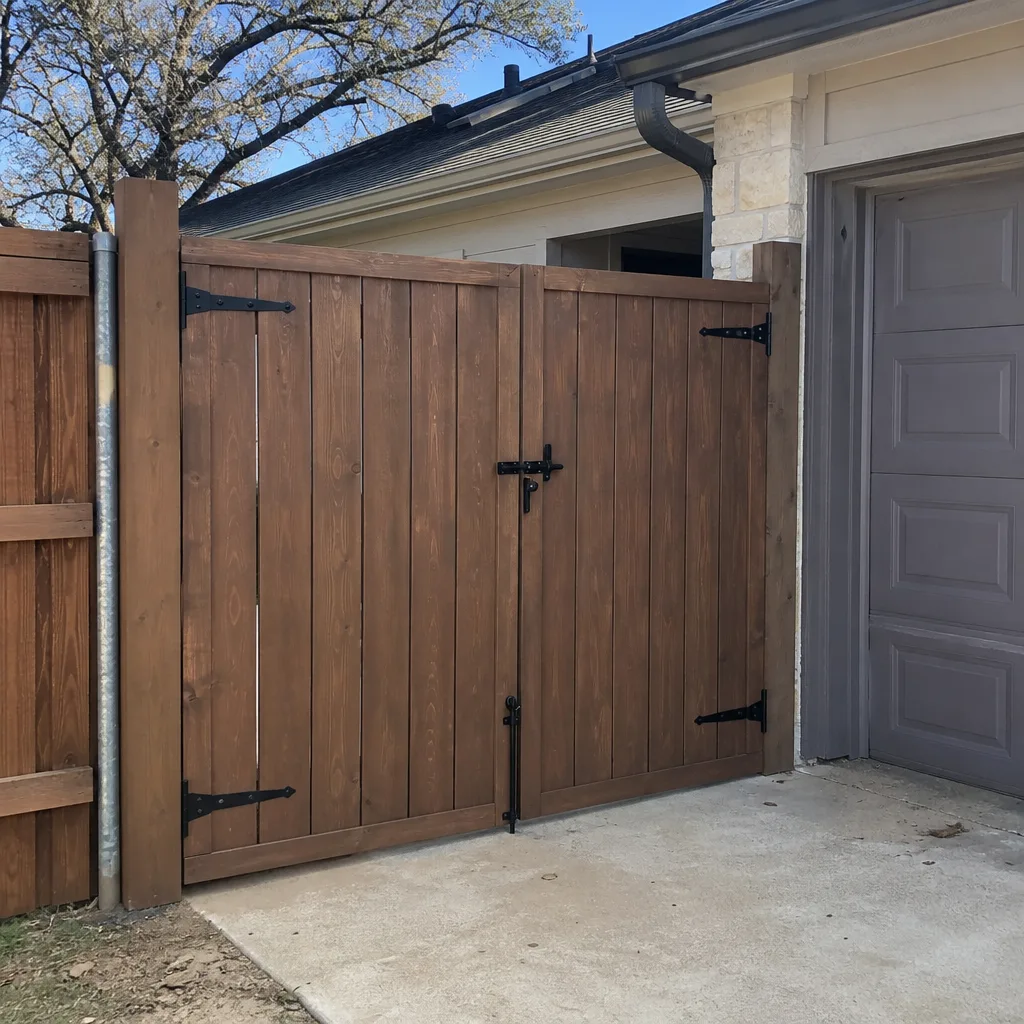 After
AfterGate Repair Warning Signs: A Fort Worth Homeowner’s Reference Guide
Most gate failures don’t happen suddenly. They announce themselves weeks or months in advance, in small ways that are easy to dismiss: a half-second hesitation before the motor engages, a faint scrape where metal meets concrete, a hinge pin that has worked itself a quarter inch out of true. The problem is that most homeowners don’t speak the language of a failing gate until the day it refuses to open at all, and by then the repair bill has often tripled. This guide teaches you to read those early signals. It is written for Fort Worth homeowners, by people who have repaired thousands of gates across this city’s neighborhoods, and it will save you money, time, and the particular frustration of a driveway gate that won’t budge on a July morning when you are already late.
Quick Answer
Your gate is warning you when it moves slower than it used to, makes a grinding or clicking sound, sags visibly at the latch end, hesitates before responding to the opener, or jerks instead of gliding. In Fort Worth, where limestone dust and summer heat accelerate wear on hinges and motors, most of these symptoms can be fixed for a few hundred dollars if caught early, but ignored, they lead to full motor replacement, cracked welds, and gate panels that have to be re-hung. The rule is simple: a gate that sounds different or moves differently is a gate asking for attention.
Table of Contents
- The Early Signals Most Homeowners Miss
- Sound Warnings: What Your Gate Is Telling You
- Movement Warnings: Sag, Drag, and Hesitation
- Structural Red Flags: Hinges, Welds, and Posts
- Opener and Motor Warnings
- What Fort Worth Climate and Soil Do to Gates
- A Seasonal Checkup in 6 Steps
- Common Mistakes to Avoid
- When to Call a Professional
- Frequently Asked Questions
- The Bottom Line
The Early Signals Most Homeowners Miss
A gate in good health opens and closes the same way every single time. Same speed. Same sound. Same gentle thump when it settles against the stop. When that consistency starts to break down, the gate is telling you something. In our experience across Fort Worth, homeowners usually notice one of three things first: the gate seems slower than it was last spring, it pauses for a beat after the remote is pressed, or it closes with a sound that wasn’t there before, something metallic and dry. None of these feels urgent in the moment, and that is exactly the trap.
The truth is that gate systems are not complicated machines, but they are unforgiving ones. A hinge that is beginning to bind puts extra load on the motor. A motor working against extra load draws more current and runs hotter. Heat shortens the life of the capacitor and the control board. What started as a $40 hinge bearing becomes a $600 motor replacement, and the only difference was six months of ignoring a sound you heard but did not act on. Homeowners in older Fort Worth neighborhoods like Ridglea and Arlington Heights, where many gates date back twenty years or more, are most likely to be living with these early signals right now.
We are not saying every small change means a repair bill. But a change that persists, or worsens, is never going to fix itself. Gates do not heal.
Sound Warnings: What Your Gate Is Telling You
Sound is the most reliable early warning system a gate has. Metal on metal, metal on stone, an electric motor straining, these sounds are specific and diagnostic. Learn to listen for them, and you will catch problems weeks before they become failures. Here are the four sounds we hear most often on service calls in Fort Worth, and what each one means.
- A rhythmic click or tick during travel. This is usually a worn chain or belt in the opener mechanism, or a gear inside the motor that has begun to lose teeth. DoorKing and Elite openers, common on older Fort Worth estates, are particularly prone to this after a decade of service. The click is the sound of a part asking for replacement while replacement is still cheap.
- A dry scraping or metal groan. This is almost always a hinge. The bearing surface has worn, the grease is gone, and steel is riding directly on steel. In Fort Worth’s summer heat, grease breaks down faster than in cooler climates, so gates here tend to develop this sound sooner. Left alone, the hinge pin will eventually seize or snap.
- A grinding or strained whine from the motor housing. The motor is working harder than it should. That could mean a failing capacitor, a gearbox losing lubrication, or simply a gate that has become too heavy for the opener because hinges are binding. The whine is the motor saying the load is more than it was built to carry.
- A sharp bang or clank at the end of travel. The mechanical stops or limit switches are out of adjustment. The gate is slamming into its end position instead of decelerating into it. Every bang is a shock load through the welds and the frame, and shock loads are how welds crack.
If your gate has started making any of these sounds in the past few weeks, and the sound is consistent rather than occasional, that is a gate asking for a service visit. Ghost Controls and Mighty Mule openers, which we see frequently on newer Fort Worth homes, are generally quiet machines. A noisy Ghost Controls unit is almost never normal.
For a deeper look at these and other common failure points, see our guide on gate repair services in Fort Worth.
Movement Warnings: Sag, Drag, and Hesitation
Movement problems fall into two categories: the gate is changing shape, or the opener is changing behavior. Both matter, and both are easy to spot once you know what to look for.
Sag and Drag
A gate that sags drops at the latch end. You can see it in the gap at the bottom of the gate: wide at the hinge post, tight at the latch post, or vice versa. You can also see it in the way the latch no longer lines up clean with the receiver. Sag comes from three sources in Fort Worth: hinge wear, post settlement, or a frame that was never properly reinforced in the first place. The clay soils of North Texas expand and contract dramatically with moisture, and over twenty years, even a well-set post can shift a few degrees out of true.
A dragging gate scrapes the driveway or the ground track. That scrape is not just an annoyance. Every pass removes material from the bottom rail, hollows out a groove in the concrete, and puts lateral load on hinges that were never designed for it. If your gate drags, the fix is rarely just lifting the gate; the underlying cause, usually a settled post or a worn hinge, has to be addressed or the gate will drag again within a season.
Hesitation and Jerk
When you press the remote and the gate waits a beat before moving, or starts, stops, and starts again, the problem is usually electrical. A failing capacitor will cause hesitation. A control board with a bad solder joint will cause intermittent response. A low battery in a Ghost Controls or Mighty Mule opener will cause both. Jerky movement, where the gate stutters through its travel instead of gliding, is most often a worn gear or a chain with a tight spot. None of these fix themselves.
Structural Red Flags: Hinges, Welds, and Posts
The structure of a gate is only as good as its weakest connection, and in Fort Worth’s climate, connections fail in predictable ways. Here are the structural red flags to check on any gate older than a few years, particularly on the wrought iron and steel gates so common in neighborhoods like Monticello, Mistletoe Heights, and Westover Hills.
Hinges
Look at each hinge closely. Is the pin centered in the barrel, or has it worked its way up or down? Can you see daylight through a gap that was not there before? Is there rust staining below the hinge, a sign that water has been sitting inside the bearing? A hinge that is failing will transfer all of its load to the remaining hinges, and the remaining hinges will fail in sequence, usually faster than the first one did. Hinge replacement is among the most common repairs we perform in Fort Worth, and it is one of the best examples of a cheap fix that prevents an expensive one.
Welds
Look for hairline cracks at the corners of the gate frame, where the pickets meet the top rail, and around the hinge mounting plates. A crack that is six inches long today will be eighteen inches long after another season of use, because every open and close cycle works the crack like a lever. Cracked welds on a gate are not cosmetic. We have seen gates in Fort Worth come apart at the hinge side because a weld crack was ignored long enough for the entire corner to separate. The gate did not fail because the steel was bad; it failed because nobody looked at it.
Posts
The post is the foundation of the entire gate system. A post that has shifted out of vertical, even by a few degrees, changes the geometry of the whole gate. Hinges bind. Latches misalign. Motors strain. A plumb post is non-negotiable. If you can see a gap opening between the post base and the surrounding concrete, or if the post has begun to lean, that is a structural red flag that should be addressed before anything else. In Fort Worth’s expansive clay soil, post movement is common, and it is often the root cause of problems that get blamed on hinges or motors.
The Critical Safety Warning on Springs
Some gates, particularly heavier estate gates, use tension springs or torsion springs to counterbalance their weight. These springs are under enormous load at all times. A spring that shows signs of fatigue, rust, or deformation is dangerous to work around. If you hear a loud pop or bang from the gate mechanism, or see a spring that looks distorted, do not attempt to adjust or remove it yourself. This is a job for a trained professional with the right tools and experience. The force stored in a gate spring can cause serious injury if it releases unexpectedly. Our technicians at Ironworks Gate Co. home treat every spring failure as a safety call first and a repair call second.
Opener and Motor Warnings
The opener is the most misunderstood part of any automatic gate. Homeowners tend to think of it as the whole system, when in fact it is just one component, and often the most sensitive one. Here is what to watch for with the opener itself.
Response Time and Range
A healthy opener responds to the remote instantly, every time, from the distance you are used to. If you find yourself pressing the button twice, or inching the car closer to get the gate to respond, the receiver or the remote battery is failing. These are cheap fixes, but they will not fix themselves, and one day the gate simply will not respond at all. A live person at Ironworks Gate Co. answers the phone 24 hours a day, 7 days a week, so when that day comes in Fort Worth, you will not be stuck waiting until Monday.
Straining and Overheating
An opener that runs hot or shuts off mid-cycle is protecting itself with a thermal overload. The cause is usually mechanical resistance elsewhere in the system: a binding hinge, a dragging gate, or a chain with incorrect tension. Replacing the motor without fixing the resistance is the classic mistake, because the new motor will overheat exactly the same way. A proper repair diagnoses the whole system, and that is the kind of repair that lasts.
Brand-Specific Notes
Different opener brands fail in different ways, and anyone who tells you otherwise has not worked on enough of them. DoorKing and Elite units are extremely durable but sensitive to voltage fluctuations, which are common in older Fort Worth neighborhoods with aging electrical infrastructure. Ghost Controls and Mighty Mule openers are popular on DIY installations, and the most common issue we see with them in Fort Worth is improper installation, particularly when it comes to limit switch adjustment and grounding. If your opener was installed by the previous homeowner or a handyman, and it has begun acting strangely, it may have been set up wrong from day one.
What Fort Worth Climate and Soil Do to Gates
A gate in Fort Worth lives a harder life than a gate in most American cities. The climate and the soil work against metal and electronics in specific, predictable ways, and understanding them helps you understand why your gate behaves the way it does.
The heat. Fort Worth summers regularly push past 100 degrees, and surface temperatures on a metal gate can exceed 140 degrees. That heat breaks down grease in hinge bearings, degrades plastic gears inside openers, and stresses capacitors on control boards. Electronic components do not fail gracefully in extreme heat; they fail suddenly, which is why so many opener failures in Fort Worth happen in July and August.
The soil. Much of Fort Worth sits on the Eagle Ford shale and clay soils that expand when wet and shrink when dry. Posts set in this soil are in constant slow motion. Over decades, a post can shift enough to bind a gate that worked perfectly for fifteen years. This is not a sign of a poorly built gate; it is a sign of living in Fort Worth, and the fix is a post that is reset and stabilized properly.
The dust. Limestone dust from North Texas roads is fine, abrasive, and everywhere. It works its way into hinge bearings, chain links, and opener gearboxes, accelerating wear. A gate in a rural part of Fort Worth, or on a limestone driveway, will need its hinges cleaned and regreased more often than a gate in a shaded urban neighborhood.
The storms. Spring in Fort Worth brings wind, hail, and sudden downpours. Wind loads on a large gate panel are significant, and repeat exposure loosens hardware and stresses welds over time. Hail will not usually dent a steel gate, but it can damage opener housings and external keypads.
A Seasonal Checkup in 6 Steps
Twice a year, in spring and fall, spend fifteen minutes with your gate. Most serious failures are preceded by changes you can see or hear with no special tools. Here is the checkup in order.
- Watch a full open and close cycle. Stand back and watch the gate travel. Note the speed, the smoothness, and whether it slows down before stopping or slams to a halt. Compare it to how the gate behaved six months ago. Changes are the signal.
- Listen during the cycle. Turn off the radio, silence the engine, and listen. Any rhythmic ticking, scraping, groaning, or banging is a diagnostic clue. A healthy gate is almost silent except for the low hum of the opener.
- Check the gap at the bottom. Walk the length of the gate and check the clearance between the bottom rail and the driveway. The gap should be consistent. A gate that is tighter at one end than the other is sagging or the post is moving.
- Inspect each hinge. Look at the pins, the barrels, and the mounting plates. Is there rust staining? Has a pin walked out of position? Can you move the gate by hand at all, and if so, is there play at the hinge? Play means wear.
- Test the safety features. If your gate has photo eyes or a reversing edge, test them. Place an object in the gate’s path and confirm the gate stops and reverses. A gate that does not stop is a safety hazard, and in a city with as many kids and dogs as Fort Worth, that is not a risk to take.
- Listen to the opener. With the gate disengaged from the opener (most units have a manual release), push the gate by hand. It should move freely with moderate effort. If it is stiff, heavy, or catches at any point, the mechanical side needs attention before the motor burns itself out trying to do the work.
If you find something during the checkup that concerns you, write it down and make the call. An $89 Seasonal Tune-Up from Ironworks Gate Co. in Fort Worth is a small price for a written professional assessment, and it includes the adjustments and lubrication that keep small issues small.
Common Mistakes to Avoid
- Ignoring a new sound because the gate still works. A gate that works today and sounds different from last week is not working fine. It is working on borrowed time. Sound changes are the earliest and cheapest problems to fix.
- Lubricating hinges with WD-40. WD-40 is a solvent, not a lubricant. It will wash out the remaining grease and leave the hinge drier than it started. Use a proper lithium grease or a penetrating oil designed for metal bearings, or let a professional do it right.
- Replacing the opener without checking the gate. When an opener fails, a handyman will often sell a new opener without touching the hinges and posts that caused the failure. The new opener then fails the same way. In Fort Worth, where heat and soil put constant stress on gates, this is one of the most common and most expensive mistakes we see.
- Adjusting the latch without checking the structure. When a gate won’t latch, the latch is rarely the problem. Usually the gate has sagged or the post has shifted. Adjusting the latch is a temporary fix that masks the real issue while it gets worse.
- Waiting until the gate won’t open to call. An emergency repair is always more expensive than a scheduled one, and it always happens at the worst time. The gate that won’t open on a Tuesday afternoon can usually be fixed the same week. The gate that won’t open at 7 a.m. on a workday is an emergency, and emergency rates reflect that.
- Trusting any estimate without a second look. Gate repair pricing in Fort Worth varies widely, and some quotes include work that is not needed. We offer a Free Second Opinion on Any Written Estimate, and we recommend using it. A square deal means upfront pricing and no surprises on the bill, and a homeowner should never accept less than that.
When to Call a Professional
Some gate work is safe and reasonable for a handy homeowner. Oil a noisy hinge, tighten a loose bolt, wipe down the photo eye sensors. But when the problem involves welded steel, gate springs, post alignment, or any part of the opener or electrical system, the risk of injury or a botched repair outweighs the money saved. A gate panel weighs hundreds of pounds. A tension spring can release without warning. An incorrectly wired opener can damage itself and void the warranty. If your gate is sagging, cracking, sparking, banging, or refusing to respond, call someone who does this work every day. Ironworks Gate Co. offers free estimates in Fort Worth, call (817) 562-7979, and a live person answers 24 hours a day, 7 days a week. Every job is protected by the 90-Day Done Right Promise, in writing, no paperwork, no arguing. We will be there when we say, and we stand behind the work.
Frequently Asked Questions
Most gate repairs in Fort Worth fall between $150 and $800 depending on the part and the scope of the work. A hinge replacement typically runs $180 to $350, an opener control board $250 to $500, and a full opener replacement $600 to $1,200 installed. Structural repairs like post resetting or weld work are priced by the job after an on-site assessment. Every price is quoted and agreed upon before any work starts, no surprises on the bill. Call (817) 562-7979 for a free estimate on your specific gate.
In most cases, yes. Our trucks in Fort Worth carry the most common replacement parts for DoorKing, Elite, Ghost Controls, Mighty Mule, and the other major brands we service, so most repairs are completed in a single visit. A live person answers the phone 24 hours a day, 7 days a week, and same-day scheduling is available for urgent failures. Call (817) 562-7979 and we will tell you honestly whether your job can be done today.
The 90-Day Done Right Promise is our written guarantee that covers every gate repair and installation we complete in Fort Worth. If something is not right within 90 days of the job, we come back and make it right, every time, no paperwork, no arguing. It is the Keystone Standard applied to every job we do, from a hinge replacement to a full estate gate installation.
Yes. A gate that is getting noisy is developing a mechanical issue, usually in the hinges or the opener drive. The noise itself is the warning, and the sooner it is addressed, the less it costs to fix. A gate in good condition is nearly silent. If yours is not, call (817) 562-7979 for an $89 Seasonal Tune-Up that includes a full inspection and the adjustments that stop small problems from growing.
We service nine major gate-automation brands: LiftMaster, FAAC, BFT, Linear, Viking, Ghost Controls, DoorKing, Elite, and Mighty Mule. Whatever is on your driveway, odds are high we stock the parts and know the machine. Correct diagnosis on the first visit saves you money, and that is how we work.
A well-built steel or iron gate in Fort Worth, properly maintained, will last 20 to 30 years before it needs major structural work. The opener will typically last 8 to 15 years depending on the brand and the load it carries. The difference between a gate that lasts 10 years and one that lasts 30 is almost always maintenance: hinges greased, posts checked, small repairs made before they become large ones. If your gate is nearing the end of its expected life, an inspection will tell you whether repair or replacement is the better investment.
The Bottom Line
A gate does not fail without warning. It slows down, it changes its sound, it sags a little, it hesitates, and every one of those signals is an opportunity to fix a small problem before it becomes a big one. In Fort Worth, where heat, soil, and time all work against metal and electronics, paying attention to those signals is the single most effective thing a homeowner can do to protect their gate, their budget, and their security. The next time you open your gate, watch it. Listen to it. If something has changed, act on it. The repairs that cost the least are the ones made the soonest, and the companies that last the longest are the ones that stand behind their work. Do not wait for the morning the gate will not open. Call (817) 562-7979 for a free estimate, and get it done right, and backed in writing.
Written by Victor Salinas, Owner at Ironworks Gate Co., serving Fort Worth since 2013.