
Free on-site gate assessment - hinges, posts, and your LiftMaster or Nice gate operator checked before anything is quoted
The assessment is free and the quote is the invoice.
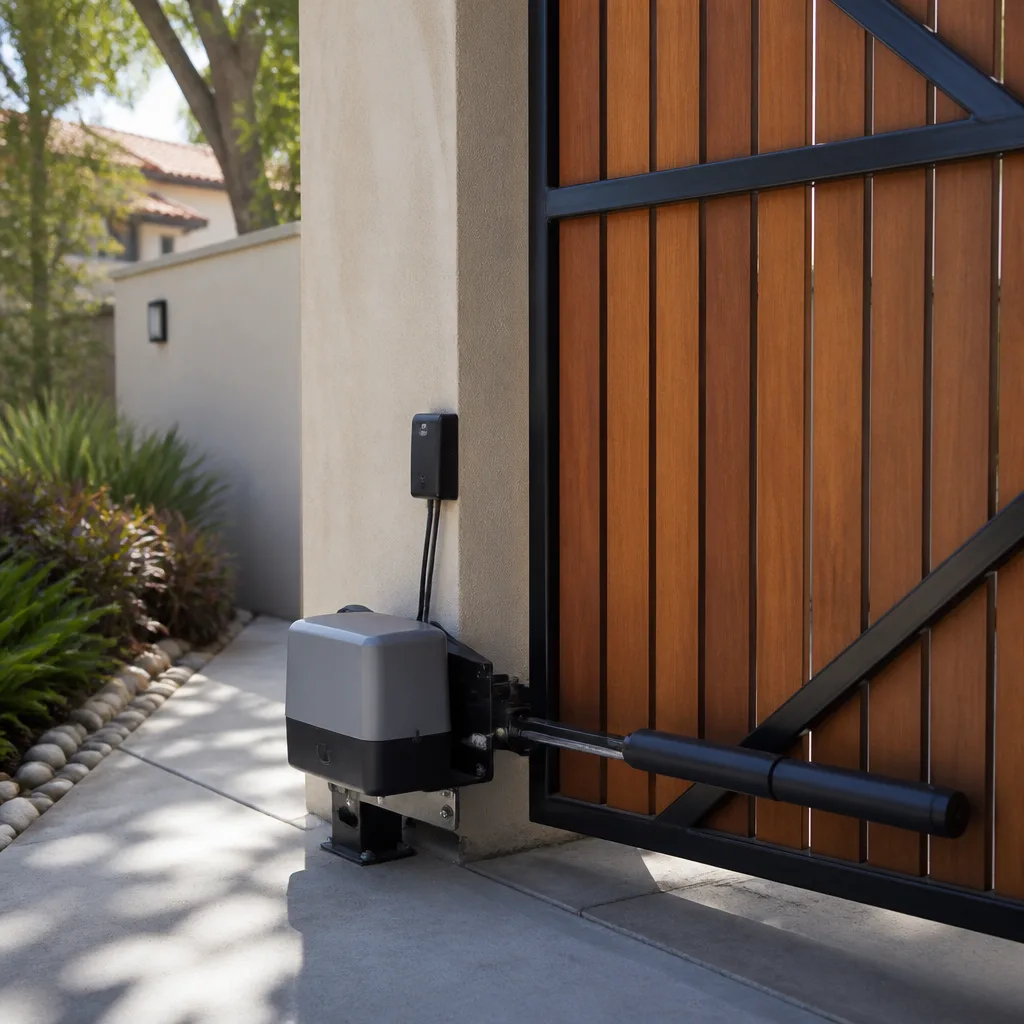
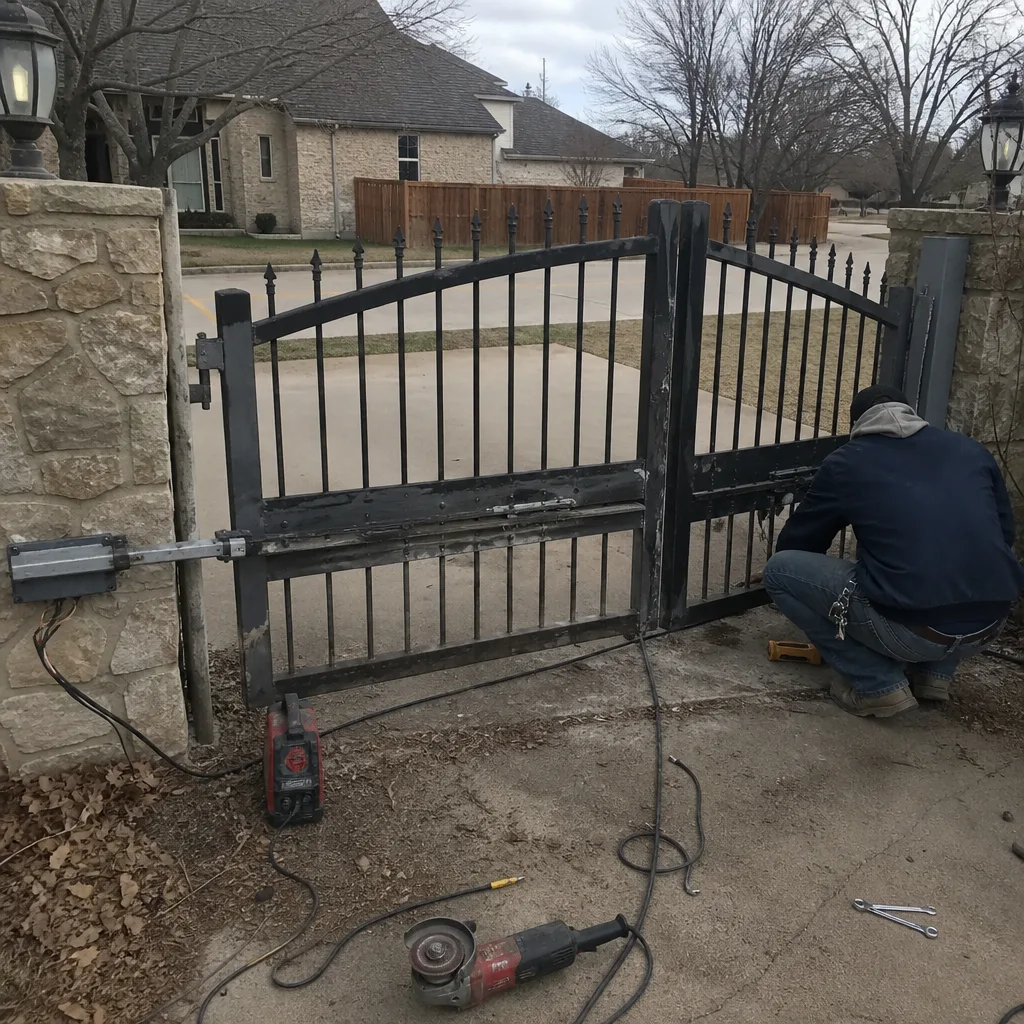 Before
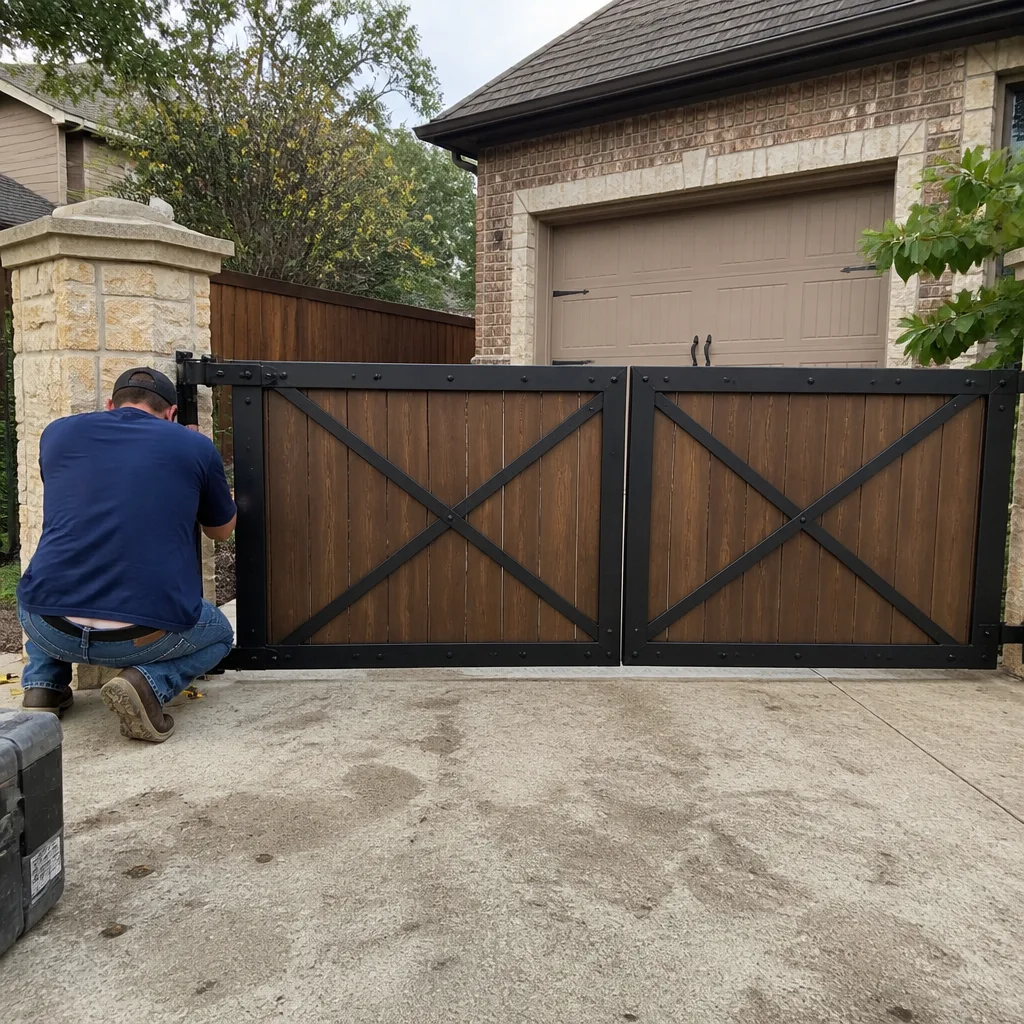 After
After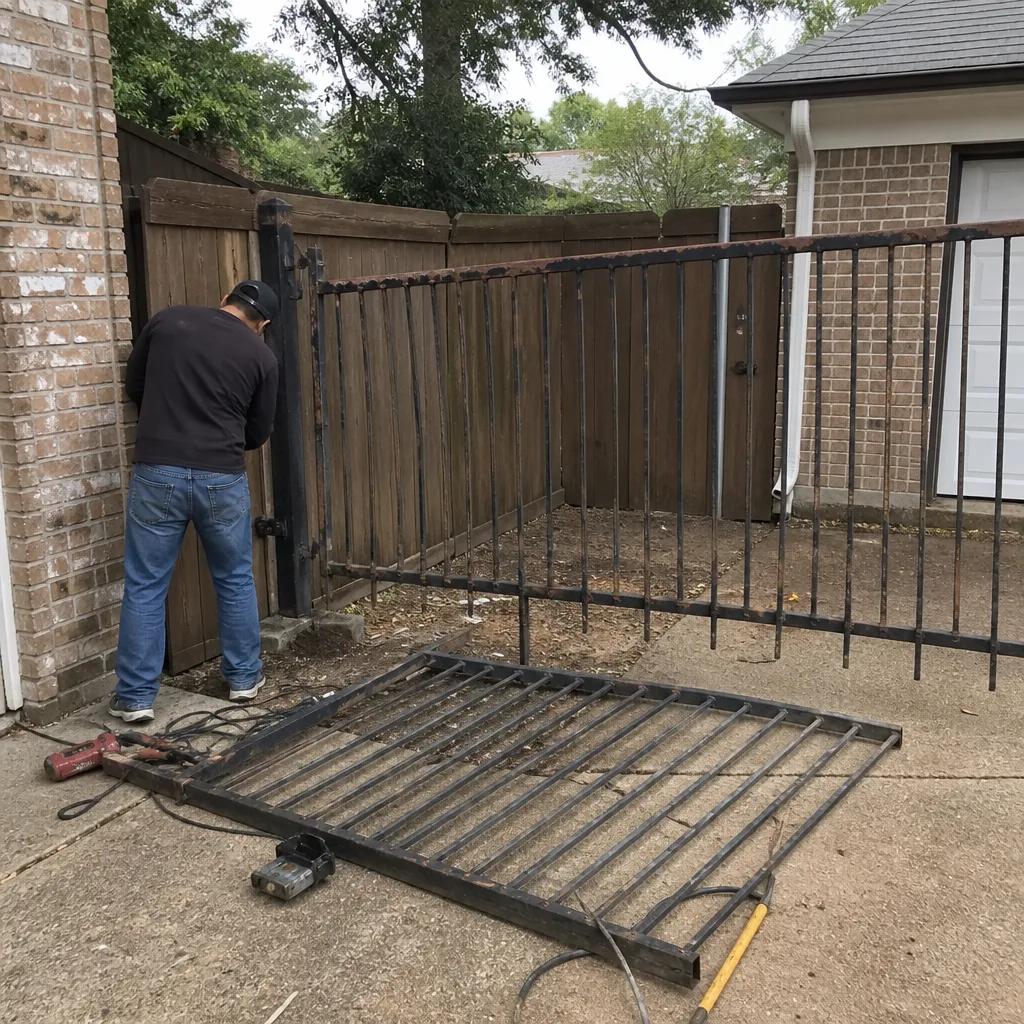 Before
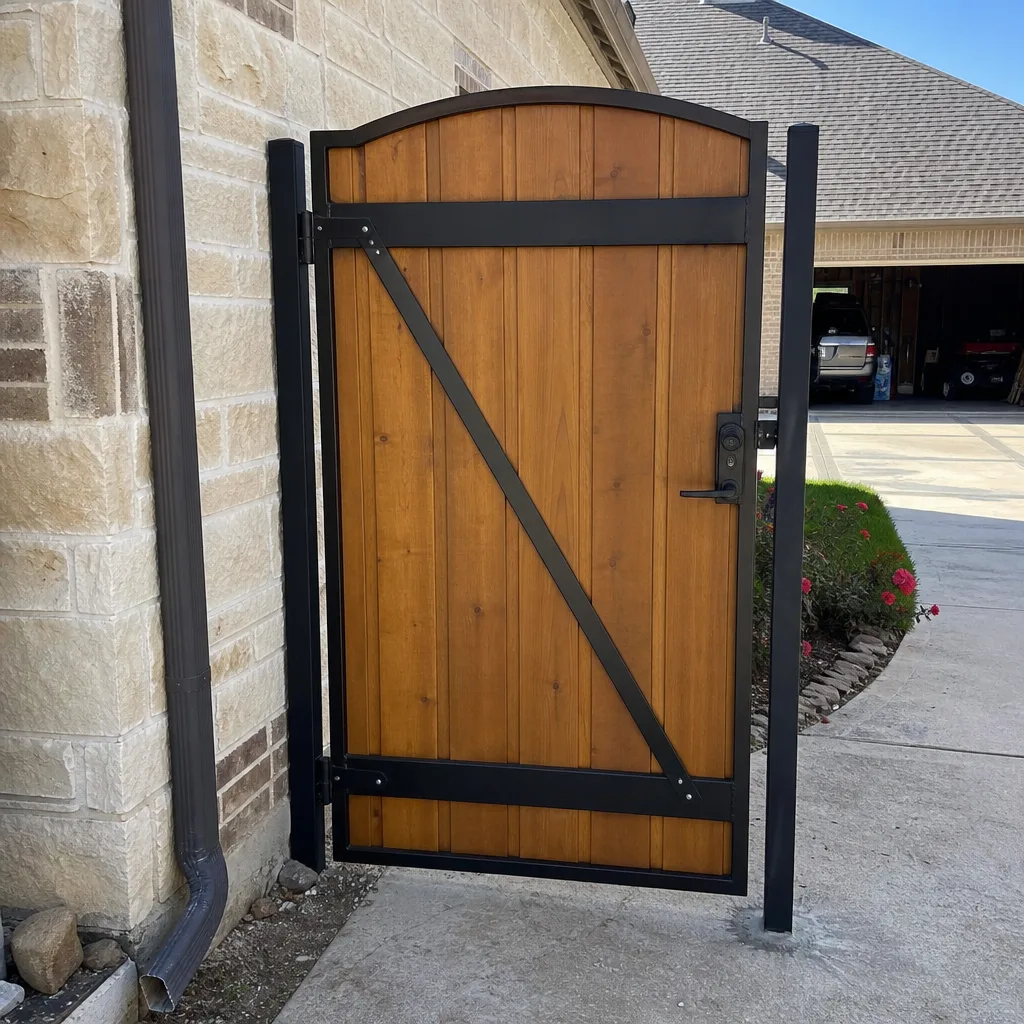 After
After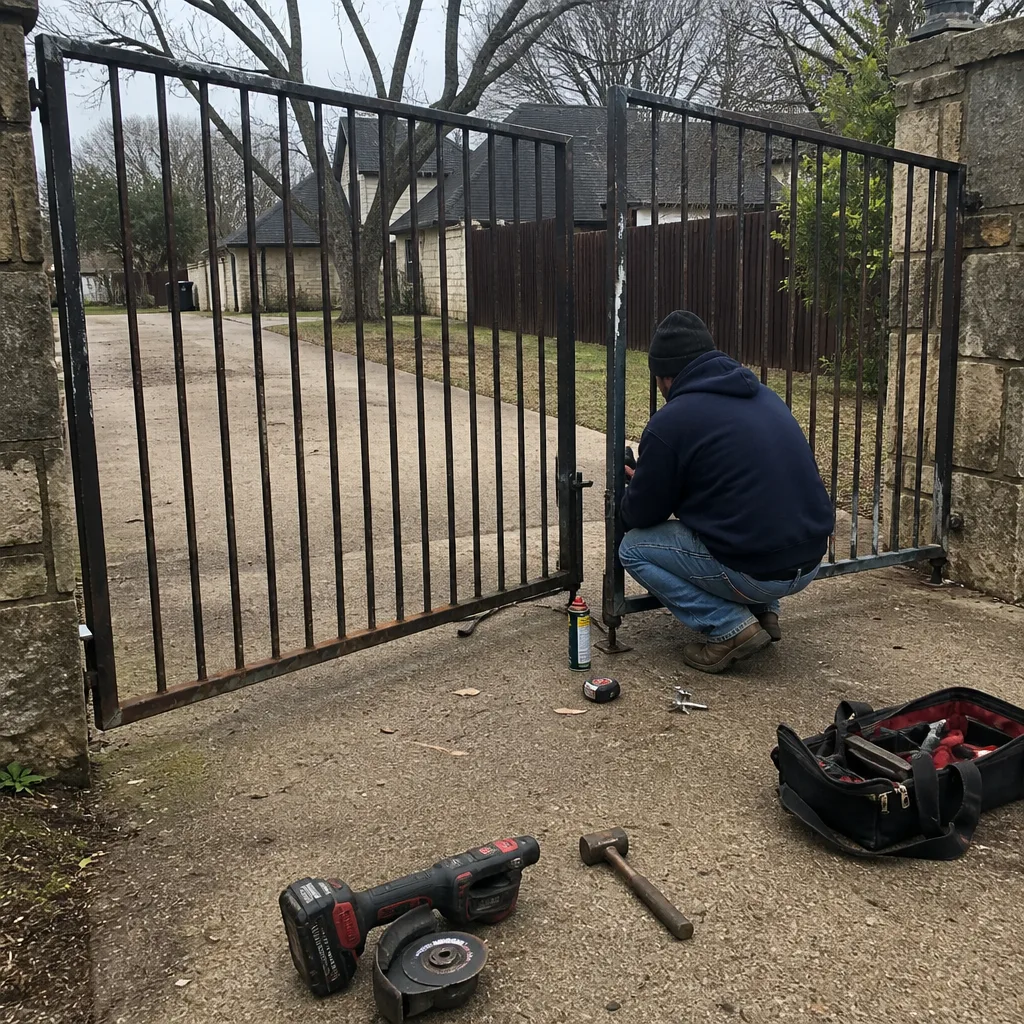 Before
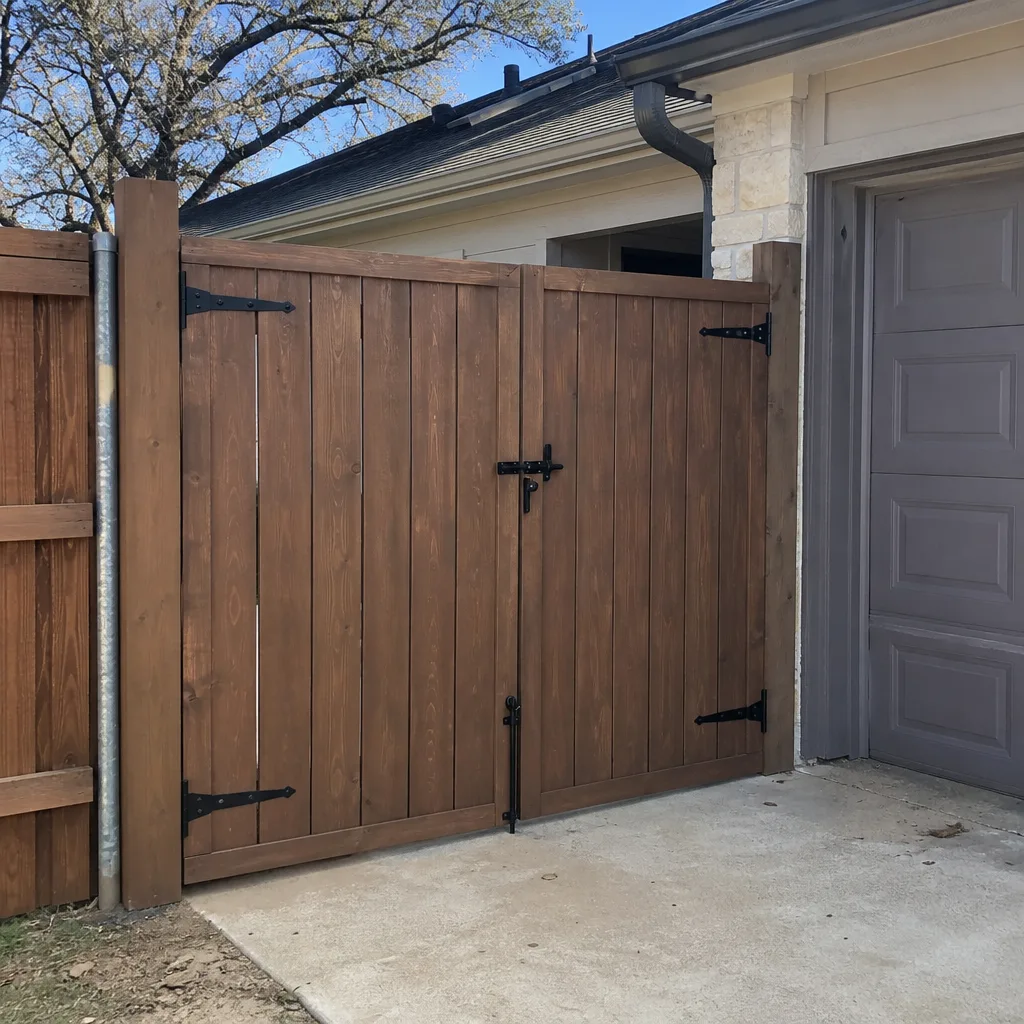 After
AfterLiftMaster Welding & Fabrication: The Fort Worth Owner’s Guide
We stock and install LiftMaster-compatible welded components and fabricated brackets for Fort Worth gates, with most jobs priced between $180 and $650 installed depending on the part, the gate’s weight, and how much fabrication the existing frame needs. If your LiftMaster opener runs but the gate sags, drags, or the mounting plate has started pulling away from the post, that’s usually a welding or fabrication failure, not an electronics problem. We carry replacement hinge plates, operator mounting brackets, and custom-fabricated arms on the truck, and most Fort Worth weld repairs are completed the same day we arrive.
Here’s the pattern we see across the city: an owner hears the motor strain, watches the gate hesitate halfway through its travel, and assumes the opener is dying. Then we get underneath the gate and find a cracked weld at the hinge plate or a bracket that was never sized for the gate’s actual weight. The opener is fine. The steel gave up first. Victor Salinas grew up watching his grandfather weld ornamental ironwork behind the house in Polytechnic Heights, and that early lesson stuck: the metal is almost always the first thing to tell you something’s wrong, if you know how to listen for it.
Which LiftMaster Models This Applies To
The welded components and fabricated brackets we install work across the LiftMaster swing and slide gate lines common in Fort Worth, including the LA500, LS501, SL3000, and CSW200 series. The key compatibility gotcha is this: the LA500 uses a flat, two-bolt mounting plate, while the SL3000 and CSW200 use a taller plate with an offset arm. They are not interchangeable, and a mismatched plate will pull out of the post within months. Before ordering, check the model sticker on the side of the operator arm itself, not the control board cover, as the cover is often swapped between units.
On the OEM-versus-aftermarket question, we lean toward OEM plates and hinges for anything under direct load, simply because LiftMaster engineers the bolt pattern and relief angles to their specific arm geometry. For brackets that serve as spacers or guards, a quality local aftermarket equivalent works well and often costs 40 percent less. The honest issue we see with cheap online aftermarket plates is not the steel itself, it’s the thickness and the weld prep. A plate cut thin will flex under a heavy Fort Worth iron gate, and flex is what cracks welds.
Signs Your LiftMaster Welding & Fabrication Is Failing
- The gate sags at the free end and scrapes the driveway. Most often this is a worn or cracked weld at the bottom hinge or a hinge plate that has loosened from the post. The opener keeps working harder to compensate, which shortens its life, so the sag is a repair signal for the metal, not a reason to adjust the opener.
- The operator arm or mounting plate is pulling away from the gate or post. This is the failure that concerns us most. A plate under tension that starts separating from the post means the anchor bolts or the weld are giving way, and the whole assembly can let go without warning. Shut the gate down and call us.
- The gate shudders or bounces mid-travel. A cracked weld at any joint creates slack, and slack turns into oscillation. If the gate moves fine by hand but shudders under motor power, the issue is usually a fractured weld near the operator connection point.
- You can see daylight through a joint that used to sit tight. A visible gap at a welded corner or hinge point means the weld is failing progressively, not all at once. Texas heat cycles accelerate this: Fort Worth swings between freeze warnings and hundred-degree afternoons, and expansion and contraction works on any fatigued steel joint.
- The gate closes fine but hangs up at the same spot every cycle. This often points to a bent fabricated arm or a twisted bracket, not a limit switch problem. Once metal deforms, the geometry changes permanently, and adjustment alone will not restore clean travel.
Replacement Cost & What’s Included
In Fort Worth, installed pricing for LiftMaster welding and fabrication breaks down roughly like this:
- Hinge replacement with welding: $180 to $350 per hinge, depending on post access and gate weight.
- Operator mounting plate replacement or reinforcement: $220 to $420, including grinding out the old welds, test-fitting, and re-anchoring.
- Custom-fabricated arm or bracket: $250 to $650, depending on the arm length, material thickness, and powder-coating.
- Full weld inspection and touch-up on an existing gate: $120 to $250, which we often recommend before an operator replacement so the new motor is not fighting old steel.
Every price is given up front and agreed before we put a grinder to metal. The range exists because a gate that weighs 300 pounds and a gate that weighs 900 pounds need different plate thicknesses, and a post that is rusted inside needs more work than one that is sound. All fabrication work carries our written 90-Day Done Right Promise. If a weld we made fails inside 90 days, we come back and make it right, no paperwork and no argument.
DIY or Call Us?
Here’s the honest split. You can safely do the inspection work: watch the gate run three or four cycles, look for sag, hesitation, or a visible gap at any joint, and note where the metal has pulled away from the post. What you should not attempt is welding a loaded hinge or a tensioned operator plate yourself. A gate under its own weight stores energy, and a weld that lets go while you are underneath means the gate comes down on you. We have also seen DIY welds done with flux-core machines that look solid on the surface and snap at the first freeze, because the penetration was never there. If the bracket is cracked or the plate is separating, call (817) 562-7979 and let a trained welder do it. If the gate doesn’t open when it should and close when it should, nothing else about it matters much.
FAQs
A properly welded hinge or bracket on a LiftMaster-operated gate in Fort Worth typically lasts 15 to 25 years, though the extreme heat of a west-facing installation, combined with the freeze-thaw cycles we get in January and February, can shorten that to 10 to 15 years if the original weld was under-penetrated or the plate was under-specified for the gate’s weight. Powder coating extends bracket life meaningfully by keeping moisture off the steel. Call (817) 562-7979 and we’ll tell you straight whether your welds are sound or running on borrowed time.
Yes, in most cases a cracked weld can be ground out, re-prepped, and rewelded without replacing the part, provided the surrounding steel is still thick enough to hold a new bead. If the plate itself is bent or fatigued, we’ll recommend replacement, because welding a distorted plate just moves the failure point somewhere else. We’ll show you the metal close up before we quote either path.
Most single-part weld repairs and bracket replacements in Fort Worth are completed in one visit, usually one to three hours on site, including grinding, welding, cooling inspection, and a full test cycle of the gate. Custom fabrication of a new arm may take two to three days from template to install, since the steel needs to be cut, welded, and coated before we hang it on your gate.
We carry the most common LiftMaster mounting plates, hinge stock, and steel blanks for fabricated arms on our service vehicles, so most Fort Worth jobs are resolved on the first trip. For less common plate geometries or heavy-custom work, we order from local steel suppliers and typically have the part within 48 hours. We are an independent service provider and not affiliated with LiftMaster, which means we stock both OEM and equivalent components and choose based on what your gate actually requires.
Written by Victor Salinas, Owner, Ironworks Gate Co. at Ironworks Gate Co., serving Fort Worth and nearby areas.