
Free on-site gate assessment - hinges, posts, and your LiftMaster or Nice gate operator checked before anything is quoted
The assessment is free and the quote is the invoice.
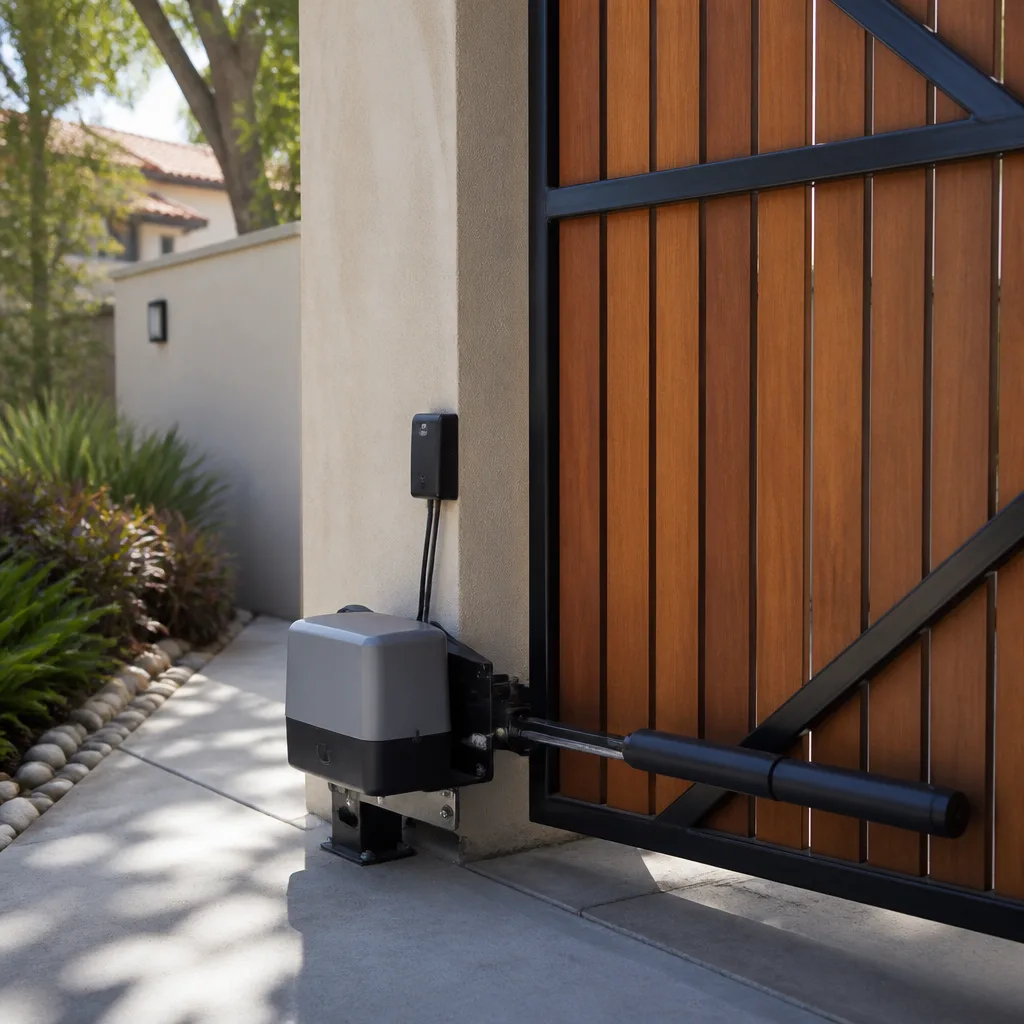
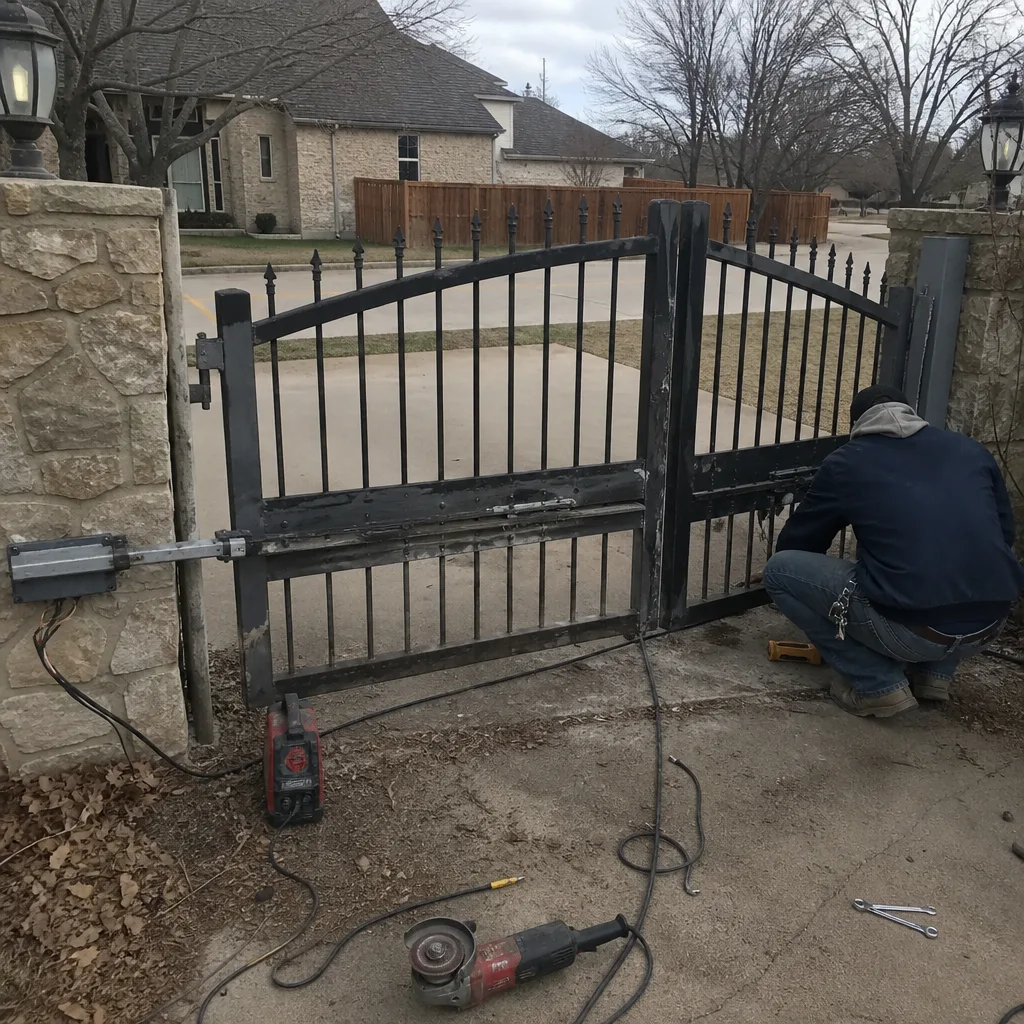 Before
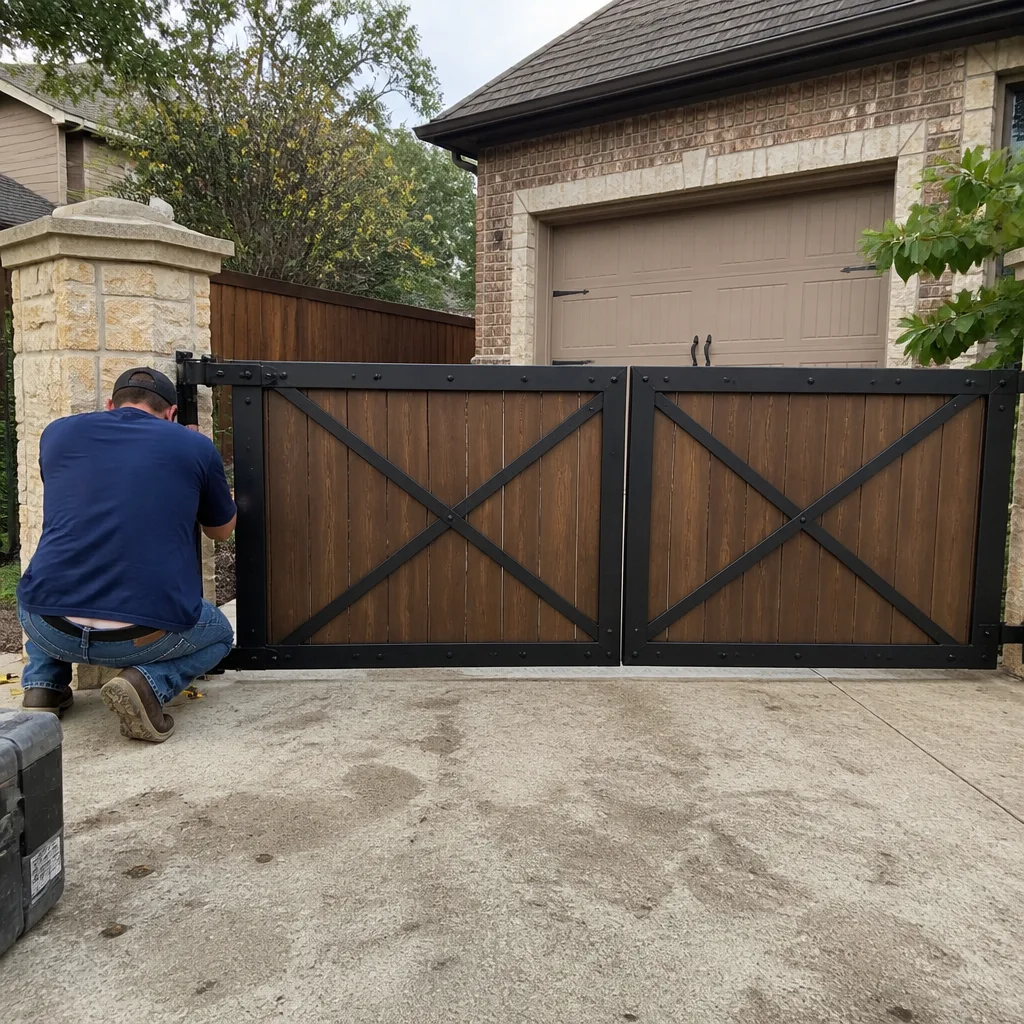 After
After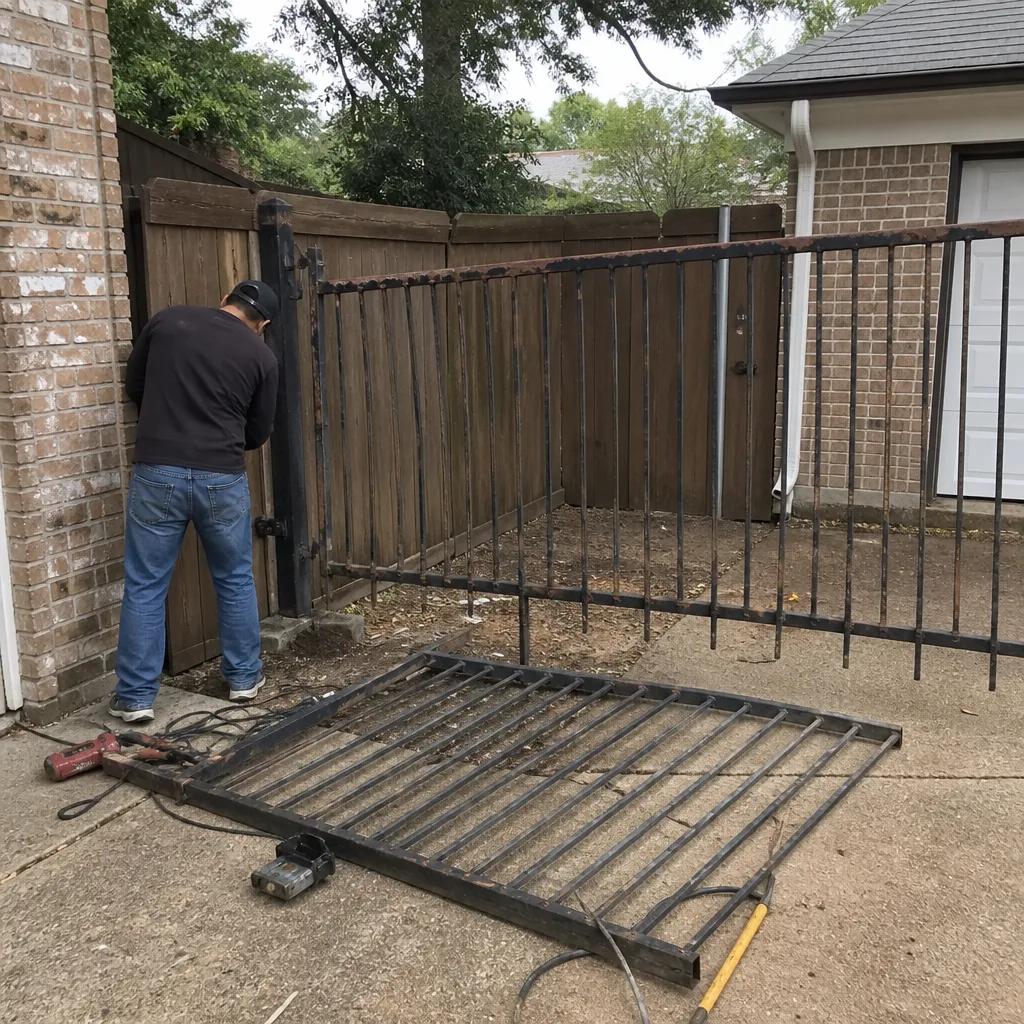 Before
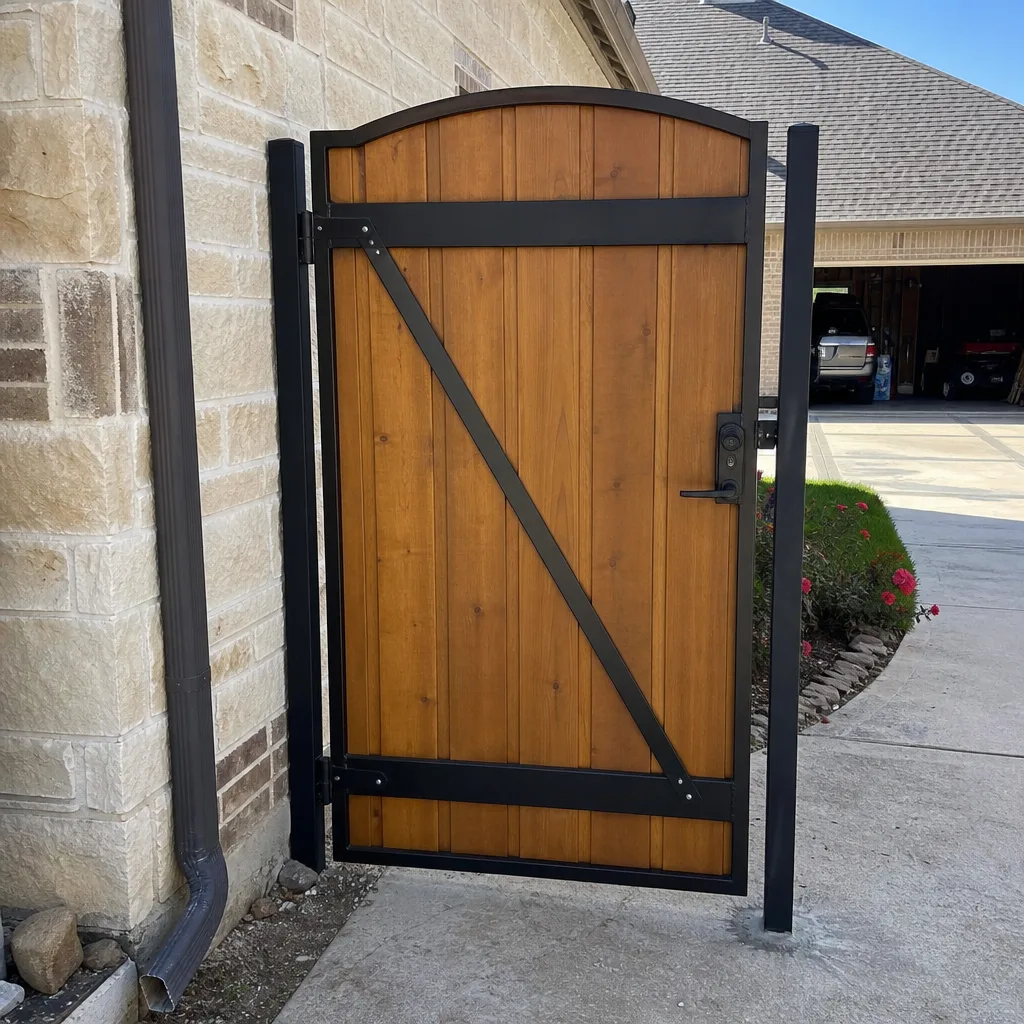 After
After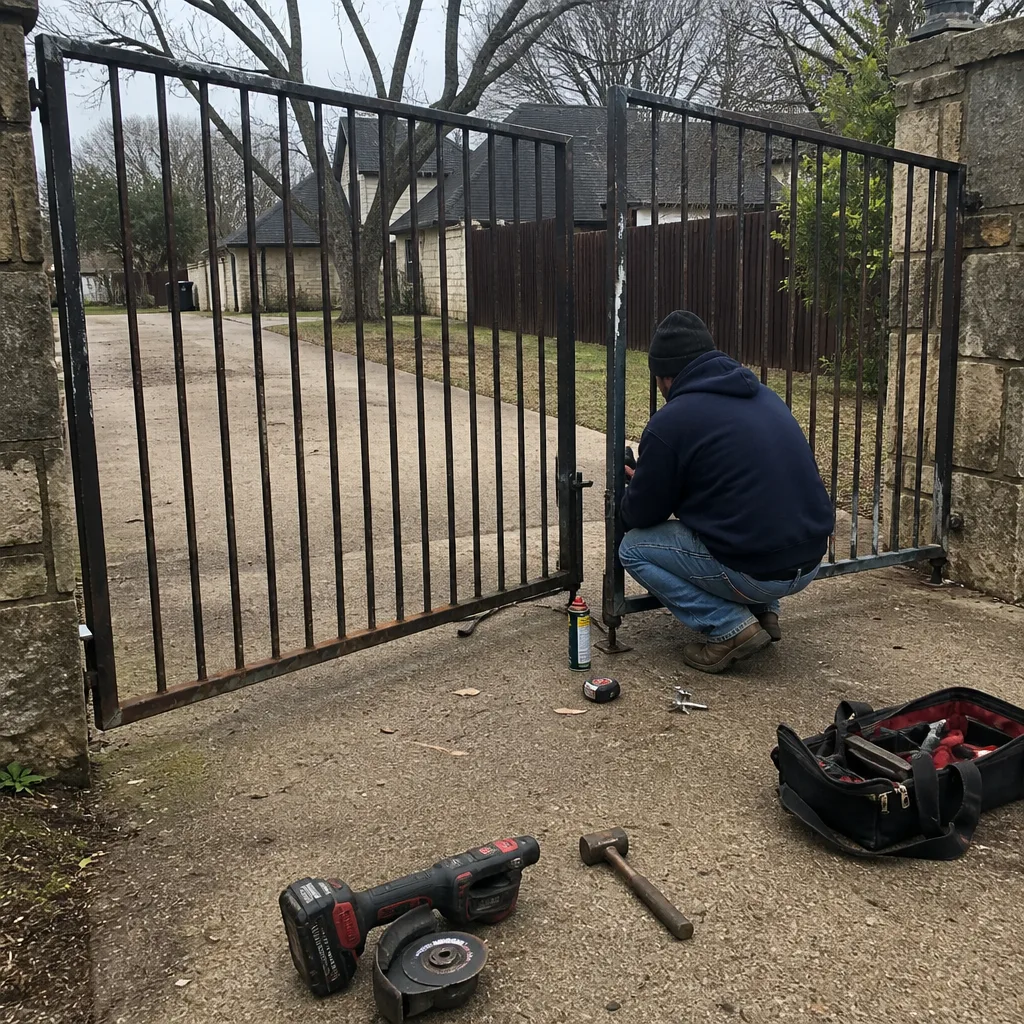 Before
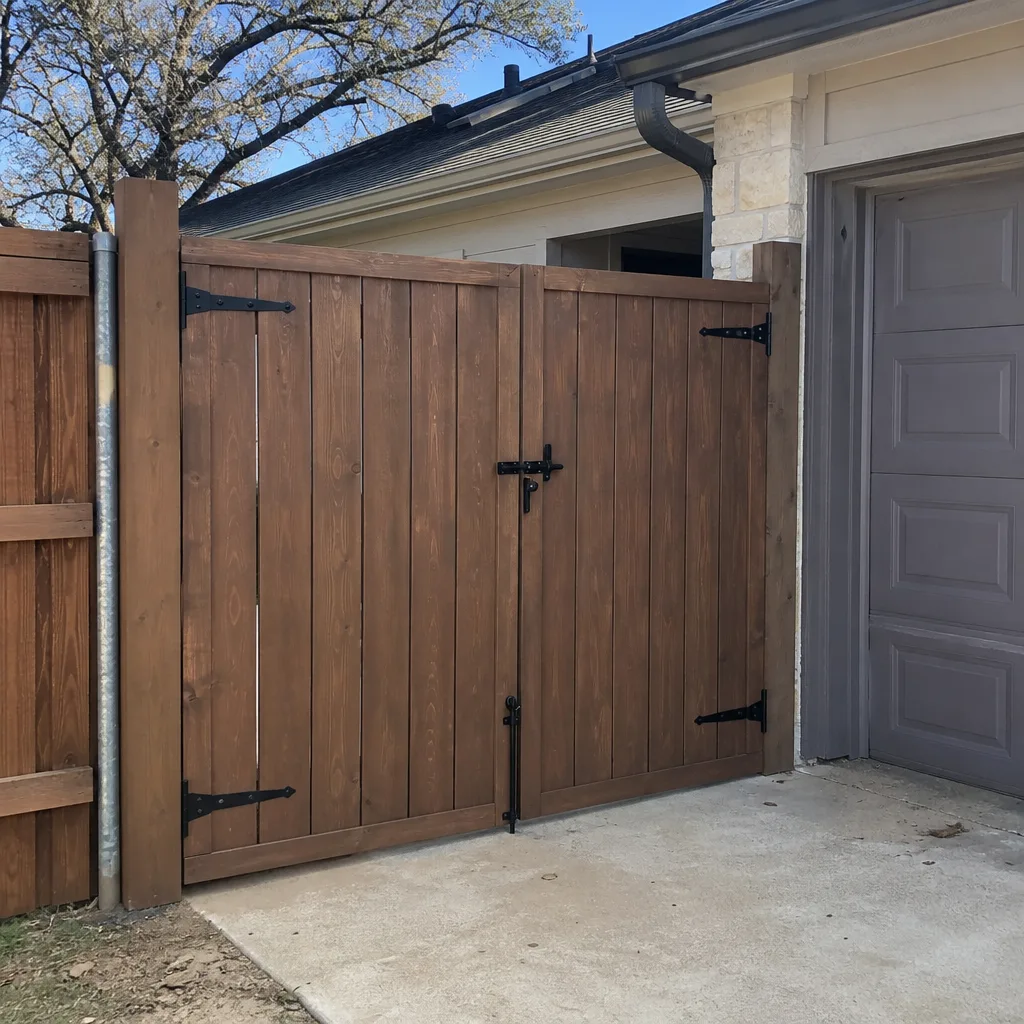 After
AfterViking Welding & Fabrication: The Fort Worth Owner’s Guide
We stock and install Viking-compatible welding and fabrication for driveway gates throughout Fort Worth, with most weld repairs and part replacements running $240 to $680 installed. A Viking gate that’s cracked at a hinge mount, sagging at a weld seam, or showing fatigue at the upright-to-rail connections usually gets fixed in a single visit. The call we hear most often starts with a gate that scrapes the driveway on a hot afternoon, or a weld that finally let go after twenty years of Texas sun and soil movement.
Around Fort Worth we see Viking gates that were installed right and never touched again until a weld cracks or a post shifts. That’s the nature of ornamental steel in North Texas: the black clay soil moves constantly, and a gate that was square in 2005 has been quietly fighting that movement every season since. The welding typically fails at the same places: bottom hinge welds, mid-rail seams, and anywhere a previous repair was done too fast with a flux-core welder instead of a proper TIG or MIG setup.
Key takeaways:
- Most Viking gate welding repairs run $240 to $680 installed in Fort Worth.
- We match the original steel thickness, not just the visual style.
- Same-day availability for weld repairs and failure points is common, though we schedule in a short window.
- Every repair is covered by our 90-Day Done Right Promise, in writing.
Which Viking Models This Applies To
Viking has built gate hardware and access control equipment for decades, and the fabrication side matters just as much. The Viking G-5, F-1, and X-9 series gate operators are the ones we see most often around Fort Worth, but the metalwork question is the same whether the opener is a Viking or anything else: the gate itself has to be square, hung on good hinges, and welded cleanly if the operator is going to last. A Viking board can burn out in a year trying to push a gate that’s dragging because a weld shifted. That’s the conversation we have first.
When you call us about a Viking gate, we’ll ask for the model label on the control board and the measurement from the gate post to the first hinge. That tells us which operator is involved and whether the fabrication issue is at the hinge, the mid-rail, or the post base. Viking parts aren’t proprietary in the metalwork sense: the gate can be repaired with common structural steel matched to the original thickness. What matters is knowing which welds carry the load on a Viking installation, and that’s where years of hands-on work counts more than a catalog number.
OEM Viking parts exist for the electrical and mechanical side: boards, limit switches, receivers. For the fabrication side, there’s no such thing as a “Viking weld.” The steel itself is standard, but the way it’s welded matters a great deal. We use the same welding process and rod that suits the original thickness, and we never weld galvanized steel without grinding back the zinc first. That one step is the difference between a repair that holds and one that rusts from the inside out.
One compatibility note worth knowing: Viking gate operators are designed for a specific gate weight and swing arc. If the gate has been repaired before with heavy steel added to “beef it up,” that added weight shortens the operator’s life. We inspect for that before quoting any weld work.
How Fort Worth Weather Affects Viking Gate Welding
The gate metal we see in Fort Worth fails in predictable patterns. The summer heat means steel expands, pushing hinge bolts and welds to their limits. The winter brings rare but real freezes, and the clay soil does the rest: posts shift, gates rack out of square, and a weld that was holding fine finally pops. Add in pollen season and the occasional hailstorm, and you’ve got an environment that tests any gate harder than most places in the country.
The weld points that fail first on Viking gates here are nearly always at the bottom hinge and the upright-to-bottom-rail intersection. That’s where the gate’s own weight works against the joint every time it swings. When those welds crack, the gate sags toward the latch side, and suddenly the Viking operator is working twice as hard. Left alone another six months, the sag becomes a scrape, and the scrape becomes a gate that won’t close at all.
Signs Your Viking Welding & Fabrication Is Failing
- The gate drags on the driveway or scrape marks have appeared. This is the classic Fort Worth failure. The bottom hinge weld or the upright-to-rail joint has cracked, dropping the gate a half-inch or more. Each swing wears the joint further and strains the Viking opener’s motor.
- The gate looks “out of square” or leans toward the latch side by a few degrees. A post has shifted in the black clay soil, or the mid-rail weld has separated just slightly. Even an eighth-inch movement shows up as a visibly crooked gate.
- The Viking operator runs fine but the gate moves slowly or stops mid-cycle. The board and motor often get blamed, but we find the real cause is a gate that’s binding from a failed weld or stretched hinge. The operator is working against metal that isn’t aligned anymore.
- Rust bleeding from a joint or a crack that’s visible at the bottom rail. Moisture gets into the weld, and Texas humidity does the rest. Once rust stains appear at a seam, the weld underneath is already compromised.
- You hear a pop or a creak when the gate swings, especially near the hinge post. That sound is metal shifting against metal at a joint that’s starting to fail. A creak isn’t charming and it isn’t harmless. It’s a call that should be made before the gate drops.
Replacement Cost & What’s Included
In Fort Worth, Viking gate welding and fabrication repairs typically run $240 to $680 installed. A basic weld repair at a single joint, with the gate realigned and the hinge re-tightened, usually lands at the lower end of that range. Fabrication that requires cutting out a section of rusted or cracked steel, matching the thickness, and welding in new material with grinding and paint prep runs higher. The final price is settled before any work starts, in writing, with no surprises on the bill.
What drives the range? The number of joints involved, whether the gate needs to come off its hinges for the work, and whether the post itself has shifted and needs resetting in concrete. Post resetting is a fabrication-adjacent job that changes the math. We also check the operator’s travel limits after any weld repair, because a gate that swings differently after being re-squared needs those limits adjusted or the Viking board will work itself to death.
Every welding and fabrication job includes grinding the repair smooth, priming bare steel to prevent rust, and matching the paint as closely as the existing finish allows. And every job is covered by our written 90-Day Done Right Promise: if it isn’t right, we come back and make it right, no paperwork, no arguing.
Standing offers: $50 off any repair over $250, free second opinion on any written estimate, and a permanent 5% senior and veteran discount. Ask about the $89 seasonal tune-up when you call.
DIY or Call Us?
There’s an honest split here. You can safely check the obvious things: look for visible cracks at the hinge welds, measure whether the gate sits level when closed, and watch the bottom rail as the gate swings. If you see the gate dip or hear a clunk at the hinge, you’ve found the problem. What you shouldn’t do is attempt your own weld repair with a cheap flux-core welder from the hardware store, especially on a gate that has a Viking operator attached.
The reason is that overhead and vertical welds on gate steel are unforgiving. A bad weld looks fine for a few months, then fails catastrophically, and now you have a 400-pound gate swinging free while the operator is still trying to move it. Victor Salinas, our owner, started learning this trade in the Polytechnic Heights neighborhood on Fort Worth’s east side, watching his grandfather weld ornamental ironwork in a small shop behind the house. What he learned then, and what he’s taught us, is that a gate weld has to be right the first time. If the gate doesn’t open when it should and close when it should, nothing else about it matters much.
We also see homeowners burning through Viking control boards because they fixed a sag with a bungee cord or a shim instead of a proper weld. The gate wobbles, the operator fights it, and eventually the board gives up. A proper fabrication repair costs less than replacing a fried control board, and it actually fixes the gate.
If you’re unsure, call (817) 562-7979. We’ll tell you honestly whether it’s a job for us or something you can handle safely yourself.
Viking Parts We Stock on the Truck
We carry a focused set of Viking-compatible hardware and fabrication supplies on every truck, so most repairs happen in one visit. That includes hinge sets in multiple weight ratings, structural steel stock in common gate gauges, weld-through primer, and corrosion-resistant paint matched to standard black finish. For the operator side, we stock Viking control boards, limit switches, receivers, and remotes, along with compatible parts for LiftMaster, Mighty Mule, and Ghost Controls systems we service regularly.
If your Viking operator needs a board or a limit switch and the gate also needs welding, we do both in the same trip. That’s the point of being a gate specialist rather than a general handyman who can weld one thing and guess at the other. The welding and the automation are two halves of the same job.
FAQs
A properly welded gate joint in Fort Worth should last 15 to 25 years before the steel or the post gives way again. The variable isn’t the weld itself; it’s the clay soil shifting the posts and slowly re-racking the gate over time. We tell customers to expect a tune-up and alignment check every few years, and a weld inspection any time the gate starts rubbing or creaking.
Most cracked welds can be repaired without replacing the gate. We grind out the failed weld, clean the joint back to bright steel, and weld it properly with the right process for the metal thickness. Full replacement only makes sense when the steel itself is rusted through or a section is twisted beyond correction. We’ll show you the difference before quoting anything.
Most single-joint weld repairs take one to two hours, including grinding, welding, priming, and paint touch-up. If the gate has to come off its hinges or the post needs resetting in concrete, that extends the job to half a day or more. Most Fort Worth weld repairs are completed in a single visit.
We stock common Viking-compatible hardware and operator parts on our trucks, including boards, limit switches, and receiver units. Less common parts may need to be ordered, but we’ll tell you that before scheduling the repair. The metal fabrication side almost never requires ordering; we carry the steel and supplies to handle it immediately.
Call Ironworks Gate Co. for Viking Welding in Fort Worth
We’ve been serving Fort Worth homeowners for over 42 years, and we plan to be here for another forty. Our technicians are background-checked and uniformed, trained to work in your home the way they’d work in their own mother’s. We service nine gate-automation brands including Viking, LiftMaster, FAAC, BFT, Linear, Ghost Controls, DoorKing, Elite, and Mighty Mule, so whatever is on your driveway, the fix is made right the first visit.
Call (817) 562-7979 for a free estimate on Viking welding and fabrication work. A live person answers every call, 24 hours a day, 7 days a week. You’ll get an honest assessment, a written price before any work begins, and a 90-Day Done Right Promise on every job.
Written by Victor Salinas, Owner, Ironworks Gate Co. at Ironworks Gate Co., serving Fort Worth and nearby areas.